A movie audience became a tourism audience
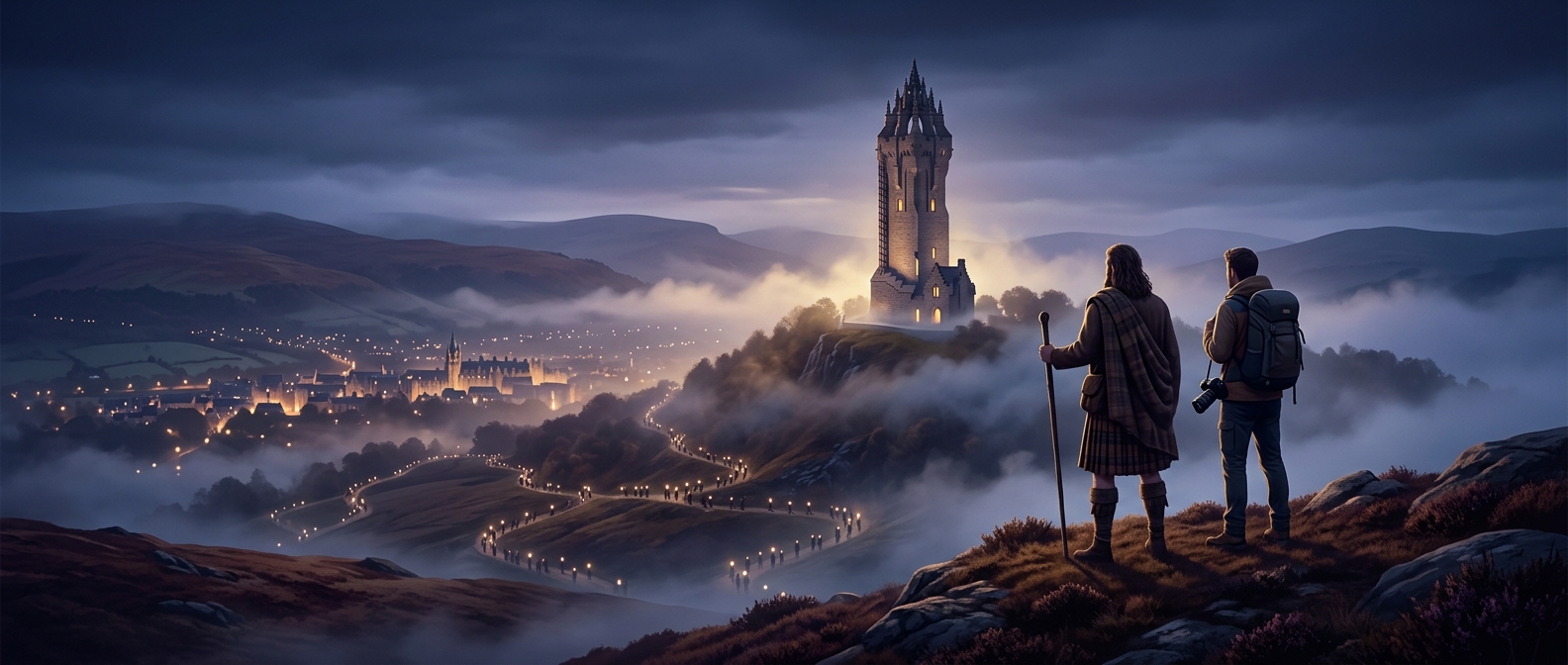
Braveheart did more than revive interest in William Wallace, the medieval Scottish leader at the center of its story. It gave viewers a reason to seek out places associated with him. One was the Wallace Monument, a tall memorial tower on Abbey Craig near Stirling—not a surviving medieval building, but a monument built centuries later to commemorate Wallace.
The film’s dramatic landscapes and battle scenes made Scotland feel like part of the story’s appeal. Once viewers connected Wallace with a real, visitable landmark, screen interest could turn into a practical question: Where can I go to see the place that honors him?
When attention becomes an infrastructure problem
The reported 300 percent rise in visits brought a consequence beyond busier tours and more crowded paths: more cars needed somewhere to go. Expanding the parking lot was a straightforward response to a surge that a monument’s existing facilities were not designed to absorb.
That change shows how a film can affect a destination even when the attraction is not itself a movie set. The monument offered something the screen could not—a physical encounter with the landscape and a memorial tied to the story’s central figure. The film supplied the attention; the site had to make room for the people who followed it.