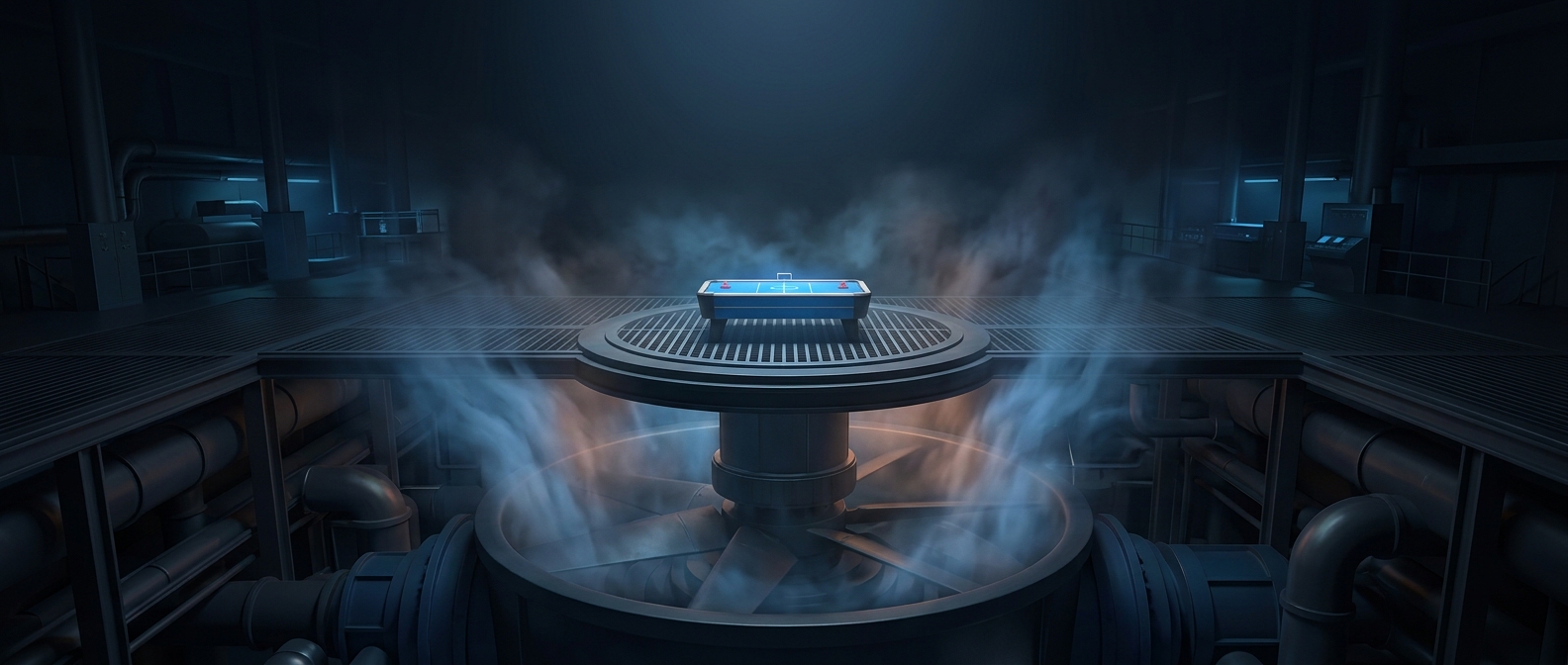
How a Table Turns Air Into a Playing Surface
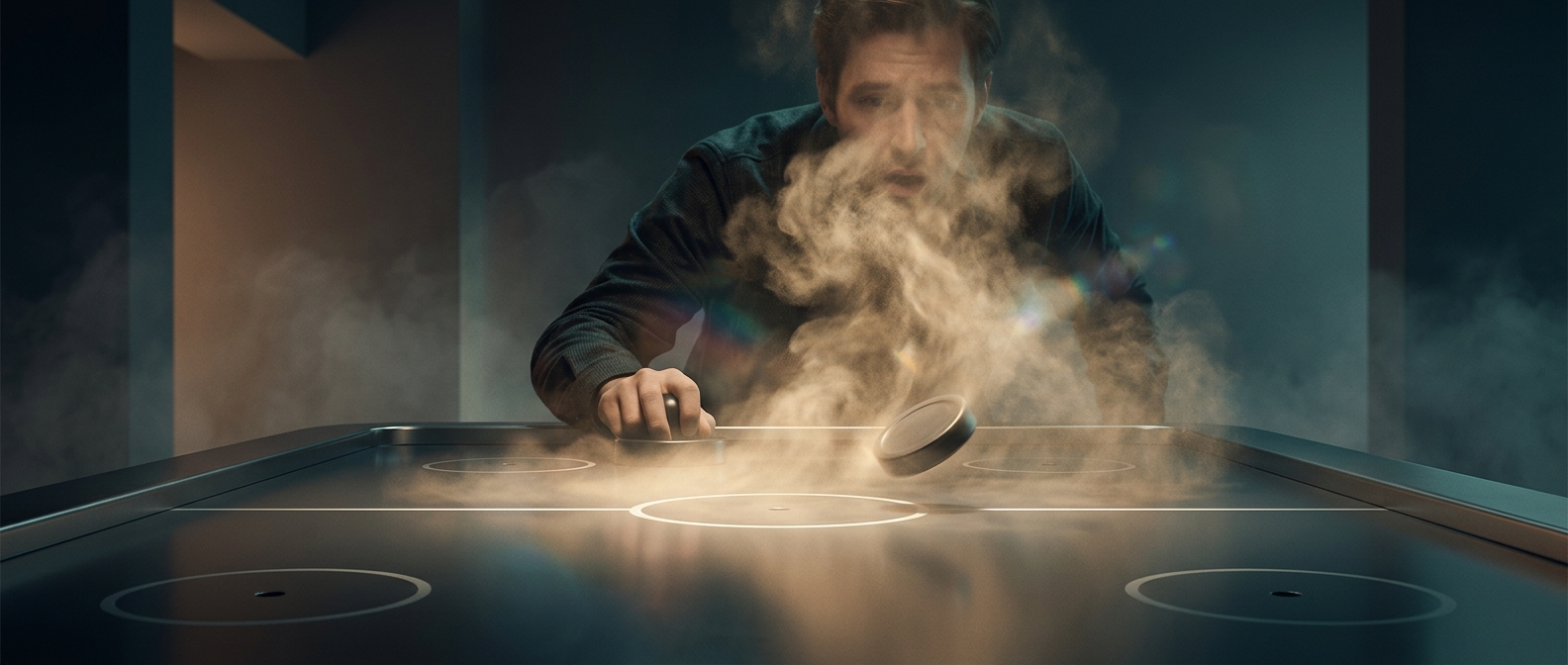
Inside an air-hockey table, a centrifugal blower spins air outward and into a space beneath the tabletop. The air then escapes through a dense pattern of small holes. Because the holes spread the flow across the playing area, the puck rides on a thin layer of moving air rather than scraping directly over the surface.
That layer does not make the puck float freely. It reduces contact enough that a small push can send it sliding quickly, while the table still supports and guides it. The puck’s collisions with the rails and the players’ paddles then shape its path.
The Airflow Is Part of the Game’s Tuning
The blower has to supply enough air for the puck to move smoothly across the table. If the flow weakens or becomes uneven, more of the puck’s weight presses against the surface, increasing drag and making its motion less lively. With a steady cushion, the puck can travel fast—but players can still redirect it with a paddle.
That balance is what makes the table feel playable: the air reduces resistance without removing the need for aim, timing, and control. Beneath the quick rebounds and sharp turns, the game depends on a carefully distributed stream of air.