A leash turns a dog’s lunge into a game mechanic
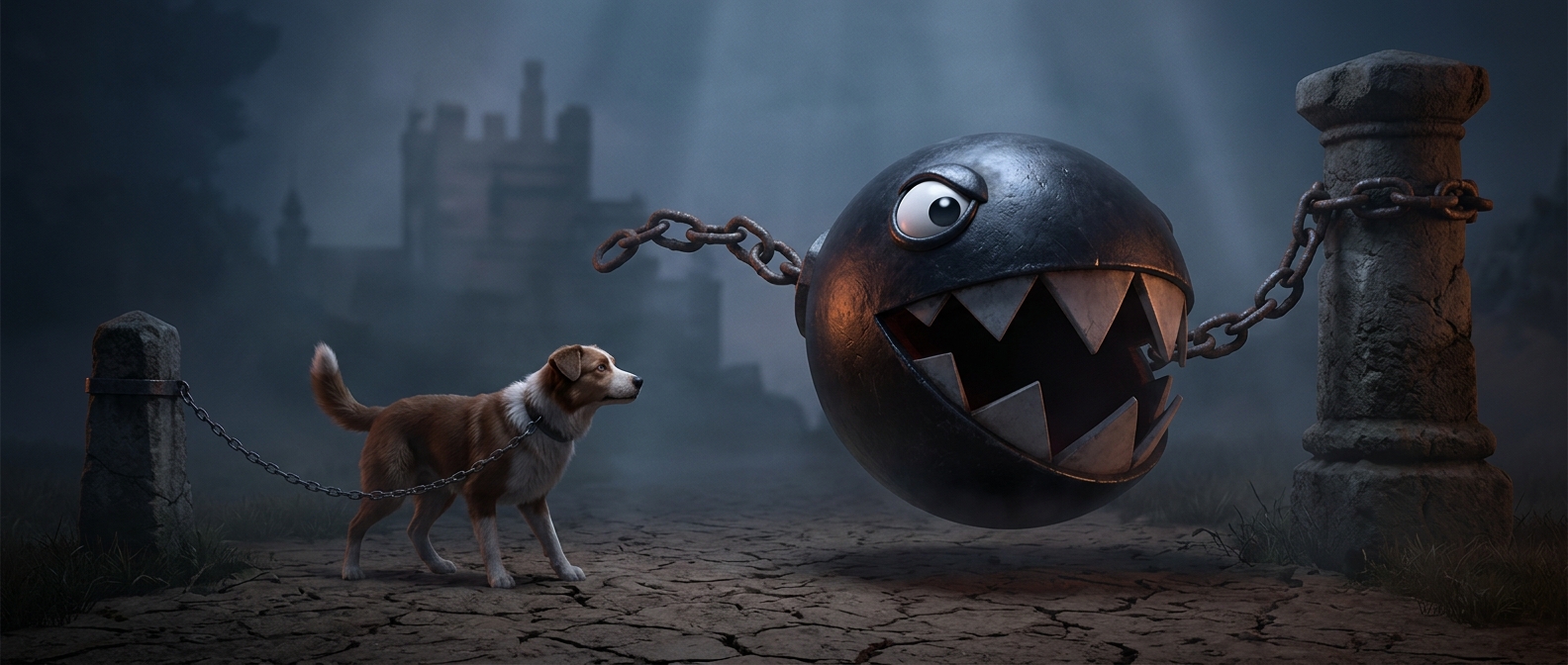
The key design move was not simply making an enemy look like an angry dog. It was giving that aggression a visible limit. A Chain Chomp can snap and rush at Mario, but its chain and post hold it within a set area. The player can see where the danger begins—and, just as importantly, where it ends.
That makes the enemy’s behavior legible. A freely roaming attacker could pursue Mario across the level; a tethered one creates a localized hazard. The player has to judge the lunge’s reach, find a gap, and pass the anchor point without getting caught. The chain is therefore both part of the character’s appearance and a practical boundary for the encounter.
The restraint makes the threat more memorable
The childhood experience behind the design supplied a sharp visual beat: a dog surges forward, then its leash stops it. In a game, that sudden change from attack to restraint can be repeated and timed, turning a fleeting real-world moment into a readable pattern. The player does not need an explanation to understand why the snapping creature cannot simply follow everywhere.
The result is a distinctive kind of obstacle: frightening at close range, but predictable enough to plan around. Its post gives the player a fixed reference point, while its lunge makes that safe-looking boundary feel dangerous. A leash that once cut off a chase becomes the rule that lets players decide when to risk one.