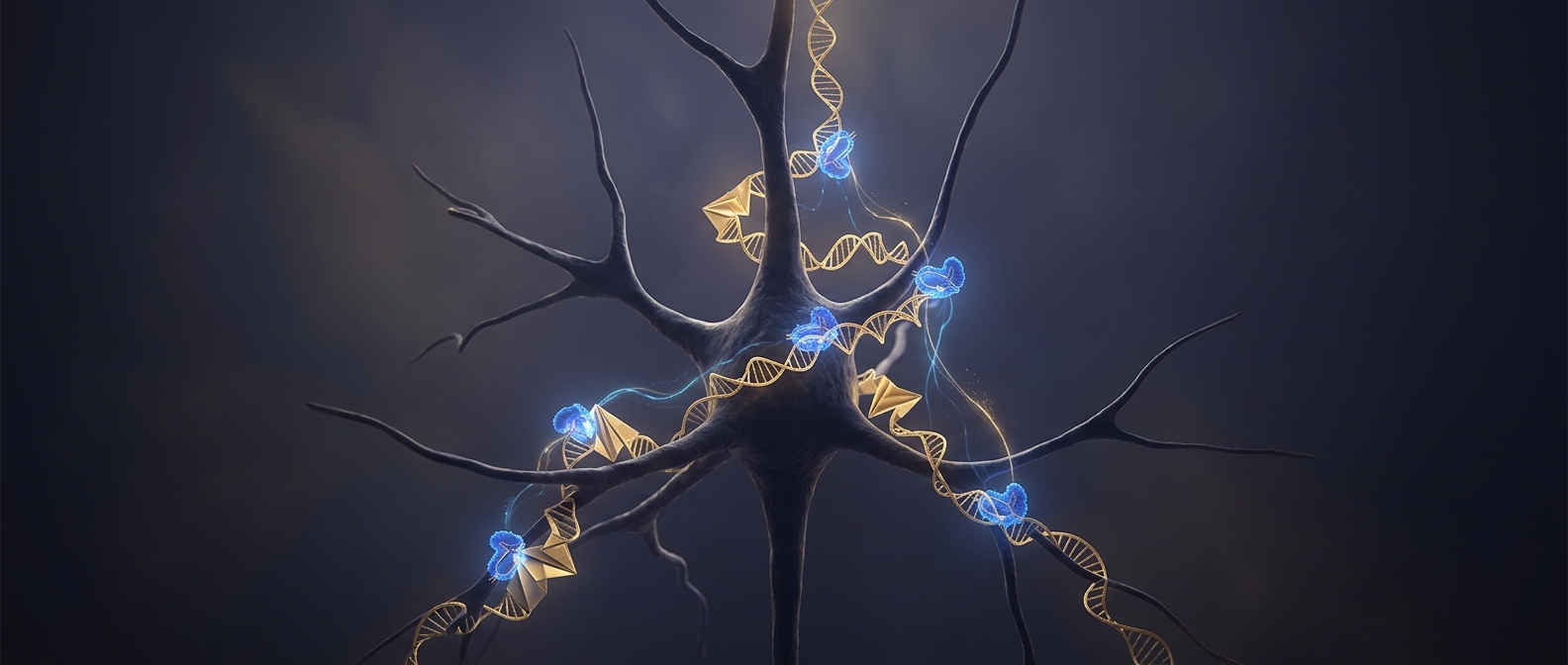
How cells choose which genes to use
A cell does not read its DNA from beginning to end. It makes working copies of selected genes, then uses those copies to build proteins. Proteins give cells much of their structure and enable their specialized tasks: neurons communicate through electrical and chemical signals, while liver cells perform functions such as processing nutrients and making bile.
The first control point is access. DNA is wrapped around proteins and folded into a compact structure inside the nucleus. Chemical changes to this packaging can make a stretch of DNA easier or harder for the cell’s gene-reading machinery to reach. Regulatory proteins, called transcription factors, can then help switch particular genes on or off.
From a developing cell to a specialized one
During development, cells receive signals from their surroundings and from one another. Those signals alter which regulatory proteins are active, steering a cell toward a particular role. As a cell specializes, it establishes patterns of gene activity that reinforce that role: a liver cell maintains the machinery for liver functions, while a neuron maintains the machinery for communication.
This is not a permanent lock. Cells can adjust gene activity when conditions change, and some cells can alter their identity under particular circumstances. But their usual pattern of accessible genes helps preserve their specialized function. The DNA is shared; the routine for using it is not.
That distinction explains how one genome can support many kinds of tissue. A cell’s identity depends less on owning a unique set of genes than on which parts of the shared set it can read and use.