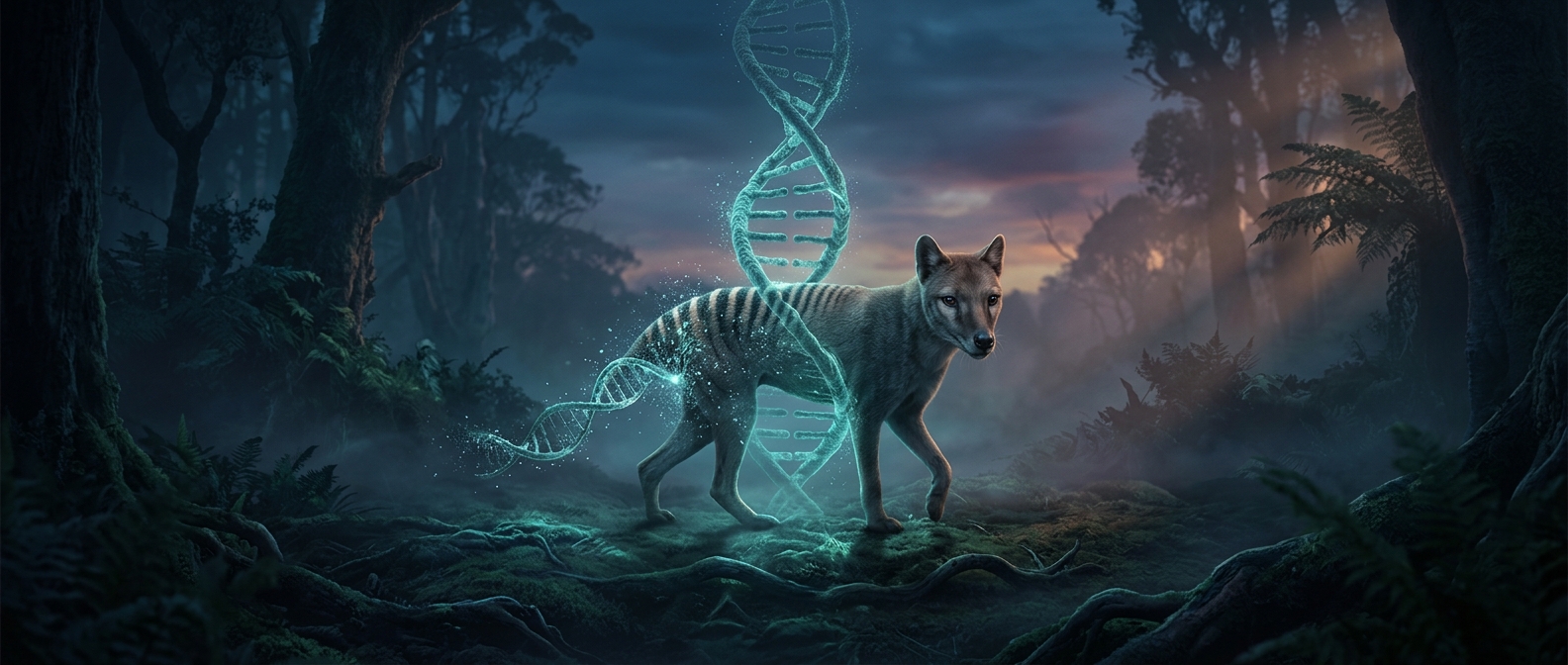
How a living marsupial could be made thylacine-like
A thylacine’s genome is its inherited DNA: the instructions cells use to build and maintain a body. Researchers can study DNA recovered from preserved remains, then compare it with the genome of a living marsupial relative. Differences help identify genetic changes that may have contributed to visible features such as body shape, coat pattern, or skull structure.
The proposed approach is to alter selected DNA in cells from the living animal. If those cells could be used to produce an embryo, its development might express some thylacine-associated traits. This is not like assembling an extinct animal from a complete, intact set of instructions. It is closer to editing one living species’ blueprint in an attempt to shift particular features.
Why resemblance is not restoration
A trait rarely depends on one isolated genetic switch. Many genes can influence how a body develops, and their effects can depend on one another and on the animal’s environment. Changing a few stretches of DNA might produce a recognizable feature without reproducing the full combination of anatomy, physiology, and behavior that made a thylacine a thylacine.
The result, if the approach succeeds, would therefore be a genetically engineered relative—not a thylacine whose original genome has been recovered. That distinction matters beyond naming: an animal’s needs, health, and ecological role cannot be assumed from its appearance alone.
The most realistic measure of success would be specific traits produced in a living marsupial, not a rewind of extinction. A striped coat could look like a return; the DNA beneath it would tell a different story.