How four guanines make a knot
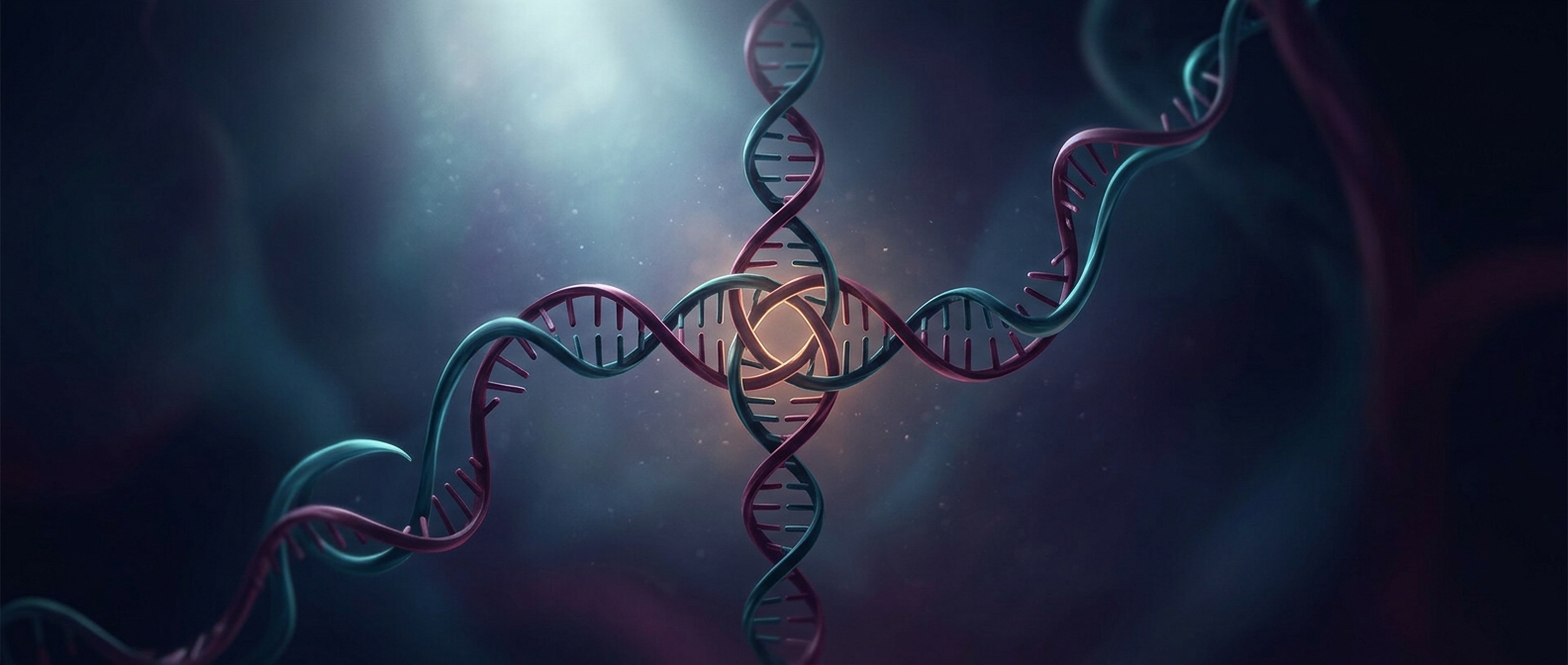
RNA is usually described as a single-stranded message, but parts of it can fold into shapes. When a stretch contains many guanine letters, four guanines can arrange themselves into a flat, square-like layer. Several layers stack, forming a compact structure called a G-quadruplex. It is not a knot in the everyday sense: the RNA strand folds into a shape that can make the message harder to traverse.
A pause in protein production
To make a protein, a ribosome moves along RNA and reads its sequence. A folded G-quadruplex can act like a speed bump: the ribosome may slow as it encounters the structure, rather than reading the message at its usual pace. The pause can affect how much protein is made from that RNA.
The effect depends on where the structure forms and whether it persists. A fold near the beginning of a message can influence whether the ribosome gets started efficiently; a fold farther along can slow its progress during reading. Other molecules in the cell can also affect how readily the RNA folds or unfolds.
Changing the pace, not the recipe
The RNA’s letters still specify the same protein. What changes is the ease and timing of reading them. By shaping or loosening these folds, a cell can help tune protein output without rewriting the underlying message—a small structural change with a direct effect on the ribosome’s journey.