A warning built to travel quietly
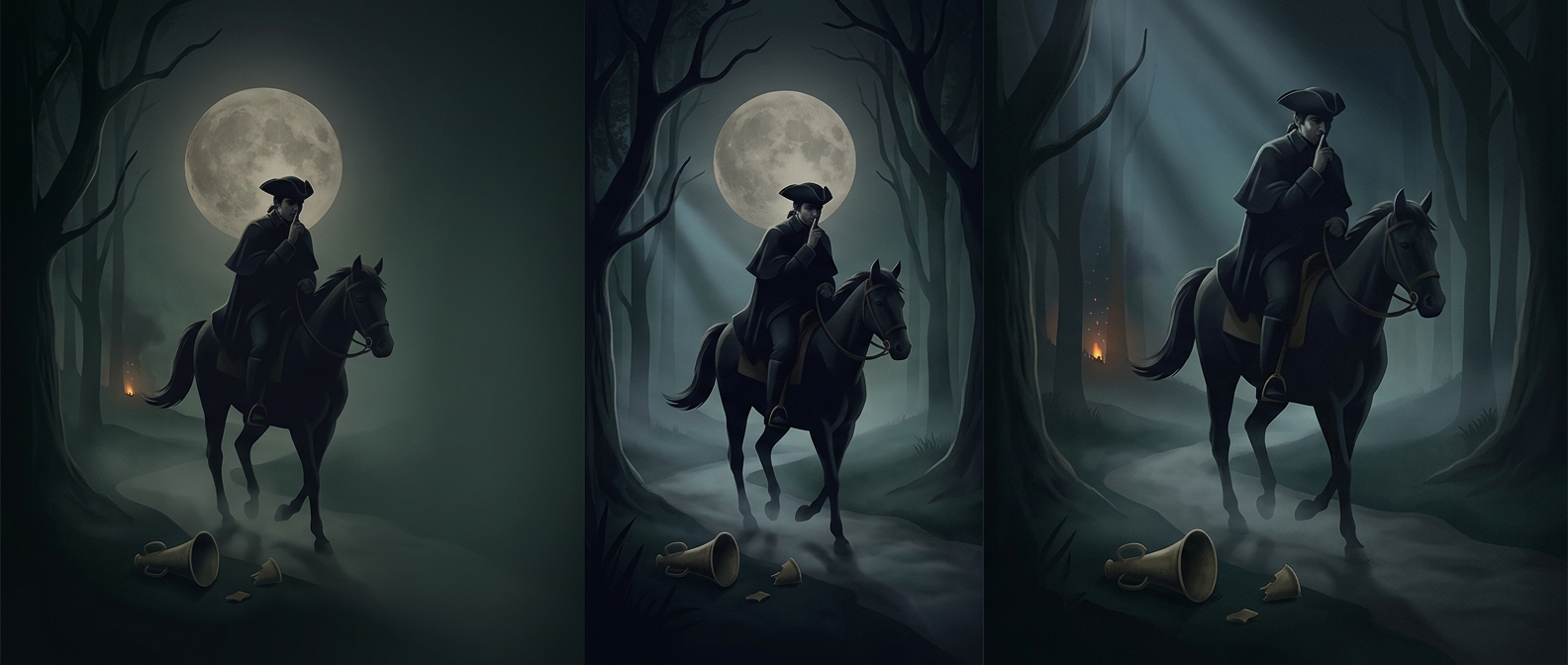
On the night of April 18, 1775, Paul Revere’s task was not to make a dramatic announcement but to get urgent news through a landscape watched by British troops. The army was moving from Boston toward the towns of Lexington and Concord, where colonial stores of weapons and supplies were believed to be located. A loud cry could draw patrols to the messenger—or alert the troops that their movement had been discovered.
Revere carried the news from house to house, waking people who could pass it along. The warning worked because it was a network, not a solo performance: other riders and local messengers spread the alarm by roads and back routes, reaching communities ahead of the marching troops.
Why the famous phrase misses the moment
“British are coming” is a poor fit for the warning Revere needed to give. Many people in the colonies still understood themselves as British subjects, so the useful distinction was between local residents and the army’s regular troops. The point was to tell listeners that soldiers were on the move and that they needed to respond—not to deliver a polished slogan.
The warning set a chain of decisions in motion: people alerted neighbors, militia members prepared to gather, and news continued outward even after Revere was stopped by a patrol before reaching Concord. The alarm could survive the capture of one rider because it had already been handed from person to person.
That is what makes the ride more than a story about speed. Its success depended on discretion, familiar local routes, and many people willing to carry the message onward. The quiet warning mattered precisely because it did not need to be shouted from the saddle to spread.