Turning speech into a set of signals
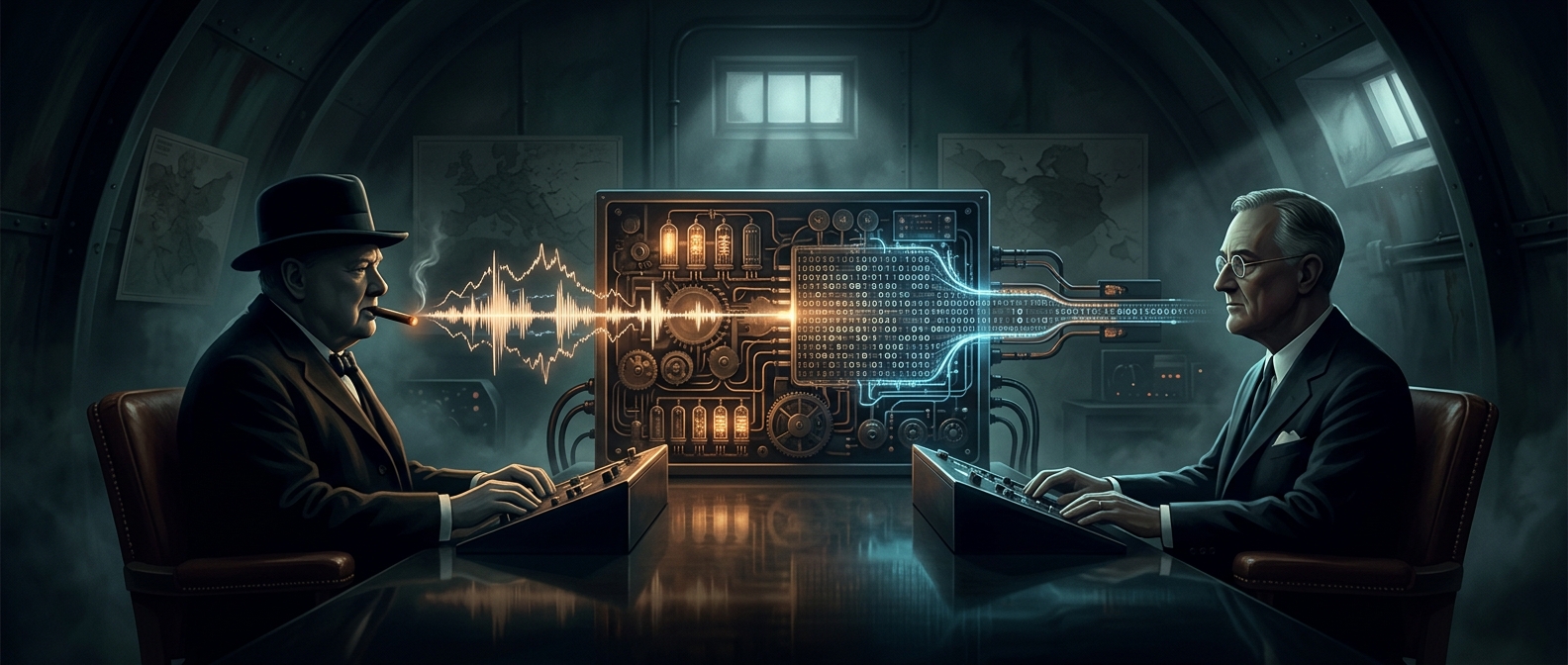
A vocoder did not send a voice as a continuous sound wave. It analyzed speech into changing electronic values—such as how strong different bands of sound were—and sent those values instead. At the other end, equipment used them to reconstruct intelligible speech. The voice could sound less natural, but its information could travel in a form that was easier to protect.
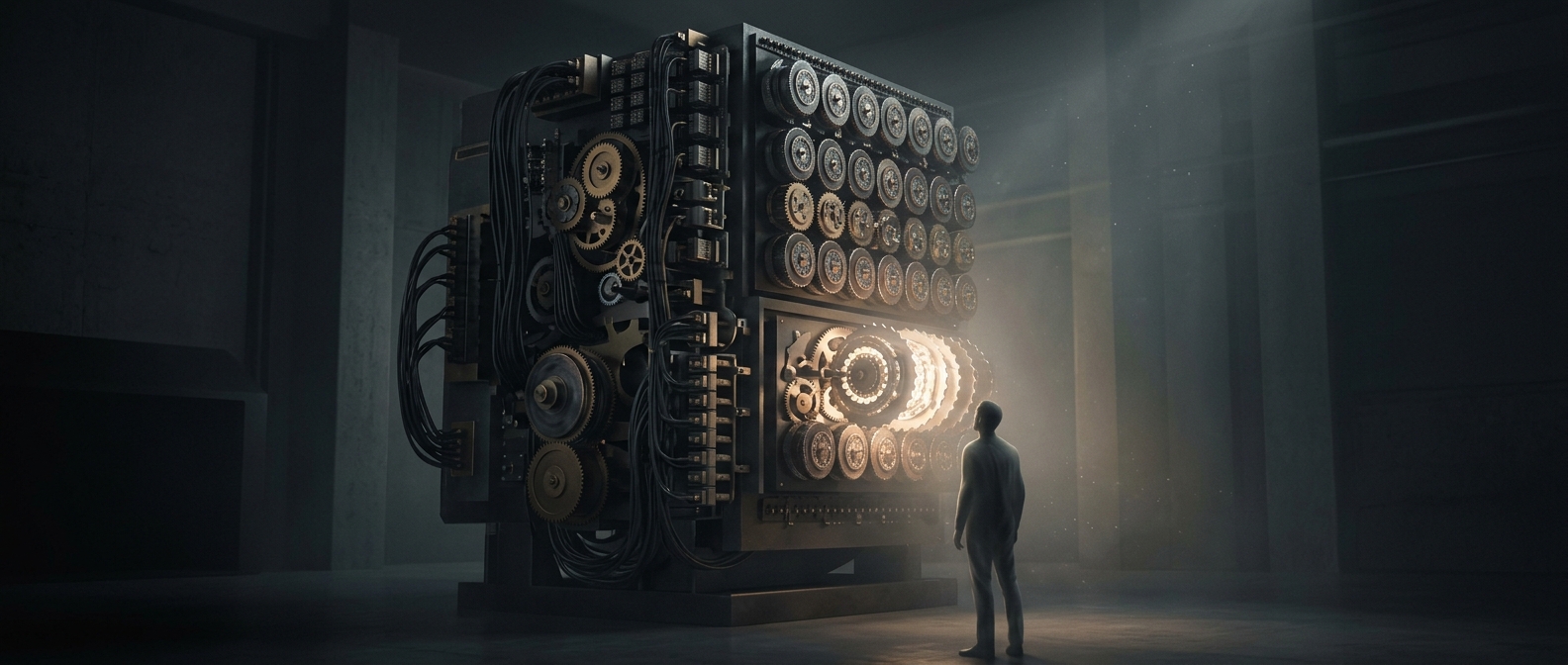
Bell Labs’ vocoder became the basis for SIGSALY, a secure telephone system built for wartime communication across the Atlantic. Its equipment filled rooms because the process required more than a telephone line: speech had to be analyzed, concealed, transmitted, and rebuilt at the receiving end.
Noise that could be undone
SIGSALY masked the speech with white noise—a signal containing a broad spread of sound frequencies. The key was that the receiver had a matching noise record. Add the same noise to the speech at both ends, and the receiver could remove it, recovering the message. Someone tapping the transmission without the matching noise would hear a meaningless jumble rather than a conversation.
This made the records part of the security system, not just a way to store sound. The transmitting and receiving machines had to use corresponding noise at the right time; otherwise, the receiver could not cleanly separate speech from masking signal. Keeping those records and machines synchronized was one of the practical demands behind a system that sounded, in principle, like a simple telephone call.
A conversation built from machinery
SIGSALY let Winston Churchill and Franklin D. Roosevelt speak securely across the Atlantic without sending their voices in ordinary, exposed form. The striking tradeoff was that a private conversation required a room-sized chain of equipment—and carefully coordinated noise records—before either leader could simply talk.