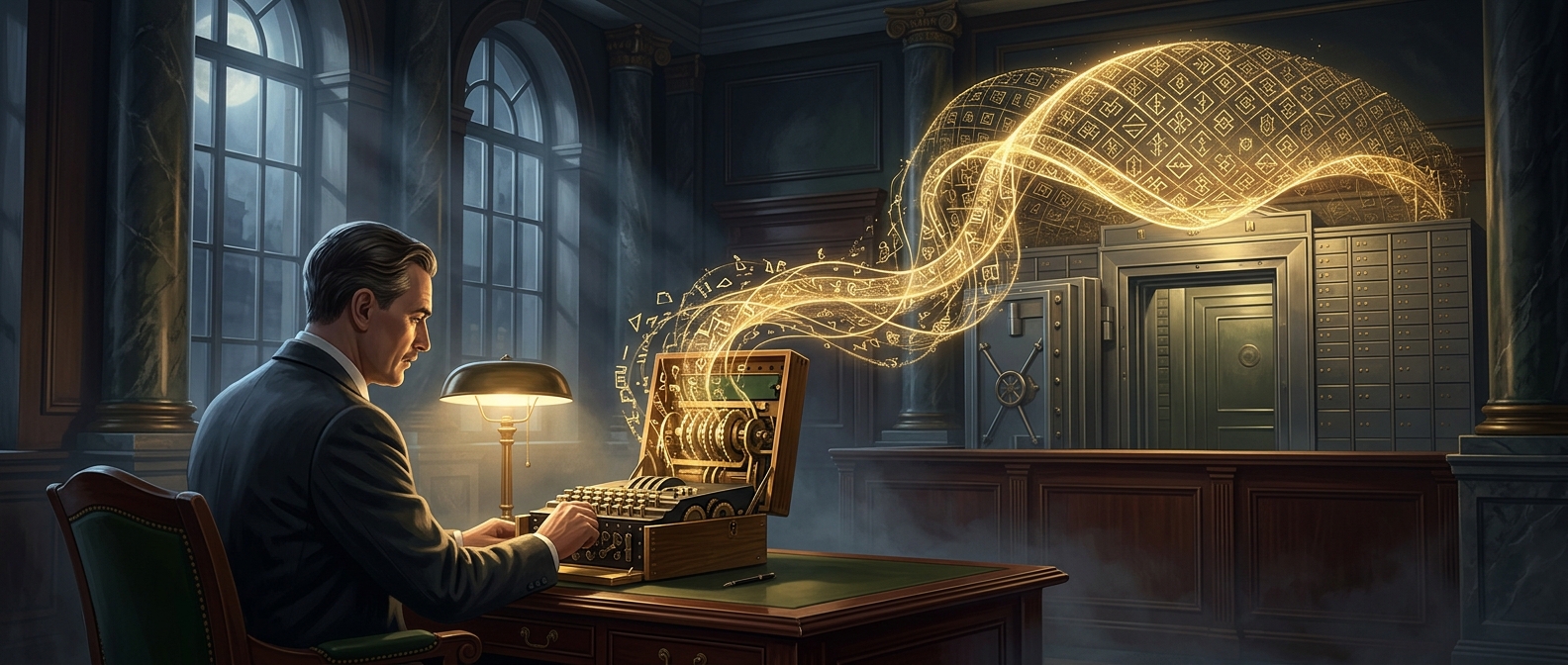
A cipher machine for ordinary business
Arthur Scherbius designed Enigma as a commercial product at a time when companies worried that competitors might intercept sensitive messages. A bank or post office could use it to turn readable text into an encrypted message without relying on a human code clerk to apply a cipher by hand.
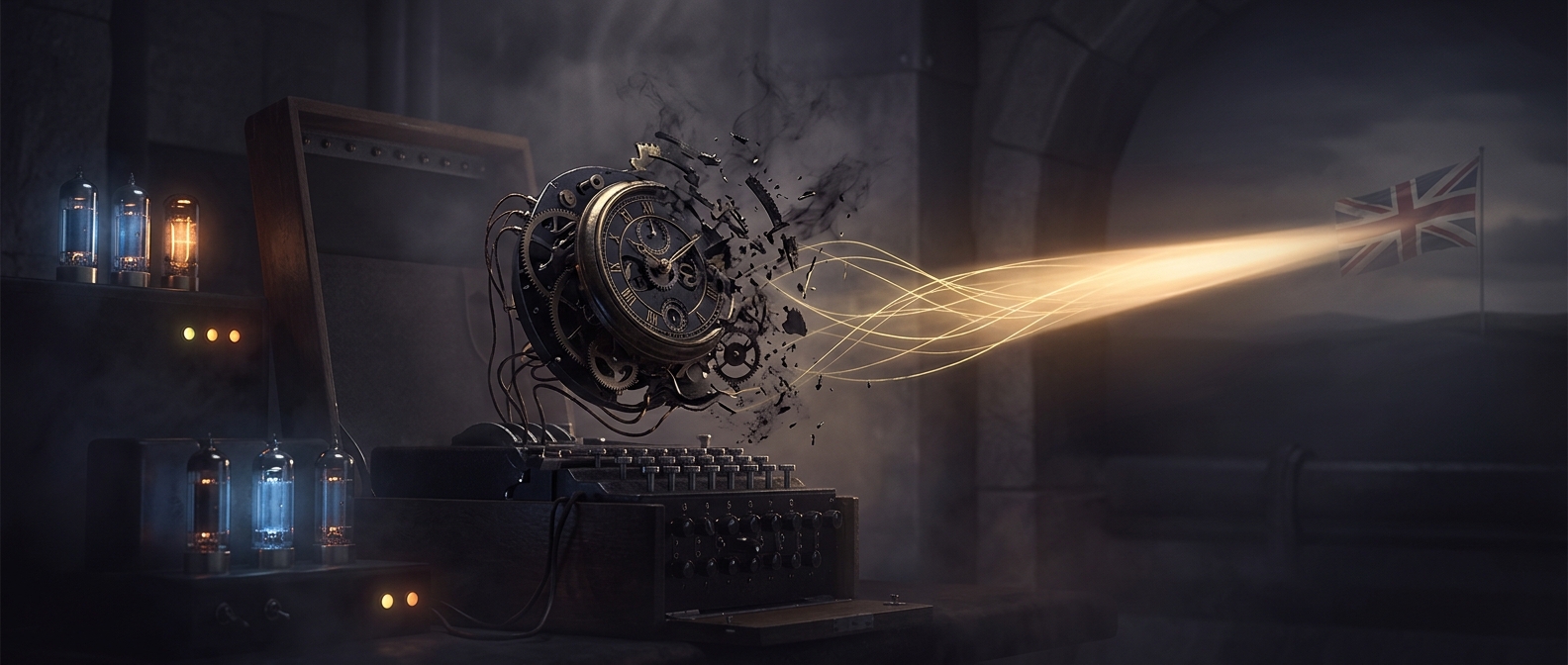
Inside, a keyboard sent each letter through rotating electrical wheels, called rotors. The rotors scrambled the letter, then advanced as the operator typed. Because their positions changed, the same letter could encrypt to different letters at different points in a message. That made Enigma harder to read by simple frequency counting than a cipher that substituted one fixed symbol for another.
Why the military found a use for it
The machine’s commercial promise depended on organizations being willing to pay for specialized equipment and to manage the procedures needed to use it securely. Its price discouraged the civilian customers Scherbius had targeted. Military communications, by contrast, carried information whose interception could have serious consequences, making encryption worth investing in.
The German armed forces adopted the basic idea and used military versions of Enigma to encrypt operational messages. That shift changed the machine’s role: instead of guarding business correspondence, it became part of a system for sending orders and reports across military networks. Security depended not just on the machine, but on operators setting it up correctly and following shared procedures. A device first marketed to protect commercial secrets thus became valuable because armies needed a practical way to protect messages in the field.