Why a USB-A plug seemed to need three tries
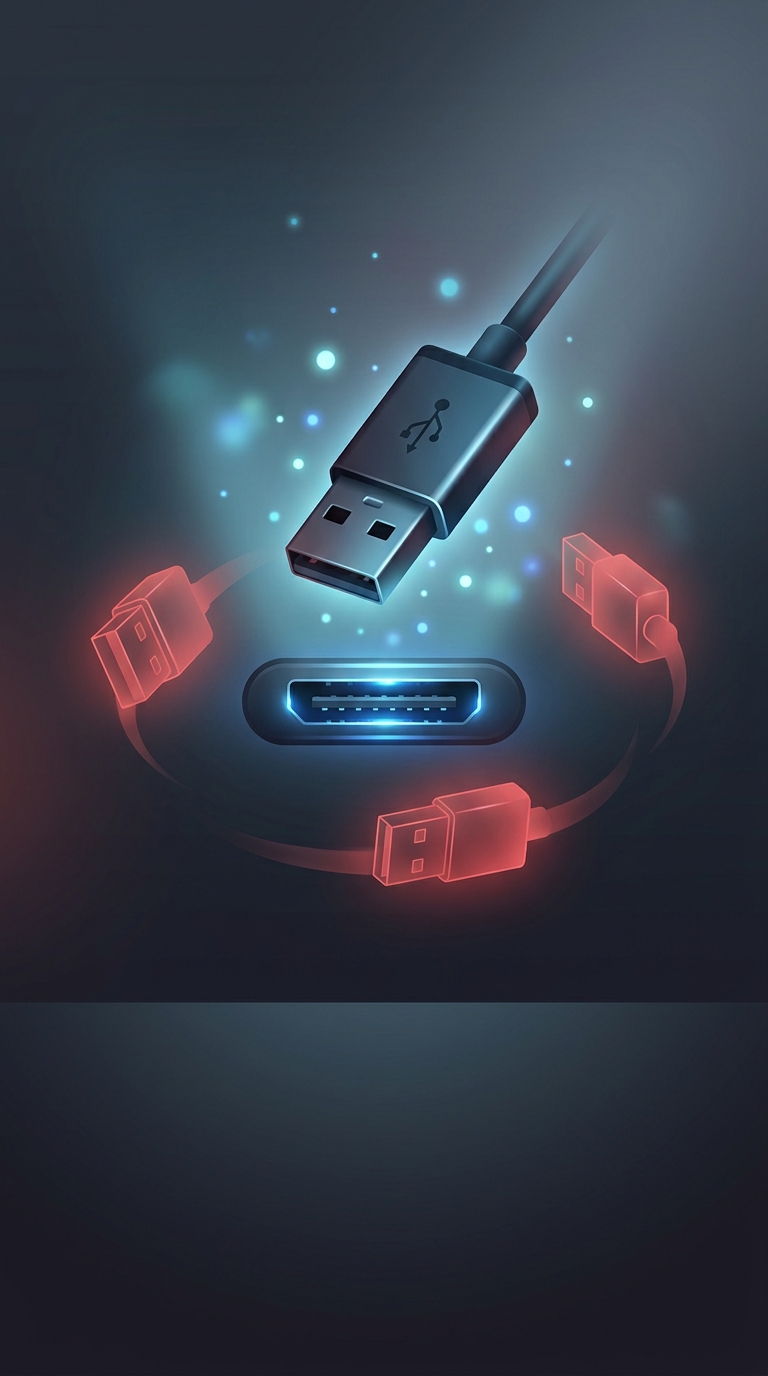
The original USB plug, now called USB-A, looks nearly symmetrical—but it isn’t. Inside its flat metal shell, the plastic tongue and electrical contacts sit on one side, so the plug has to meet a matching arrangement inside the port. Turn it over, and the pieces no longer line up.
That gives the connector only one correct orientation. In theory, a person who tries one way and then flips the plug should be done in two attempts. In practice, the port often hides the clues that would make the right orientation obvious.
A small design choice, a familiar guessing game
The metal shell is broad and rectangular, while the working contacts are tucked inside. If a port is on the back of a computer, beneath a desk, or on the side of a device, it can be hard to see which way its internal tongue faces. People often guess, meet resistance, flip the plug—and sometimes rotate it the wrong way or misjudge the angle before trying again.
USB-A’s shape helped make a sturdy, standardized connection, but it required users to orient the plug themselves. The connector offered no simple visual cue that reliably worked across devices and port locations. The “three tries” became a joke about a real mismatch: a connector that looked reversible but wasn’t, used in places where its orientation was difficult to inspect.
USB-C addressed that particular annoyance by putting contacts on both sides of the plug, allowing it to work either way up. With USB-A, the tiny pause before insertion—and the instinctive flip after the first miss—was part of everyday computer life.