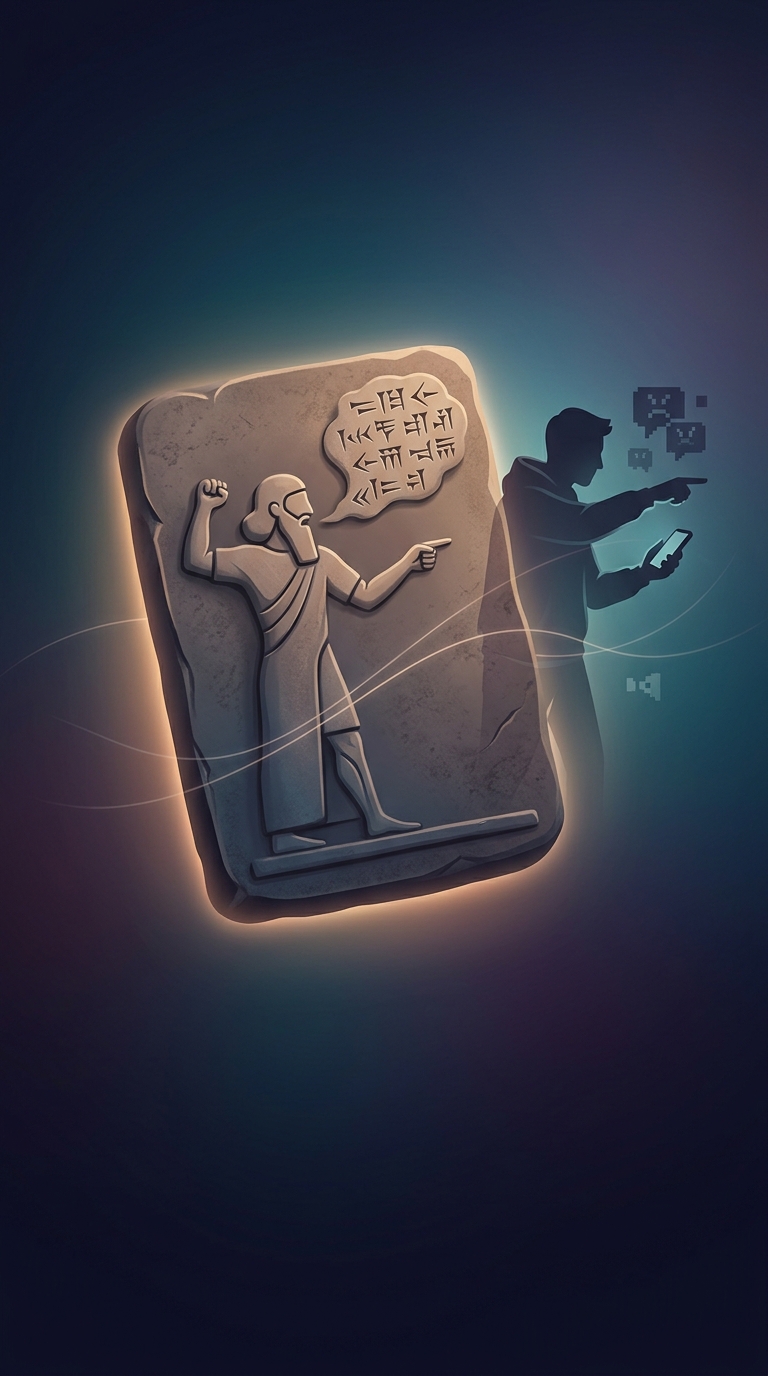
A customer complaint pressed into clay
The artifact is a clay tablet from ancient Mesopotamia, usually dated to around 1750 BCE. It records a complaint by a customer named Nanni to a copper merchant named Ea-nasir. Rather than a modern review or social-media rant, it is a message written in cuneiform—the wedge-shaped marks used to write on clay.
Nanni objects that the copper he received was poor quality and that Ea-nasir’s treatment of his representative was insulting. The tablet preserves the practical details of a failed transaction: a buyer expected usable metal and respectful service, and believed he had received neither.
What the complaint can—and cannot—show
The tablet is often jokingly called the world’s oldest customer-service complaint, and its exasperated tone feels strikingly familiar. But “Karen culture” is a modern label, not an ancient social category. One angry customer’s letter cannot prove that people in Mesopotamia shared a broader culture of entitlement.
What it does show is that complaints about bad goods and discourteous treatment are much older than modern retail. Copper mattered for tools and other everyday needs, so a dispute over its quality was more than a matter of hurt feelings: it could affect whether a purchase was worth the effort and expense. The tablet’s survival turns that ordinary commercial conflict into an unusually vivid record of a customer insisting that a seller answer for what he delivered.