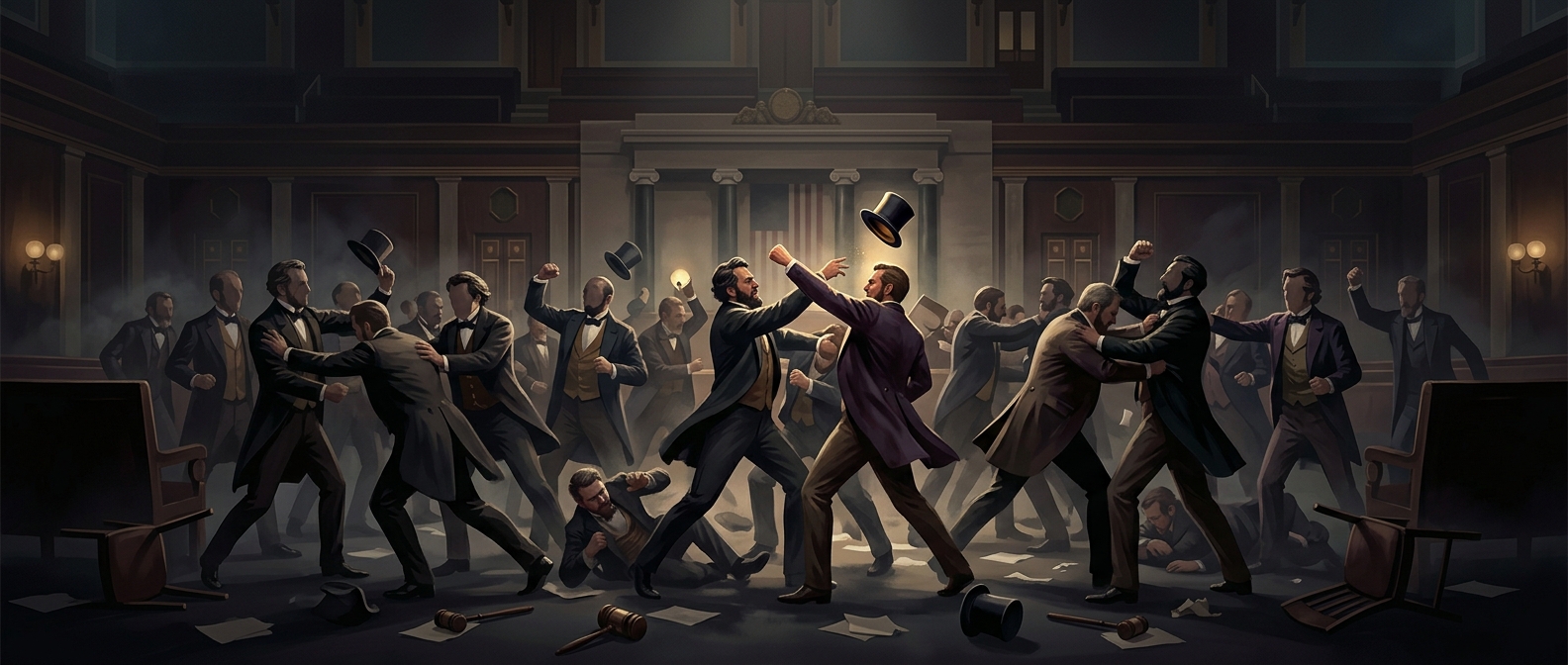
A partisan feud spilled into the House chamber
The clash between Matthew Lyon of Vermont and Roger Griswold of Connecticut was more than a personal quarrel. In the late 1790s, the young federal government was split between Federalists, who favored a stronger national government, and Democratic-Republicans, who feared that Federalist policies threatened individual liberty. Lyon was a sharp-tongued Democratic-Republican; Griswold was a Federalist. Their hostility carried into the House, where political disputes could become intensely personal.
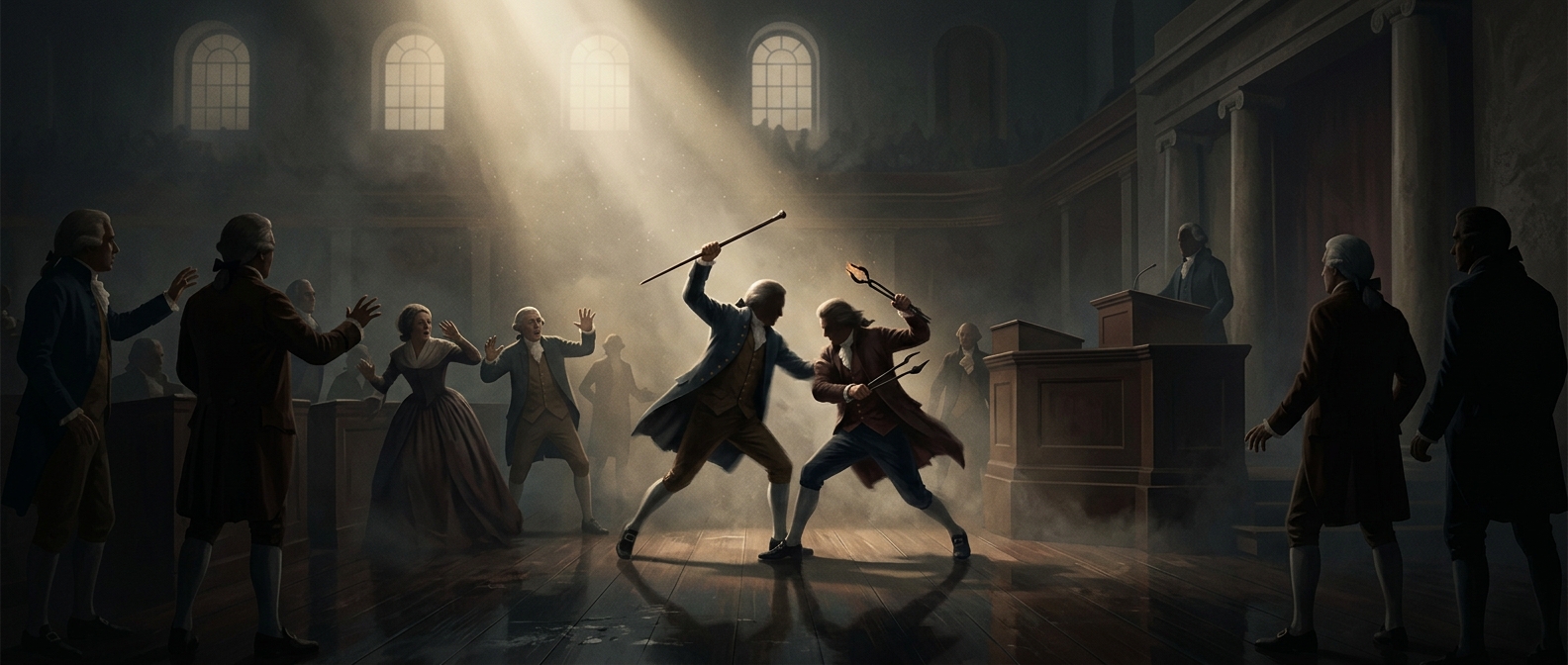
After Lyon spat at Griswold, Griswold struck him with a cane. Lyon seized fireplace tongs—an implement for handling logs and coals—and fought back. The improvised weapons made the confrontation memorable, but the deeper question was whether the House could discipline one of its own members for violence.
The House tried to punish the combatants
The episode forced lawmakers to turn a brawl into a test of congressional authority. Members considered expelling Griswold, a severe penalty that would remove him from the House. The motion received a majority but fell short of the two-thirds vote required for expulsion. Griswold kept his seat.
That outcome exposed a practical limit on the chamber’s power: even when many representatives wanted a colleague gone, a supermajority was needed to make it happen. The House could debate conduct and seek punishment, but its members were also divided by the same party loyalties that helped fuel the fight.
The incident became an early example of how political conflict in the new republic could escape speeches and votes and enter the chamber physically. It also left a more tangible image than most parliamentary disputes: a congressman defending himself with the sort of tool usually kept beside a hearth.