The pause is part of the punchline
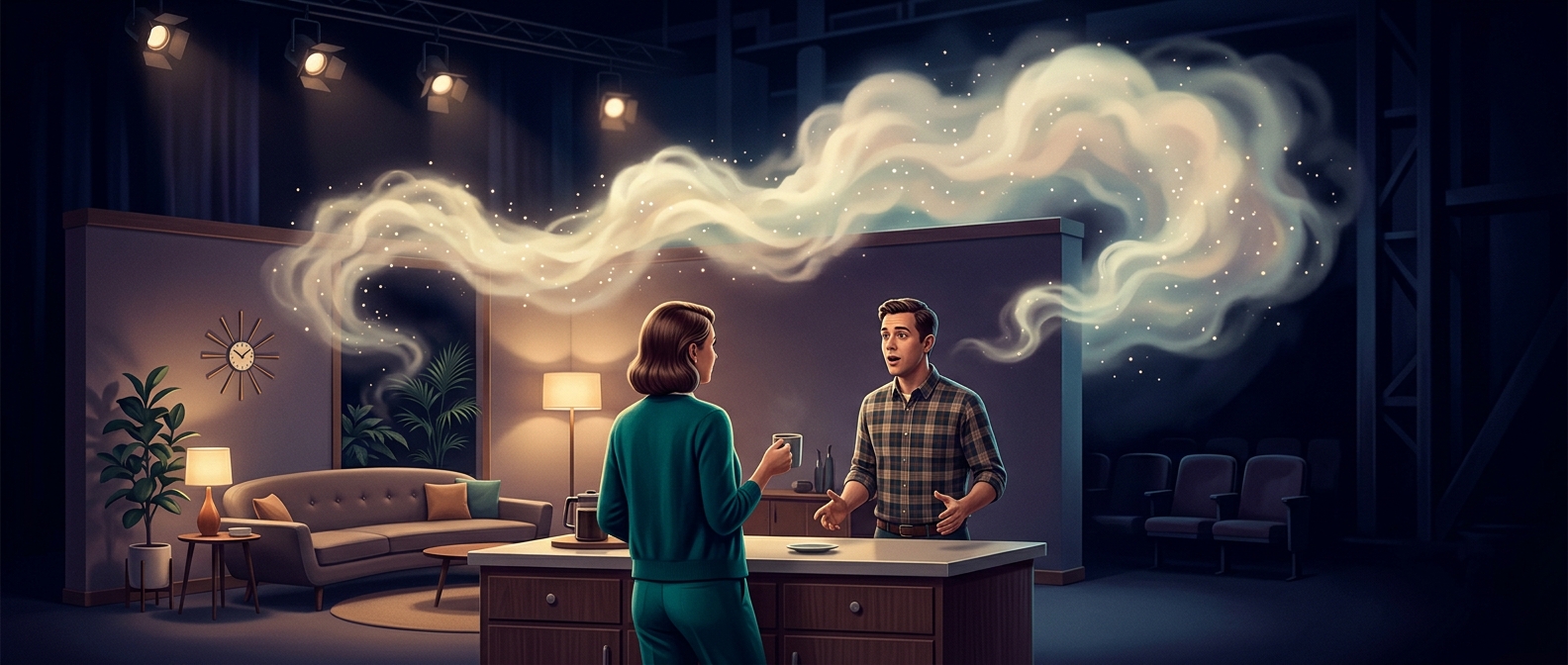
A sitcom joke does not end when the actor says the funny line. In a show built around audience laughter, the laugh that follows is part of the scene’s rhythm. Performers leave a beat—sometimes holding a look or expression—so viewers can hear the response instead of having the next line cover it.
That beat also gives the joke room to register. If dialogue starts again immediately, laughter and speech compete for attention. The audience may miss the next line, and the exchange can feel hurried even if every word is clear.
Timing around an invisible audience
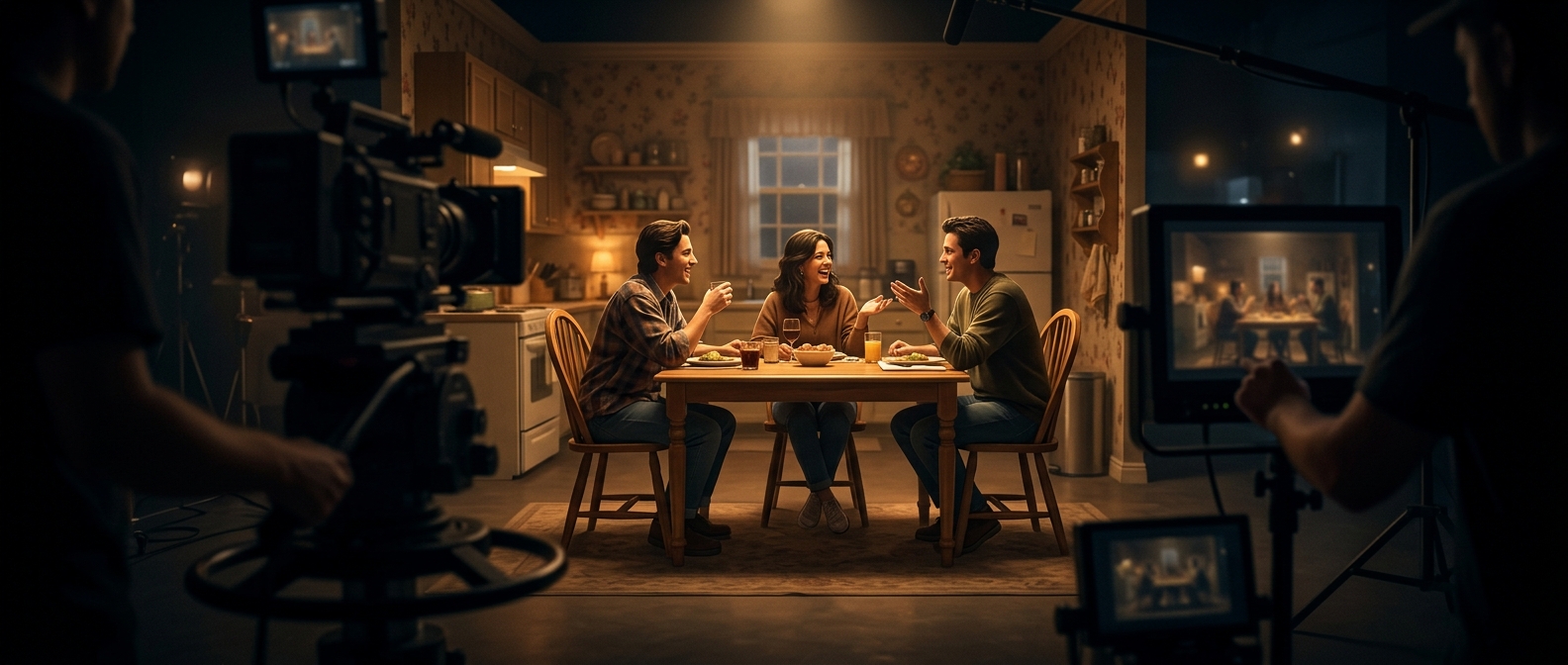
On a sitcom filmed before a live audience, actors can hear people laugh and wait for the response to ease before continuing. In shows that add or adjust laughter in postproduction, the pause still matters: editors need space to place the laugh without making it sound as if it interrupts the dialogue.
The actors’ stillness is therefore not necessarily a sign that they have forgotten what comes next. It is a performance choice shaped by the show’s sound and editing. A glance, a deadpan expression, or a brief silence can carry the scene while the laughter plays.
The tradeoff is deliberate: hold too little, and the laugh gets trampled; hold too long, and the scene can feel stalled. That tiny gap is what lets a joke land before the story moves on.