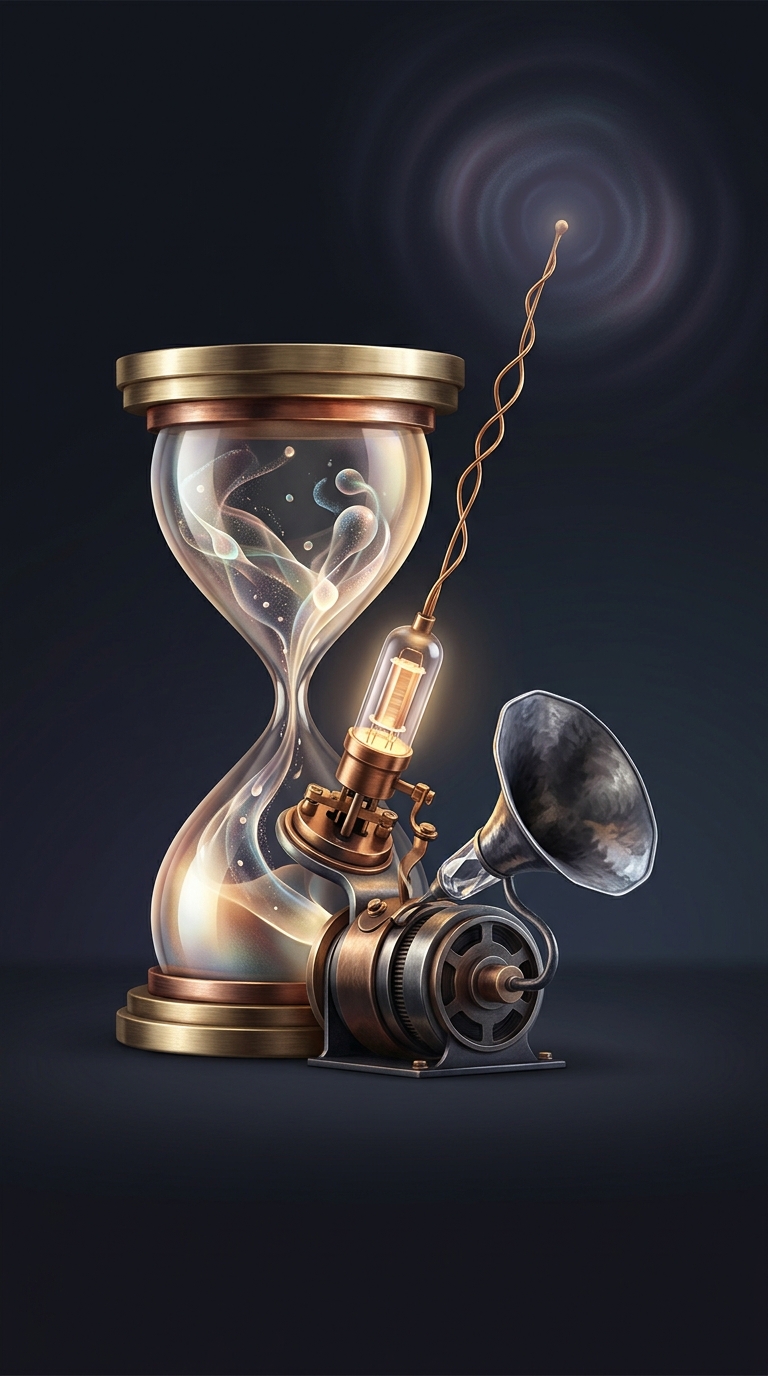
Edison’s imagined receiver for the afterlife
Edison’s spirit-phone idea borrowed its logic from electrical engineering: if something too small or subtle for ordinary senses could affect a mechanism, a sensitive device might register the effect. He speculated that the dead might persist as memory-bearing entities capable of influencing a delicate valve—a component that controls the flow of electricity or another substance. In principle, the valve would turn an otherwise imperceptible influence into a measurable change.
That was a proposed mechanism, not a working design. The surviving account gives no demonstrated way to distinguish a signal from noise, identify who sent it, or turn a valve’s movement into intelligible communication. Those unanswered steps are the difference between imagining a receiver and building one.
An engineering ambition without a machine
The idea fit Edison’s public image as an inventor who wanted to make difficult processes practical. But the spirit phone never became a documented piece of equipment: no machine or set of blueprints surfaced. Without either, there is no physical device to inspect and no recorded test showing what it could detect.
The lasting point is the unusual boundary Edison tried to cross. He treated communication with the dead as a possible engineering problem—one that might yield to a sensitive instrument—while the proposed instrument remained an idea rather than an invention.