A magazine turned the crossbow into a rapid-fire weapon
The repeating crossbow replaced the usual rhythm of loading and shooting one bolt at a time with a simple mechanical sequence. A box-like magazine sat above the bow, holding a stack of short bolts. As the operator worked a lever, a bolt dropped into the firing position while the mechanism drew back the string; moving the lever forward released the shot and readied the next bolt.
That arrangement made speed possible because loading, drawing, and firing were linked in one repeated motion. The operator did not need to pause after every shot to place a new bolt by hand. But the magazine could only feed the next bolt when the crossbow was moved through its operating cycle, so rapid fire depended on keeping that motion going.
Speed came at the cost of force
A conventional crossbow could be built to store more energy in its drawn string, producing a harder-hitting shot. The repeating design prioritized a quick, manageable action instead. Its bolts and mechanism were suited to fast volleys, not the penetrating power of a heavier crossbow shot.
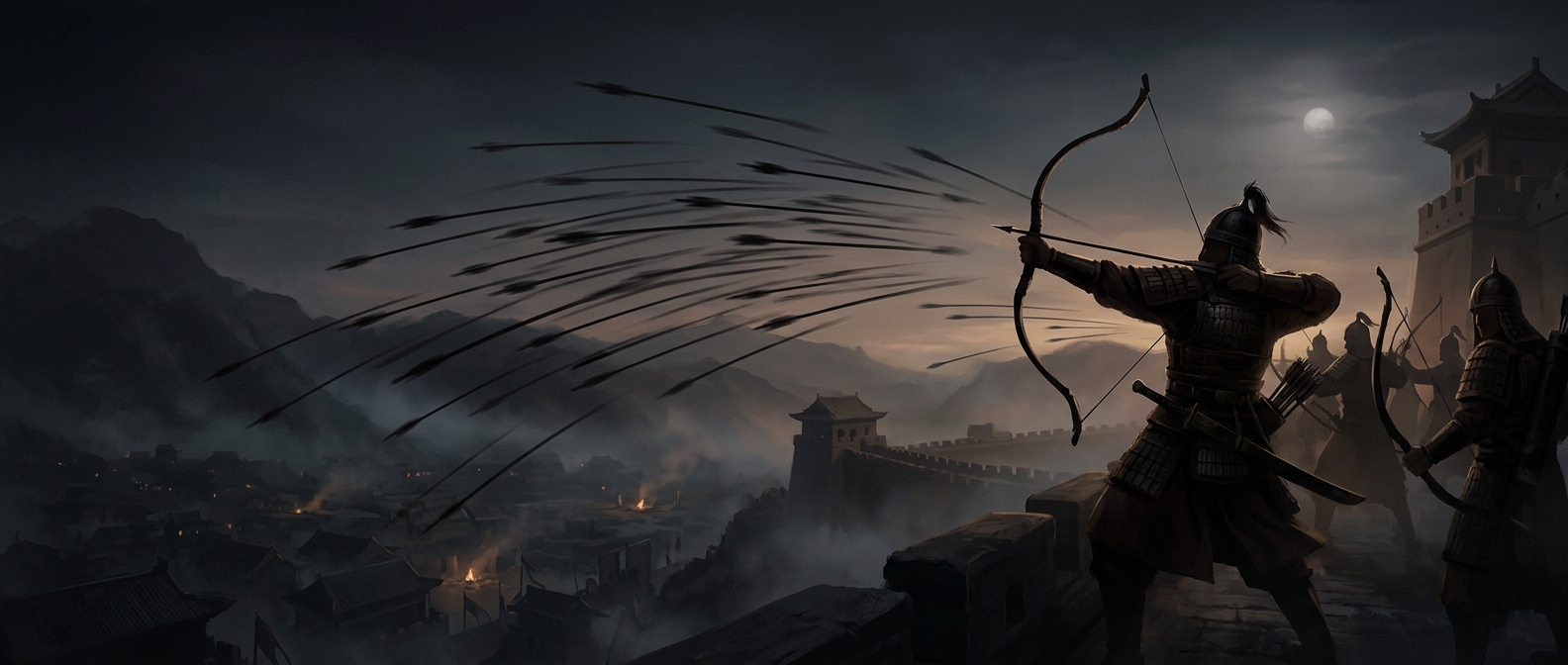
That tradeoff shaped how the weapon was useful. A stream of bolts could threaten or distract a group of opponents, even if each individual shot was less likely to punch through strong protection. The innovation was not a more powerful crossbow, but a different balance: less force in each shot in exchange for more shots before the operator had to stop and reload.