The work behind a Welsh railway’s return
A railway can look abandoned long before its hardest problems are visible. Weeds hide rails, water erodes the ground beneath them, and a locomotive that has stood idle may need extensive mechanical attention before it can run safely. Volunteers had to restore a working system, not simply put an old train back on the track.
From overgrown line to usable track
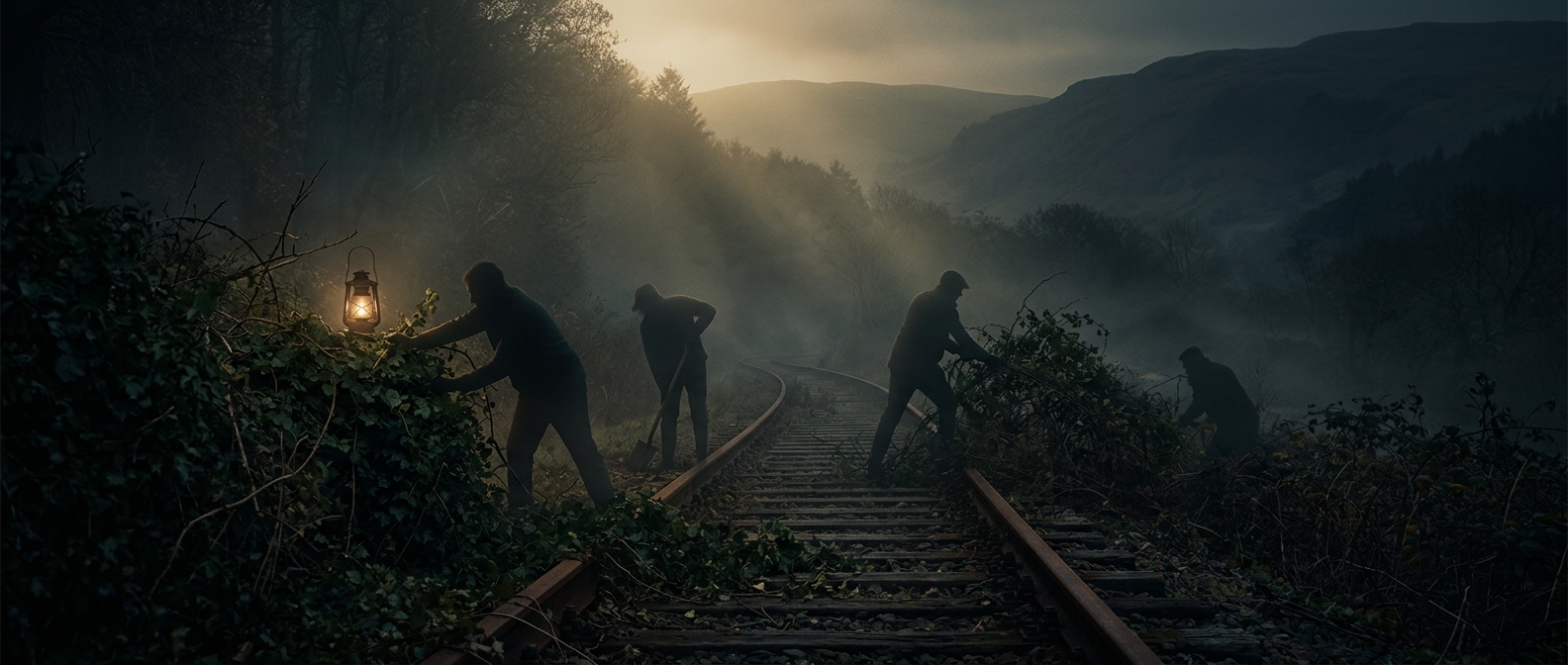
Track repairs begin with the foundations. Ballast—the layer of crushed stone under and around the rails—helps hold them in position and lets water drain away. If it has shifted or become clogged, the rails can move out of alignment. Volunteers also clear vegetation, repair damaged sections and check that the route is sound enough for trains to pass.
Stations and trains need attention, too. A usable platform matters to passengers; a serviceable locomotive and carriages matter to the timetable. Each piece of work depends on the others: a restored engine is no use if the track is unsafe, and a repaired line cannot carry passengers without trains ready to run.
A timetable is a maintenance commitment
Getting trains moving again is only the visible milestone. Regular services require people to keep inspecting and repairing the railway, often while also preparing stations and equipment for visitors. That makes a timetable more than a list of departure times: it is evidence that volunteers have brought the track, trains and day-to-day operation together—and are still doing the work to keep them together.