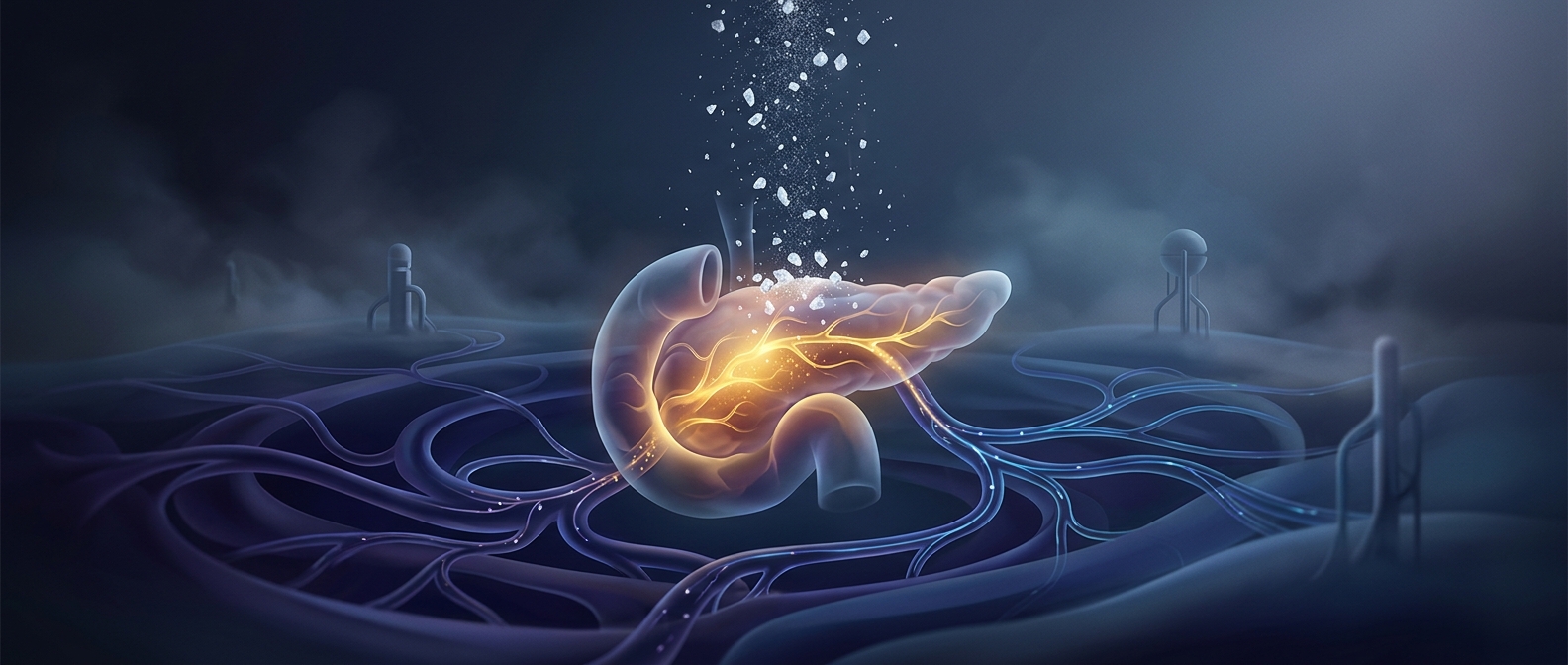
How the body can respond before sugar arrives
Insulin is released mainly when rising blood glucose signals the pancreas to help move glucose out of the bloodstream and into cells. But digestion does not begin with the first bite: the sight, smell, or taste of food can also alert the brain that nutrients may be coming. Through automatic nerve signals, the brain can prompt the pancreas to release a small amount of insulin in advance. This early response is sometimes called the cephalic-phase insulin response—“cephalic” means relating to the head.
Sweetness may act as one of those advance cues. The body is not detecting sugar in the blood at that point; it is reacting to a signal associated with food.
Why a sweetener does not always produce the same effect
An artificial sweetener can taste sweet without supplying the same glucose as sugar. A taste cue might nevertheless prompt an anticipatory response, but that does not mean every sweetener, person, or occasion produces a measurable insulin release. The response depends on the situation and on how the body interprets the cue; it is not a simple, guaranteed chain from sweet taste to a large insulin rise.
That distinction matters: a brief preparatory signal is different from the sustained insulin response that can follow sugar entering the bloodstream. Sweetness can be a warning bell, but it is not the nutrient itself.