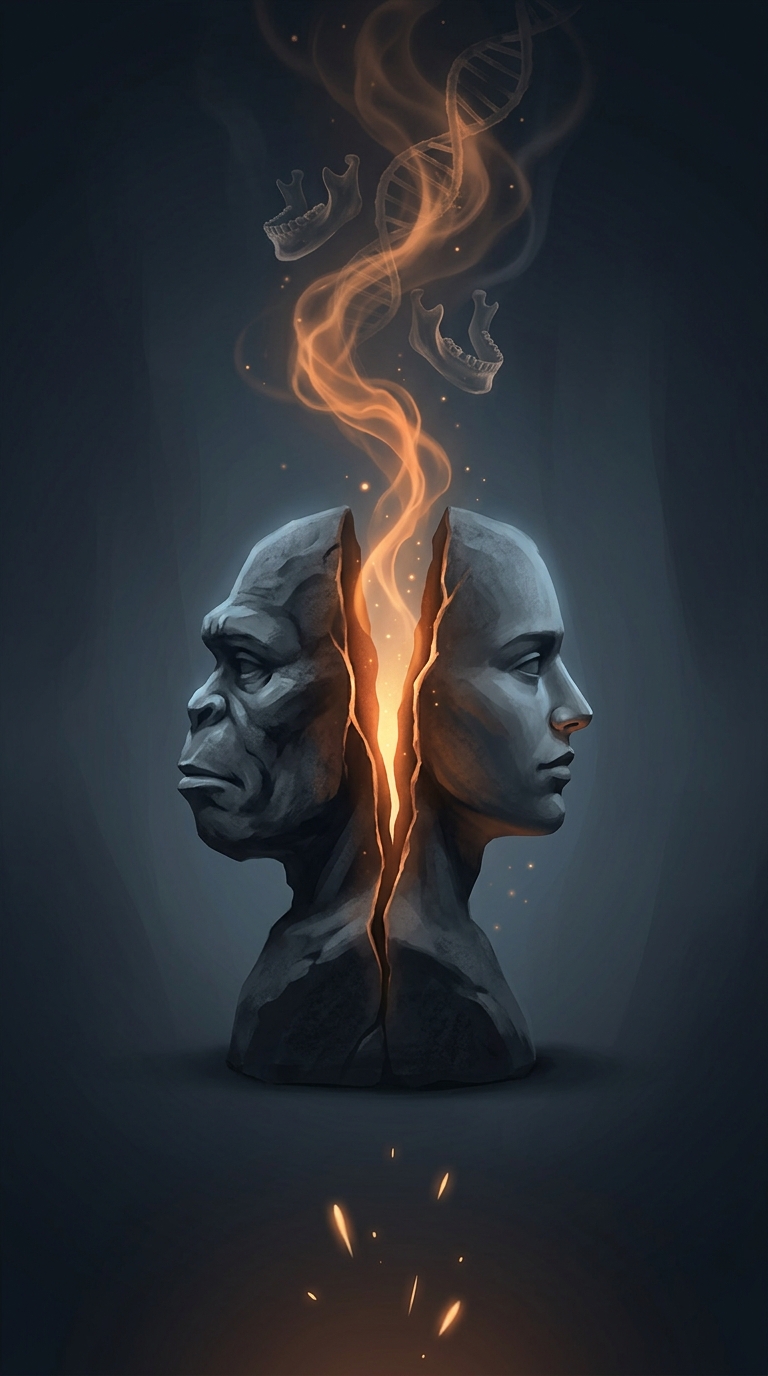
What a larger skull tells us—and what it doesn’t
A skull’s inner volume, called cranial capacity, gives a rough measure of how much space the brain occupied. Neanderthals generally had greater cranial capacity than living humans, although individual sizes overlapped. That is evidence of larger brains in physical volume, not a direct measure of intelligence.
Brain tissue is costly to maintain: it uses energy, and its size can reflect the demands placed on it. Neanderthals were, on average, more heavily built than modern humans, so some additional neural capacity may have supported larger bodies and their needs. But body size alone does not explain the difference, and a skull cannot reveal how efficiently its brain processed information.
Brain volume is not a score of mental ability
A brain is not a single-purpose organ. Its regions support different tasks, and the arrangement and connections among them matter as well as total volume. Researchers have proposed that Neanderthals’ visual systems required more neural resources, perhaps in response to the conditions in which they lived. That remains an interpretation, not a settled way to divide their brain tissue into functions.
This is why comparing cranial capacity is a little like comparing the size of two computers without knowing their wiring or what they were built to do. The measurement is real, but it cannot by itself tell us how either system performed—or what a Neanderthal could understand.
Evidence of lives, not inner experience
Archaeological evidence offers a different kind of clue. Neanderthal tools show practical skill and planning; burials and other traces of care can inform debate about social life and meaning. Such evidence helps reconstruct what people did, but it does not give direct access to their thoughts or feelings.
The striking point is not that a larger brain settles who was smarter. It is that brain size is only one piece of evidence, while the lives behind the fossil record must be inferred from behavior, biology and material remains together.