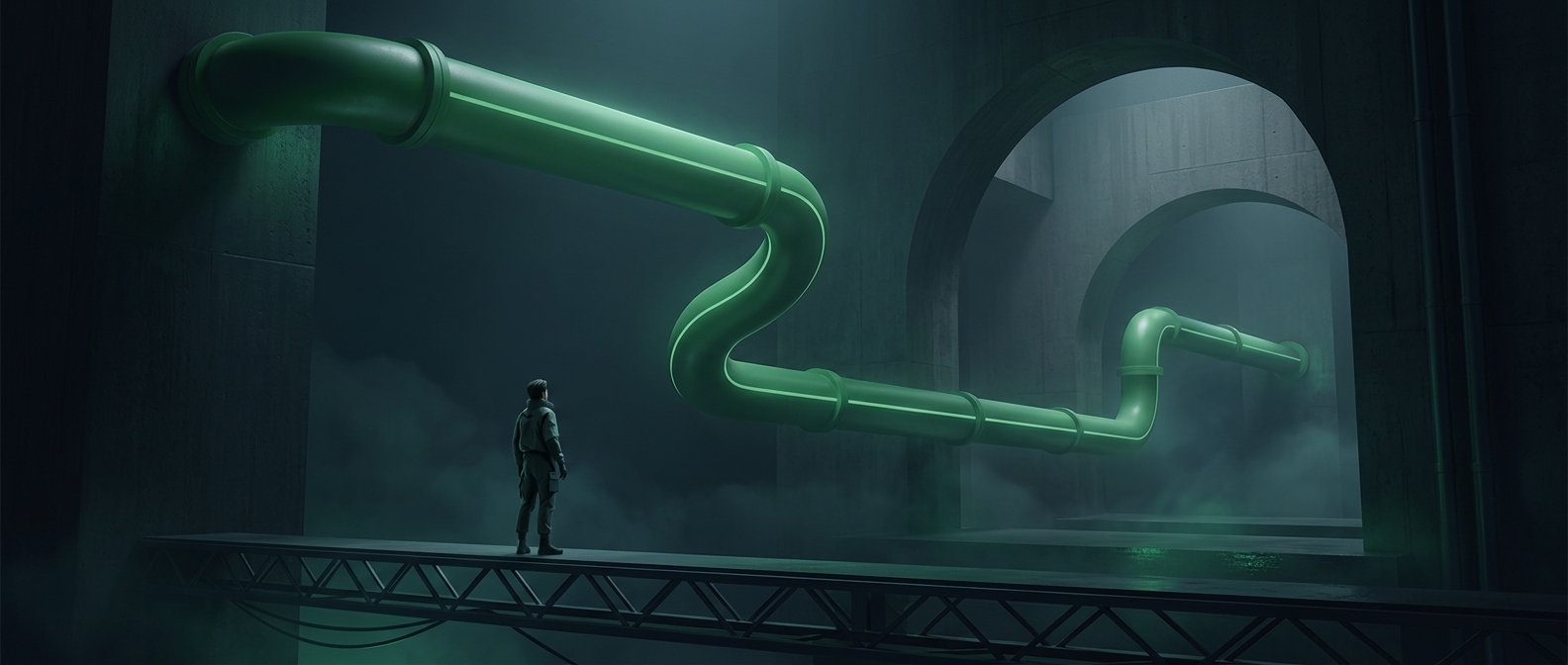
A Pipe Turns Distance Into a Level-Design Choice
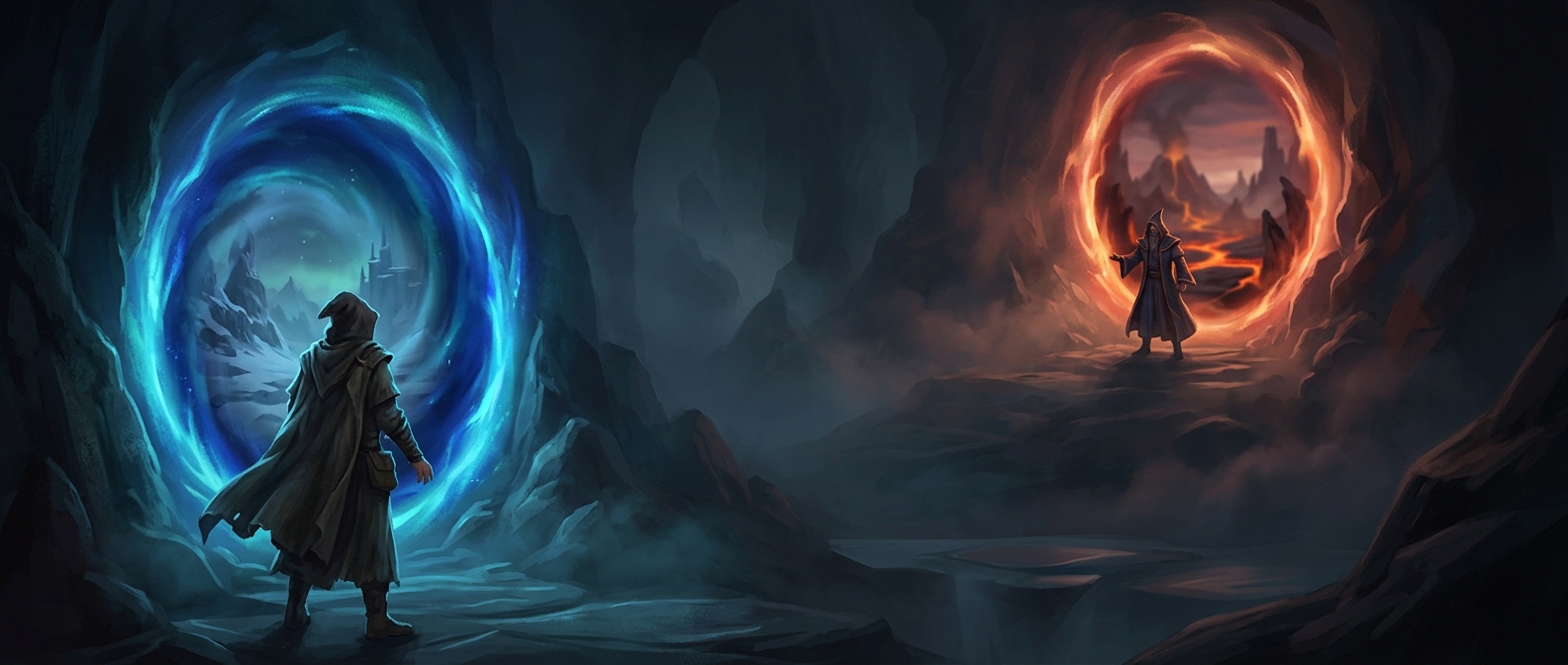
A character entering a green pipe does not need to travel through the landscape between its two ends. The game can treat the entrance as a trigger: once the player enters it, control pauses or shifts, and the character reappears at a paired exit. The pipe supplies a visible explanation for the jump, while the game handles the connection behind the scenes.
That shortcut gives designers control over which places are connected, rather than forcing every route to follow the terrain. Two areas can sit far apart on the map—or be separated by an obstacle—yet remain one step apart in play. A pipe can also send a character to a hidden room, a bonus area, or a later section without showing the journey in between.
Why Make the Shortcut Visible?
A transition still needs to make sense to the player. A marked pipe offers a clear cue: this object may lead somewhere, and entering it may change the scene. Its opening and exit also give the transition a simple physical story, so a sudden change of setting feels like part of the game world rather than an unexplained cut.
The tradeoff is that a pipe can conceal how the world fits together. Players may know how to reach an exit without knowing where it lies relative to the surface. Designers can use that uncertainty to make exploration feel surprising, while keeping navigation legible through repeated shapes and familiar entrance-and-exit behavior.
In practical terms, the pipe is both scenery and a routing tool. It lets a level connect places for pacing or discovery, even when the ground between them would be too long, dangerous, or simply uninteresting to cross.