An unlocked door is a shortcut to confrontation
In a story, a locked door creates a practical problem: someone has to knock, pick the lock, break it, or explain how they got inside. Each option takes time and can redirect attention from the scene the writer wants—the antagonist facing the hero in a familiar, supposedly safe room.
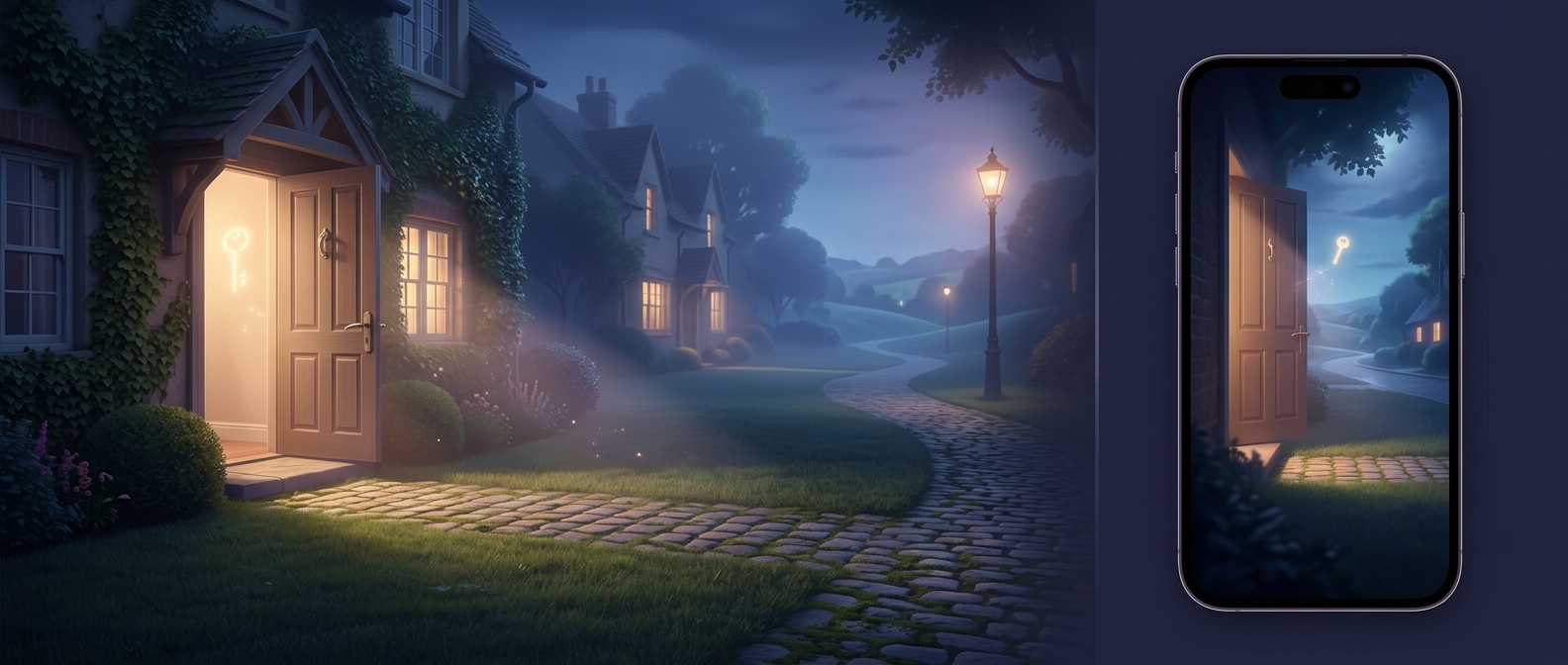
Leaving the entrance unsecured removes that delay. The threat can arrive in the middle of an ordinary moment, making the living room feel suddenly exposed. The contrast does much of the dramatic work: a place associated with privacy becomes a stage for intimidation.
Convenience can become a pattern
Repeated across a fictional town, the shortcut can make its residents seem strangely careless. But the convention often reflects what a scene needs more than how people would actually protect their homes. Writers may also skip the arrival itself because showing a character enter without interruption keeps the focus on the confrontation.
That choice has a tradeoff. A forced entry can make an intruder feel dangerous, while an open door makes the danger feel effortless—and may leave viewers wondering why no one secured the house. The missing lock is not just a gap in household security; it is a small piece of stagecraft that gets the menace into the room before the tension has time to leave.