Why a Screen Glitch Can Feel Like a Message
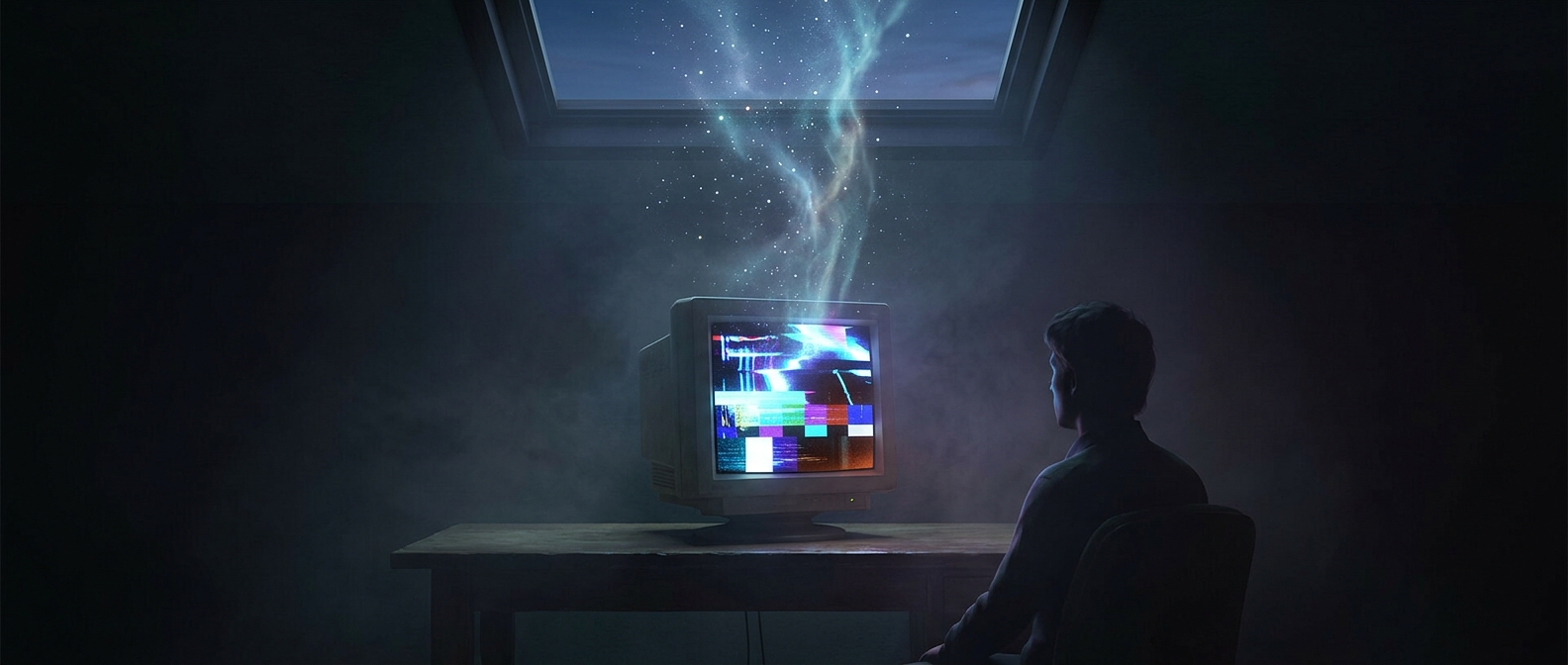
A frozen image, scrambled file, or burst of static is usually a technical failure—not a message sent by the universe. But when an anomaly appears at just the right moment, it can feel as though it has meaning. Digital apophenia is the name for interpreting such glitches as signs or communications.
The Mind Supplies the Missing Pattern
Apophenia is the tendency to perceive meaningful patterns in unrelated or random events. Human perception is built to make sense of incomplete information: a few marks can suggest a face, and an ambiguous sound can seem to contain a word. A digital glitch works similarly. A distorted image might resemble a symbol; a fragment of audio might sound like a name.
The technology’s unpredictability can make the impression especially compelling. A screen may fail at a moment of worry or decision, and the timing becomes part of the pattern. The glitch itself does not explain what it means; the viewer’s circumstances and expectations do that work.
A Personal Interpretation, Not a Verified Transmission
Calling an event a message describes the person’s interpretation, not evidence that a computer has received communication from the cosmos. The visible failure can have ordinary technical causes, while its perceived significance comes from the way people connect it to what is happening in their lives.
That distinction leaves room to take the experience seriously without treating the supernatural explanation as proven. A glitch can be personally striking precisely because it is ambiguous: the device supplies the interruption, and the mind turns it into a story.