Why the MPMan F10 could skip the moving parts
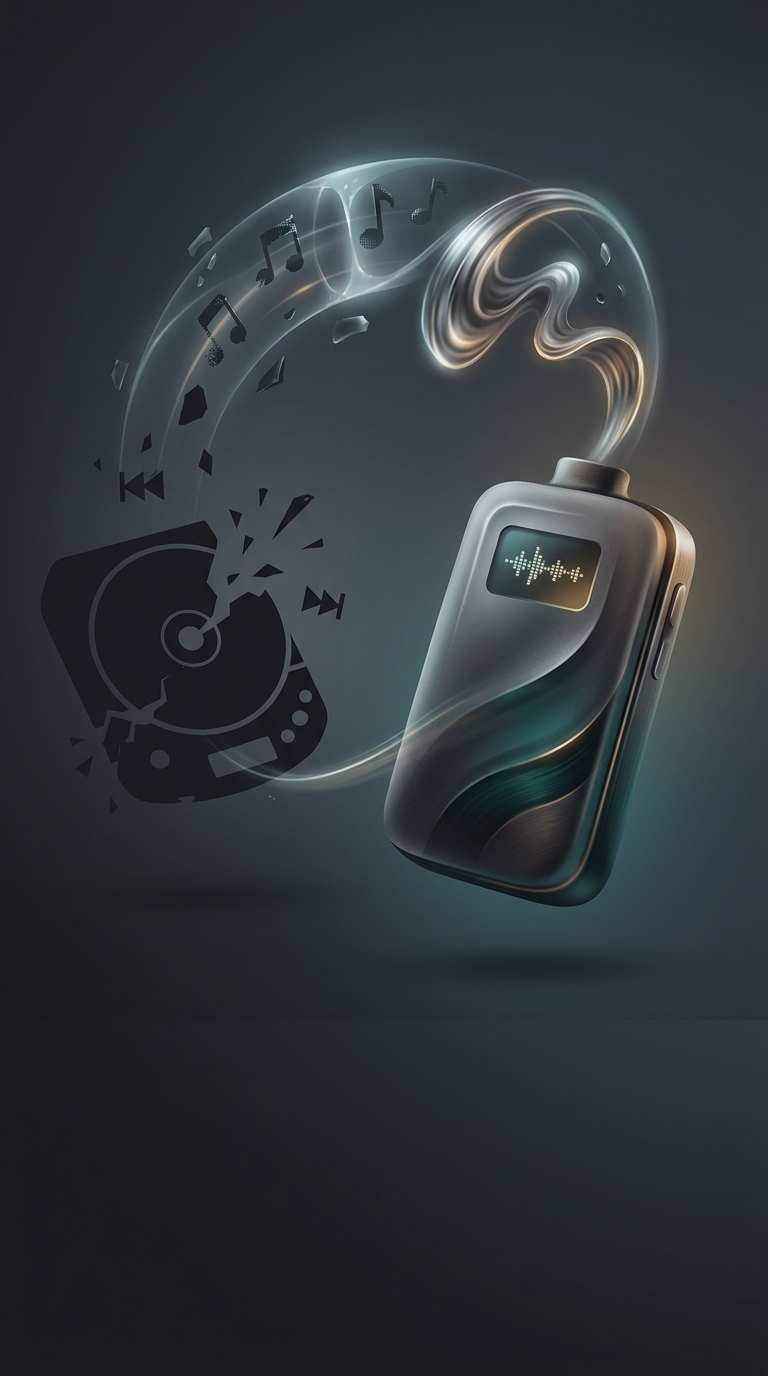
Before portable solid-state players, carrying music usually meant carrying a device that read a physical medium: a cassette tape or a compact disc. The MPMan F10 stored songs as digital files in flash memory, electronic storage that keeps its contents without power. With no spinning disc or moving tape mechanism to jostle, it could play music without the skips and mechanical wear those formats could suffer.
That design came with a sharp tradeoff: capacity. The F10’s 32 megabytes held only about six average-length songs. Flash memory was costly and limited, so fitting an entire music collection into a pocket-sized player was not yet practical. Users had to choose a small set of tracks rather than take a library with them.
The computer was part of the player
To change that set, owners connected the device to a computer and transferred digital music into its memory. This made the MPMan more than a smaller version of a CD player: it depended on a new routine of selecting, storing, and moving audio files. The player’s usefulness therefore rested not just on its hardware, but on the computer and software used to prepare its music.
That workflow hinted at the larger promise of digital audio: music could be copied and rearranged without handling a separate disc or tape for each album. But the tiny memory made the promise easy to see and the limitation impossible to ignore. The F10 brought solid-state portable music to the mass market in 1998; its six-song capacity showed how much storage technology still had to improve before a pocket player could replace a music collection.