How the crabs time a mass migration
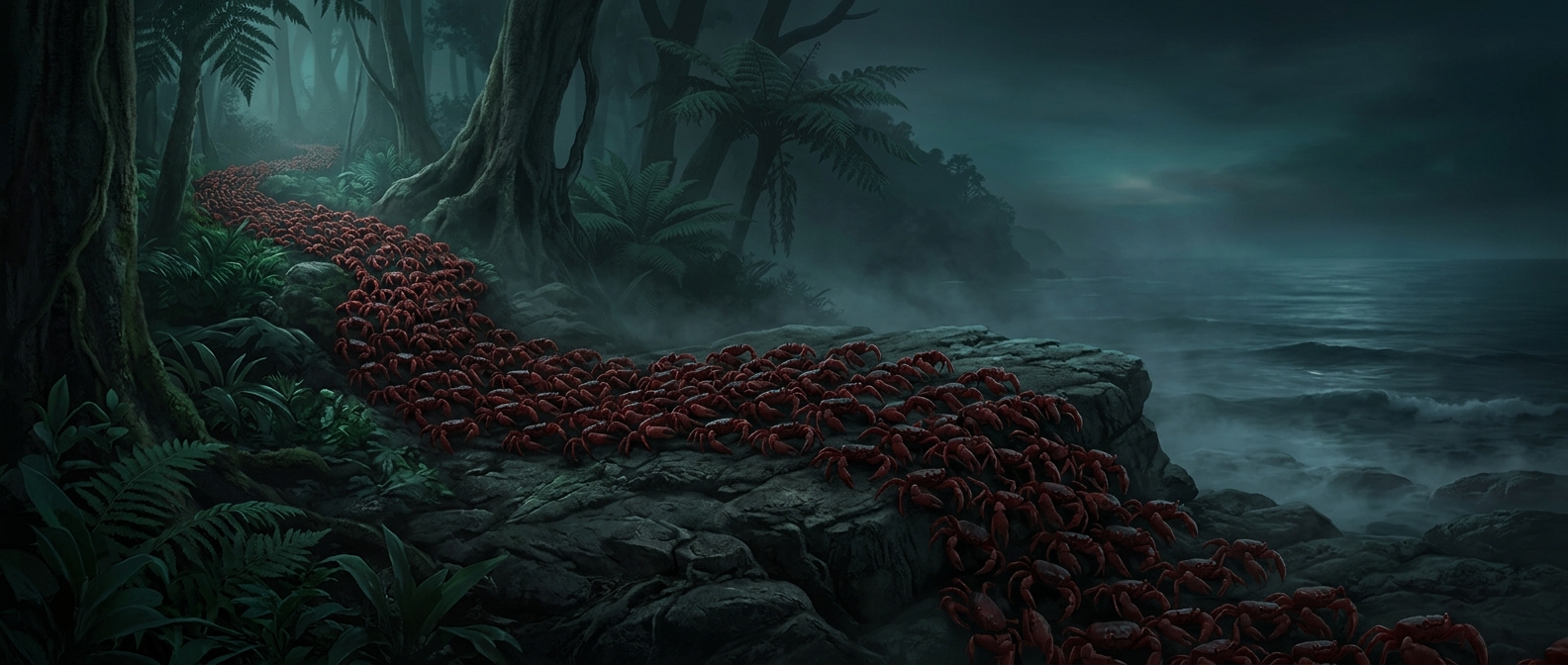
Christmas Island’s red crabs live mainly in the island’s forests, but reproduction draws them toward the shore. The migration is tied to the wet season and the lunar calendar: crabs generally begin moving as seasonal rains make the journey safer, and spawning is timed so eggs reach the sea around a particular phase of the moon and tide.
That timing matters because the adults must cross a dry, exposed landscape, while their offspring begin life in the ocean. Moisture helps prevent the crabs from drying out, and the tide carries newly released eggs away from shore.
One journey, two generations
After reaching the coast, females release their eggs into the water. The eggs hatch into tiny, free-swimming larvae that develop at sea. They do not simply follow their parents back: after several weeks, young crabs return to land as small, shrimp-like animals called megalopae. They gather near the shore, then transform into miniature crabs and move inland toward the forest.
The adults’ outward march and the juveniles’ inland scramble are therefore parts of one life cycle, separated by a marine stage. The returning young face a different challenge from the breeding adults: they must leave the ocean and cross the shore before settling in forest habitat.
Why roads become part of the route
Because the migration happens in such large numbers, crabs can cross roads, enter settlements, and occupy spaces people use. Barriers and temporary road closures can help steer or protect them, but the underlying pattern is set by the crabs’ need to reach breeding sites and by the timing of rain, tides, and lunar cycles. What looks like a single red tide moving across the island is really a coordinated exchange between forest and sea—and between generations.