How a table seemed to answer
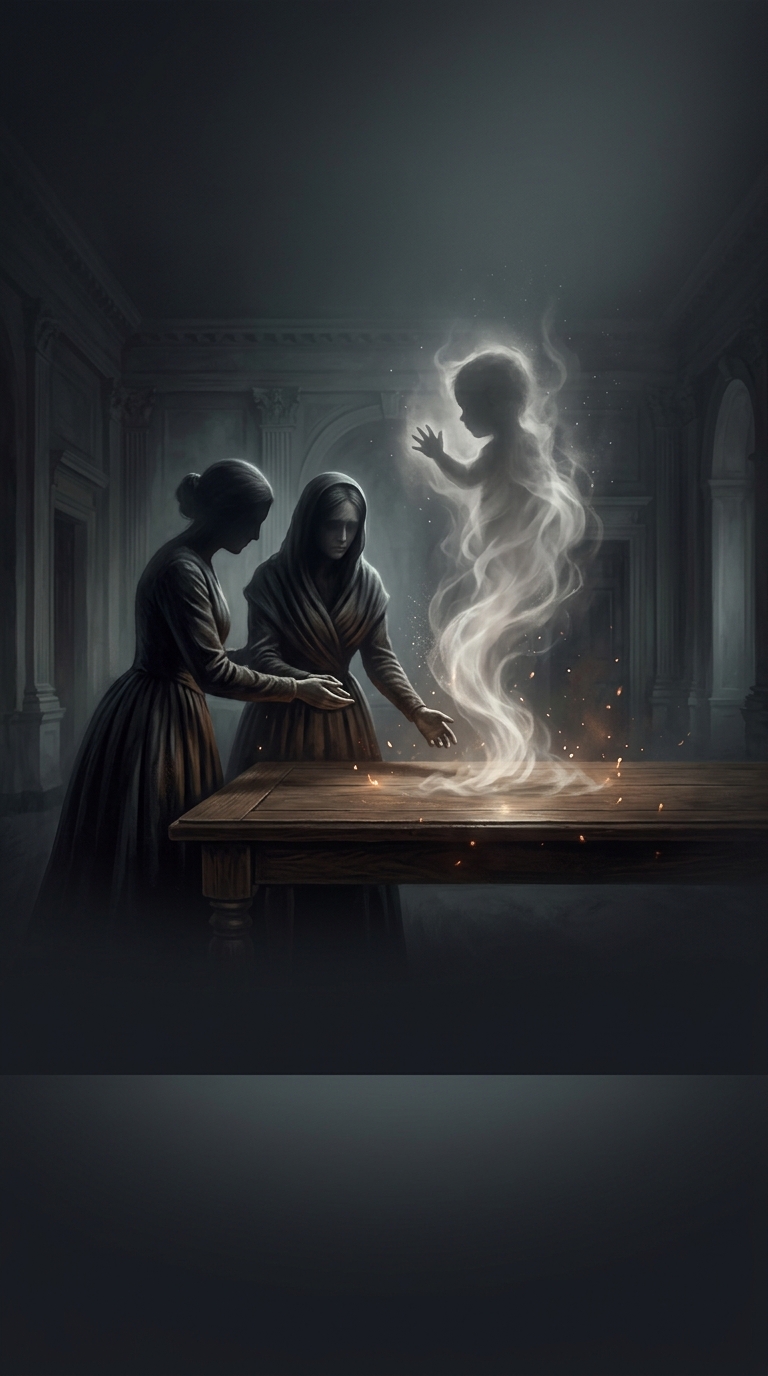
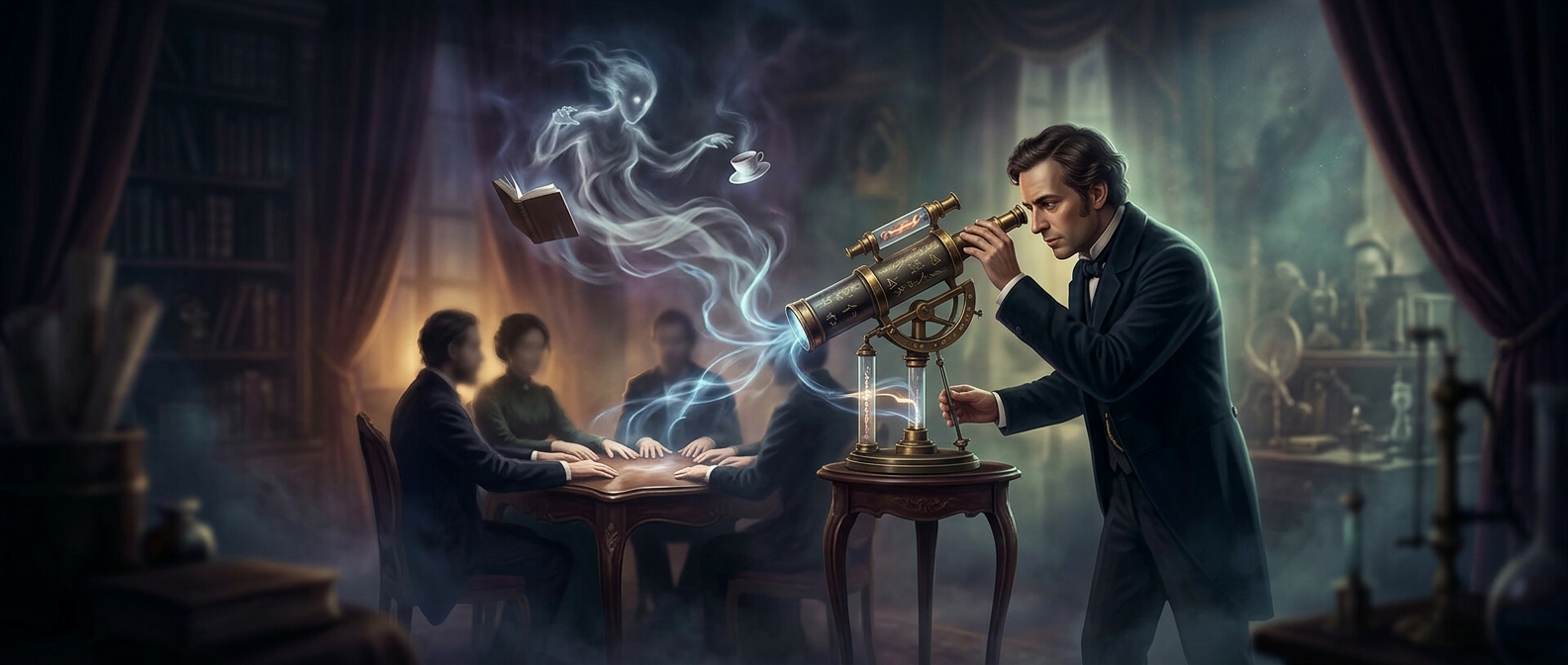
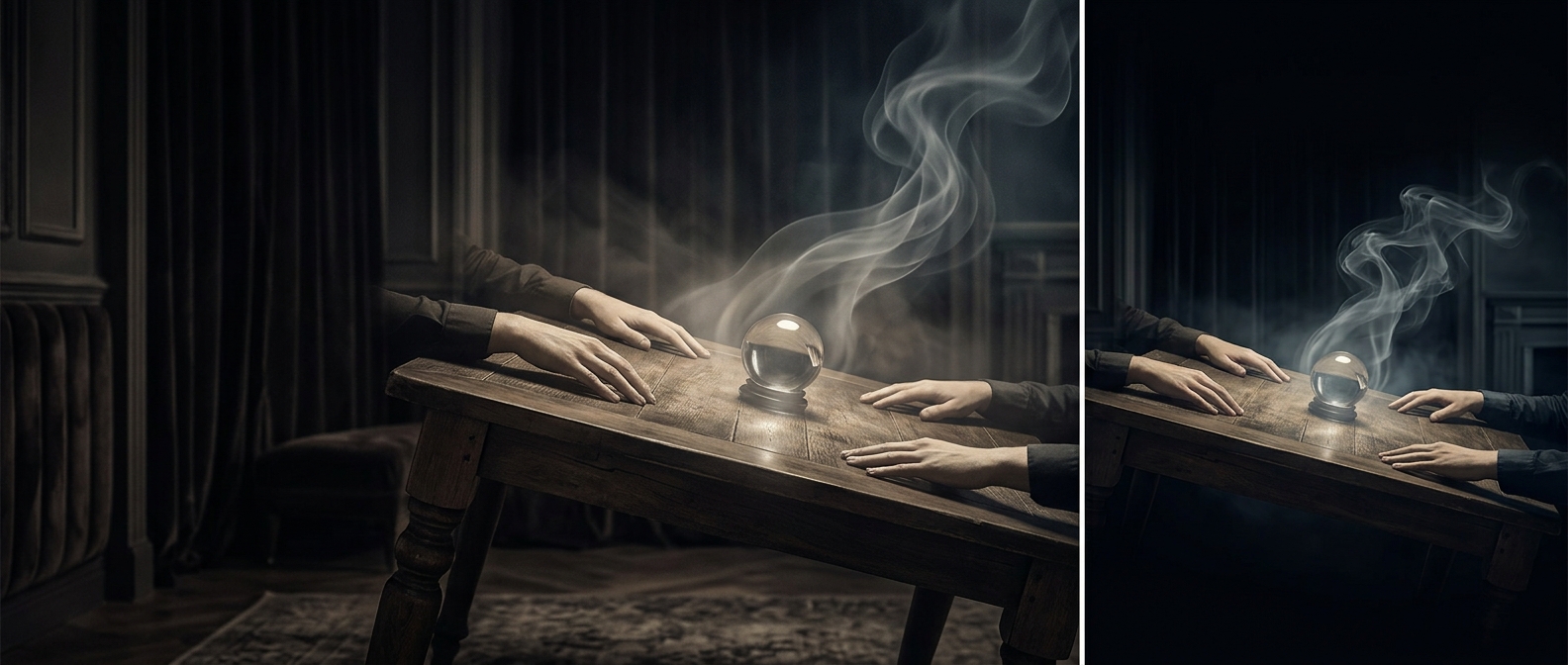
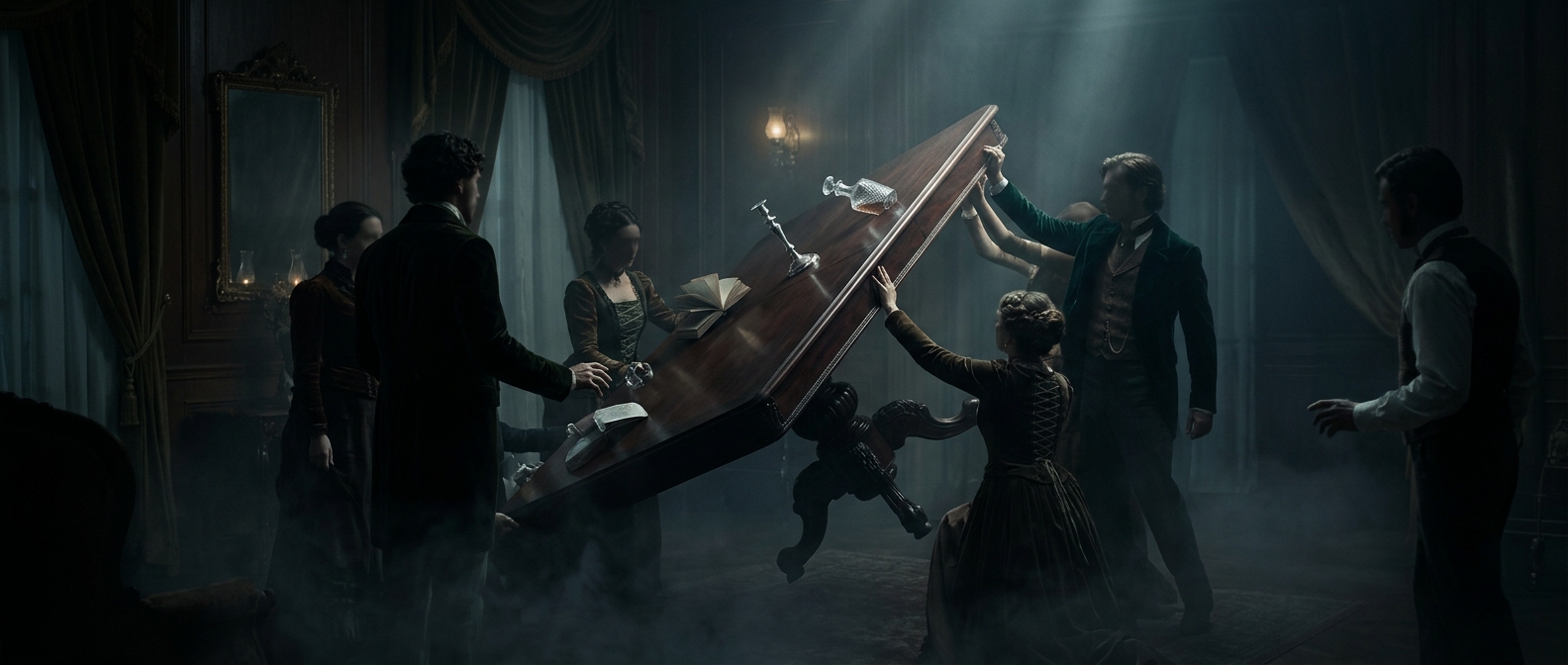
At a Victorian séance, participants might rest their fingertips on a table and wait for it to move. A slight shift could become a rocking motion, then a turn or a series of knocks interpreted as a reply from the dead. The movement did not require anyone to decide to push. Small, unconscious muscle actions could supply the force—and the table’s movement could make those actions feel as though they came from somewhere else.
The body supplies the motion
This is called the ideomotor effect: an idea or expectation can prompt tiny movements without a person noticing that they are moving. A sitter anticipating a spirit’s answer might lean or press almost imperceptibly. If several people’s hands were on the table, their movements could combine. Once the tabletop began to rock, its motion offered feedback: sitters adjusted their hands, and those adjustments could help keep it moving.
Because no single push felt deliberate, the resulting motion could seem independent of the group. Knocks and turns gave participants something to interpret, while shared attention made each movement feel significant. The séance could therefore be compelling without requiring anyone to consciously fake it.
A parlor performance with a real sensation
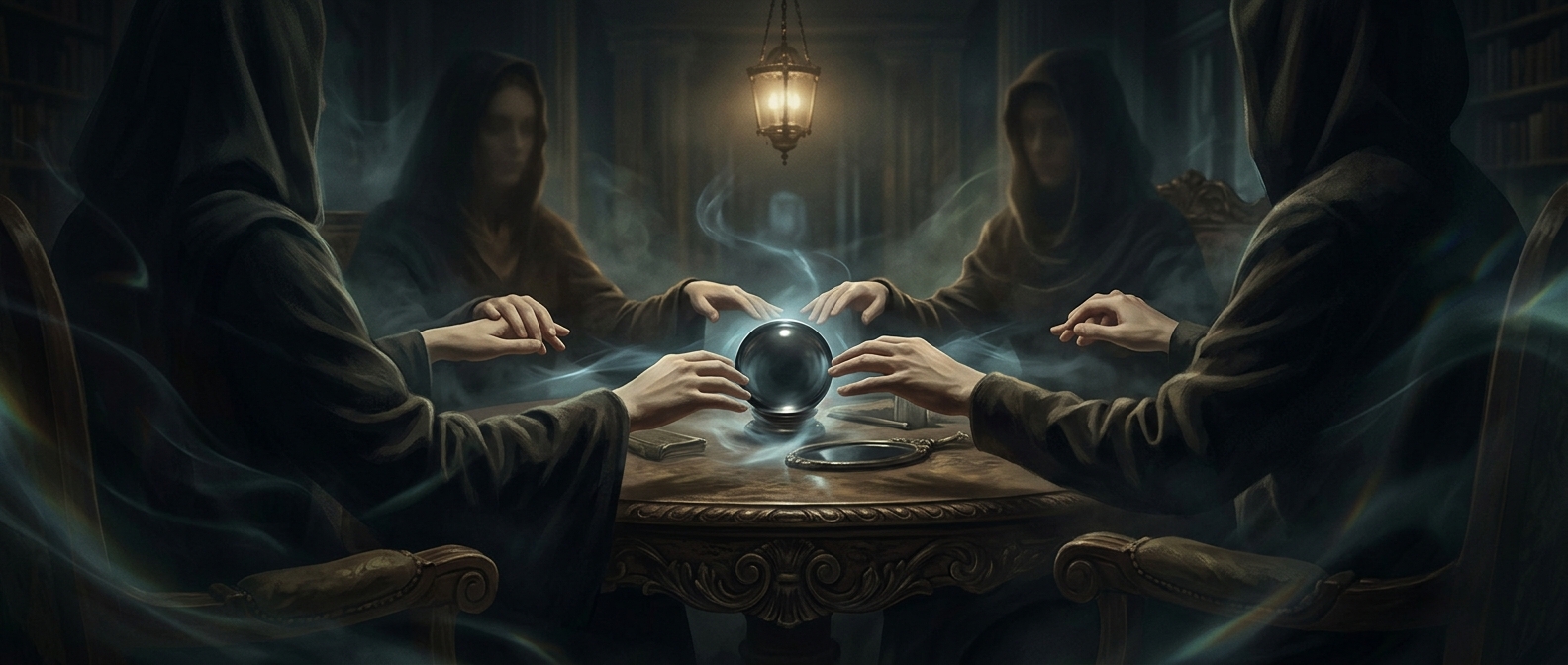
Table-turning belonged to a culture in which séances mixed social amusement with the hope of contact beyond death. For well-to-do guests, gathering around a heavy table turned an ordinary parlor into a stage: the suspense came from waiting together, watching for movement, and deciding what it meant. The participants could sincerely experience the table as responsive even as their own bodies helped make it move.
That is the unsettling trick of table-tipping: the sensation of an outside force can arise from movements no one in the circle feels themselves making.