A thermal bath with a second life after dark
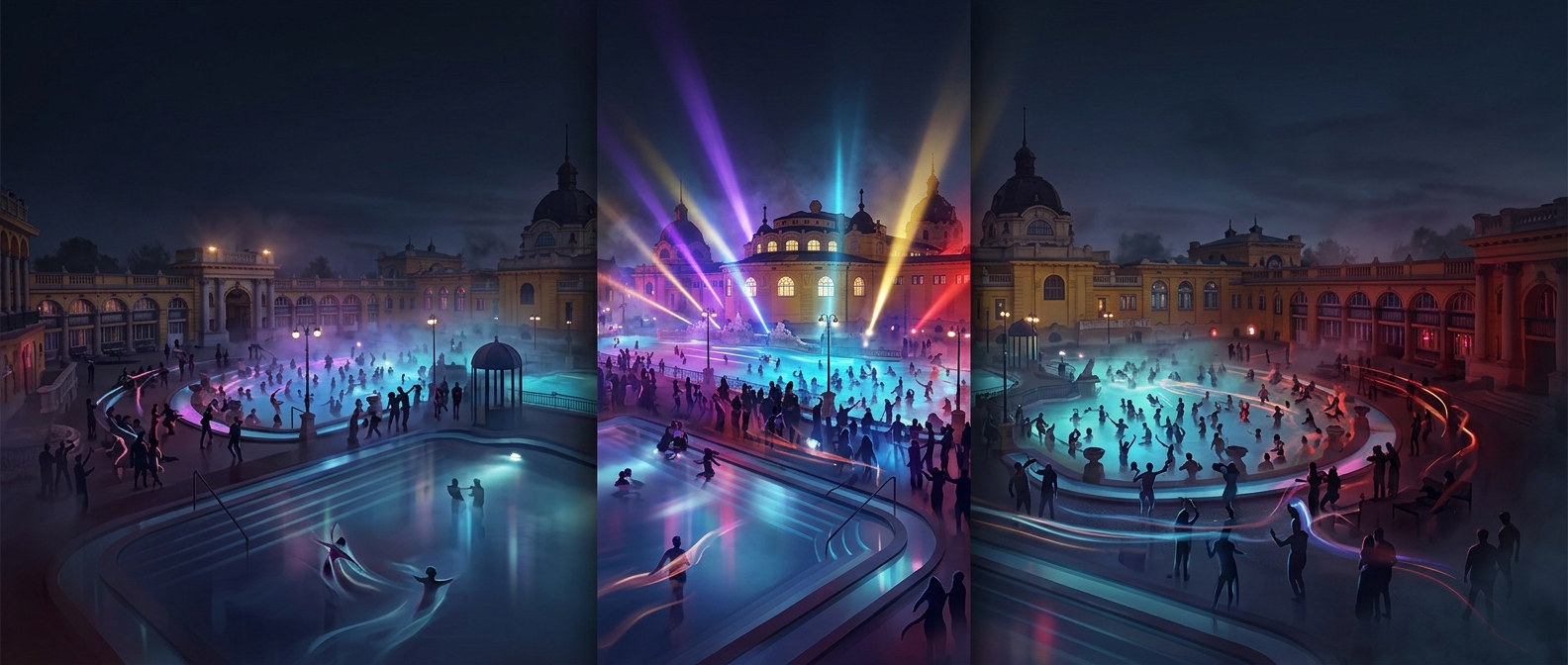
Széchenyi was built as a place to bathe, not as a nightclub. Its pools draw on Budapest’s thermal-water tradition: naturally heated water has long made bathing part of the city’s public life. A “sparty” borrows that familiar setting but changes its purpose, turning the bath complex into a venue for music and nightlife.
That shift works because the setting already supplies what a club usually has to create: a dramatic backdrop and a strong sense of atmosphere. The warm water, open-air pools, and ornate 1913 building make the event feel unlike a night in an ordinary indoor dance hall. Colored lights and sound recast the architecture without erasing its original identity.
The unusual venue is the point
A poolside party also comes with a practical tradeoff: this is still a working bath, so guests move between water and dry areas rather than treating the whole complex like a conventional club floor. The result blends two different kinds of leisure—communal bathing and late-night dancing—while keeping the building’s older purpose visible.
That contrast is what makes the event memorable: a place designed for slow soaking becomes a setting for loud, energetic nightlife, and the historic bath remains part of the experience rather than mere decoration.