The tax stop that helped make the crossing a party
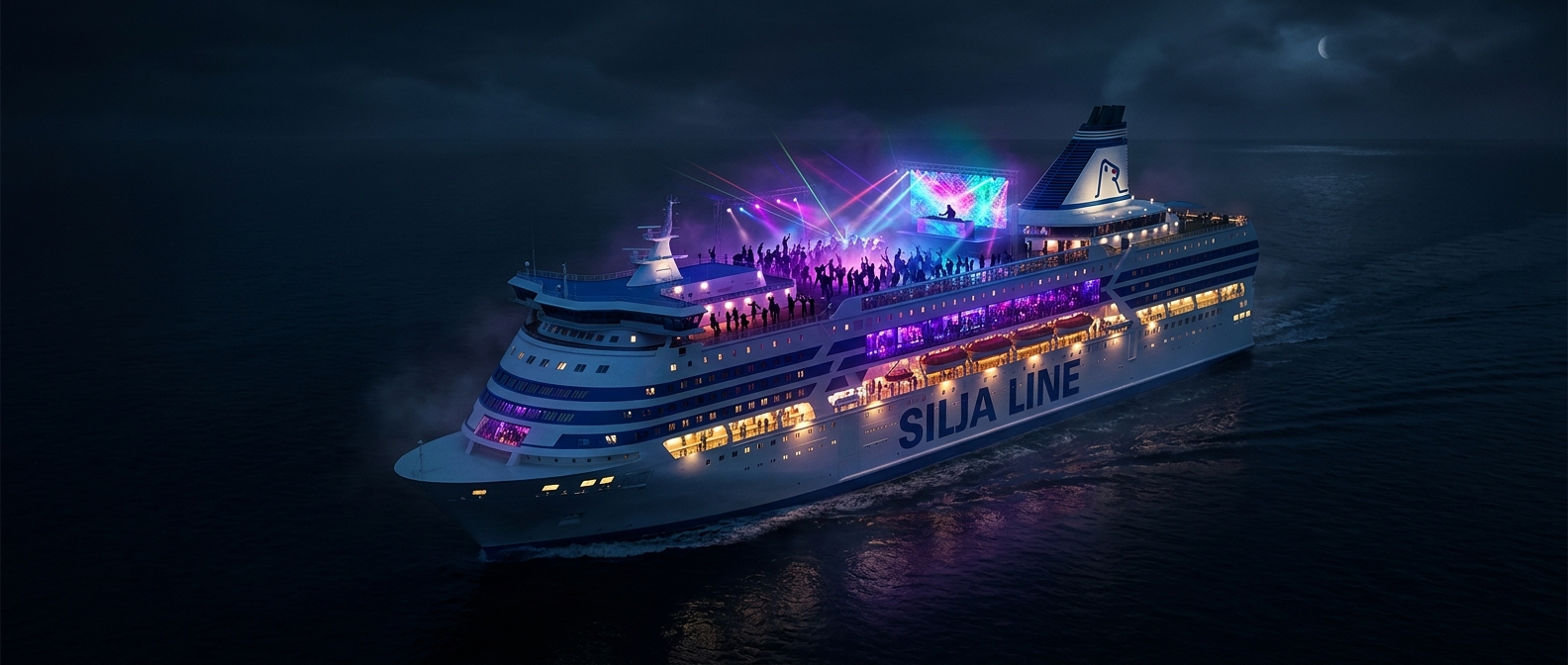
On Baltic overnight ferries, the journey was part transport and part evening out. Bars, dance floors and shops gave passengers something to do during the long crossing—and duty-free alcohol could make the onboard offer especially attractive.
The tax arrangement was more specific than simply sailing through international waters. Many Stockholm–Helsinki services call at Åland, the Finnish archipelago whose special tax status allows qualifying ships to sell goods duty-free on these routes. A ship’s position in open water, by itself, does not make every sale tax-free.
From passage to floating promenade
Once people were already spending hours aboard, operators could build an experience around the crossing. Restaurants and bars turned dinner into nightlife; shops and shared promenades gave passengers reasons to wander the ship instead of staying in their cabins. Saunas added another distinctly Nordic way to pass the time.
That mix also suited the practical demands of an overnight trip: passengers needed places to eat, relax and sleep, while entertainment helped make the hours between ports feel like part of the holiday. The result was a vessel that functioned as transport but was laid out more like a compact resort.
A route with two kinds of value
The attraction was not only the destination. For some travelers, the evening aboard—the social scene, the shopping and the sense of being at sea—was itself part of the outing. A tax-enabled shop helped draw passengers, while the ship’s wider leisure design gave them reasons to stay up and enjoy the crossing.