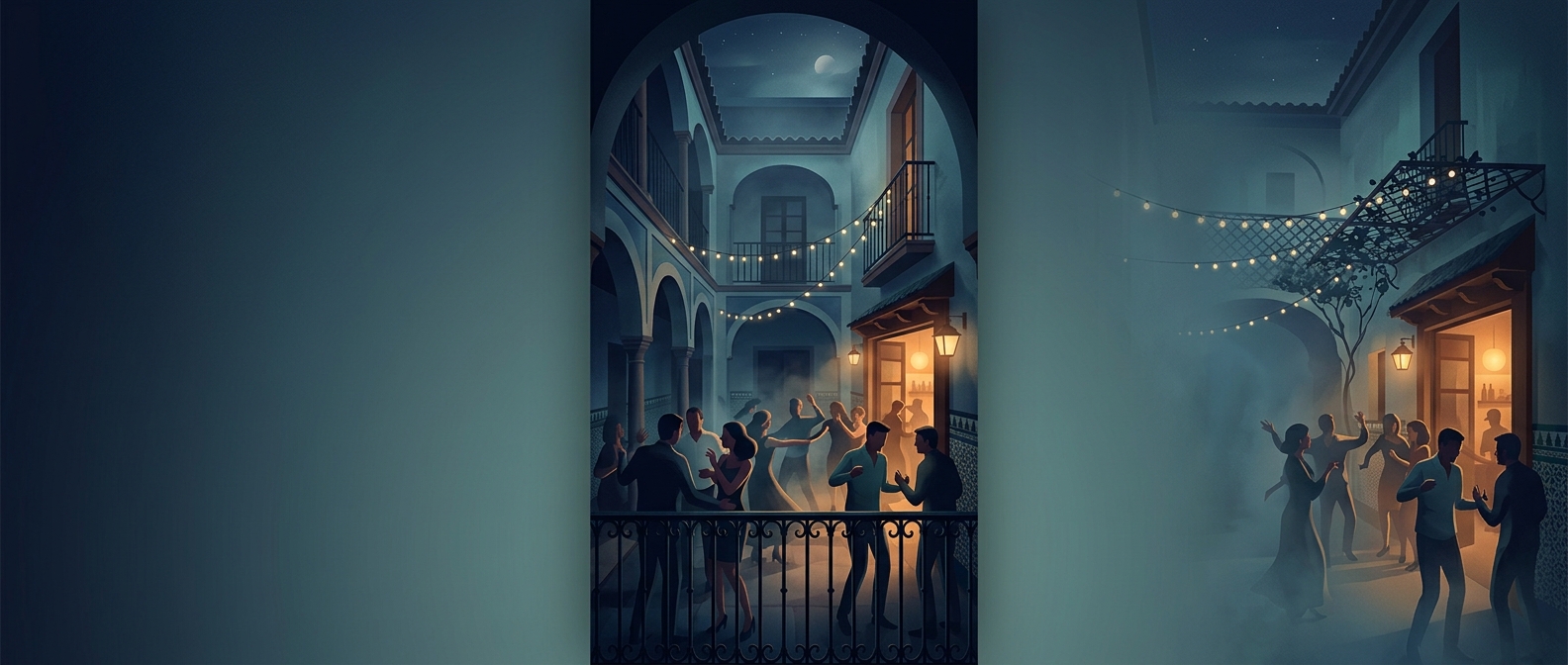
Two kinds of nightlife, a few blocks apart
Bourbon Street’s sound is built to travel. Bars and clubs cluster along a narrow, heavily visited stretch of the French Quarter, where open doors, street-facing venues, and competing performers turn music into part of the street itself. The result can feel less like entering one room than moving through several soundtracks at once.
That concentration is also why the street can seem staged: visitors arrive expecting a spectacle, and businesses cater to a steady flow of people moving between stops. The music is real, but it shares the scene with the commercial machinery of nightlife.
Music as part of neighborhood life
Away from the main strip, a bar may serve a smaller circle of regulars, and a band or musician can be something people came to hear rather than another attraction along a crowded route. Street performances, when they happen, depend on the people playing, the place, and the moment; they are not a guaranteed soundtrack on every corner.
New Orleans’ brass-band traditions help explain why music can feel at home in public space, not only on a club stage. In a neighborhood setting, the social ties around a venue may be as noticeable as the performance itself. The shift is not simply from loud to quiet, but from nightlife presented for passersby to music woven into a local gathering.