Why a Van’s Sliding Door Moves Out Before It Moves Back
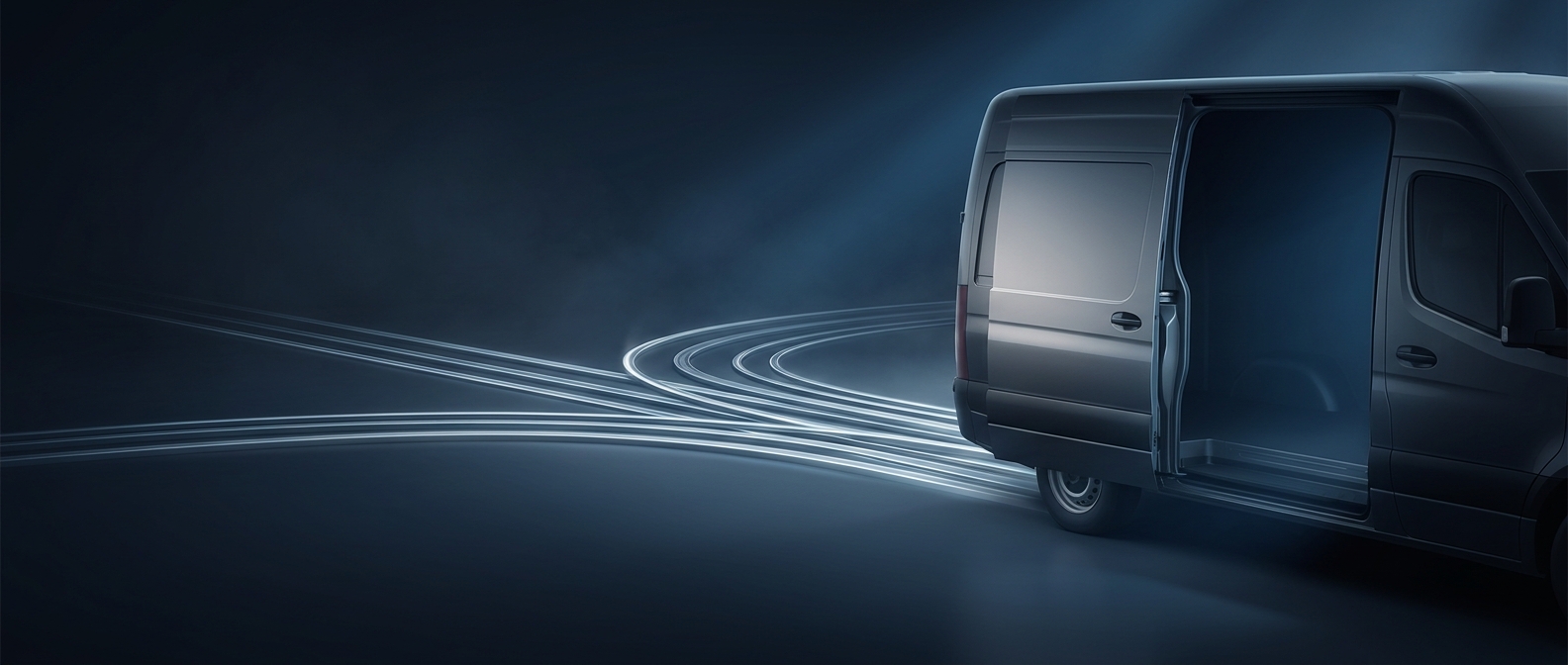
A van’s side door cannot simply travel straight along the body: its outer panel sits nearly flush with the van, where it must meet the weather seals and avoid leaving a wide gap. But to slide rearward, the door first has to clear the bodywork. Its opening motion therefore follows a short, guided curve: outward first, then along the side.
Tracks Keep the Heavy Panel on Course
Rollers attached to the door run in tracks mounted at different points, commonly near the top, middle, and bottom of the opening. The tracks guide the door through the same change in direction while helping support its weight. Because the guides are separated, they also resist the door twisting or sagging as it moves—much as separated rails help keep a long drawer square instead of letting it bind.
The tracks’ shapes determine the sequence. Near the front edge, the guides allow the door to move outward far enough to clear the body; farther back, they direct it rearward alongside the van. The rollers follow those paths, so the driver does not have to lift or swing the panel through its full travel by hand.
A Space-Saving Tradeoff
Once open, the door sits beside the van rather than projecting into the area beside it. That matters in a narrow parking space, where a conventional hinged door could hit a neighboring vehicle or leave too little room for someone to get in. The curved path is the engineering compromise: a little outward motion at the start lets a large door move out of the way without demanding a large swing.