The elevator’s rope becomes part of its load
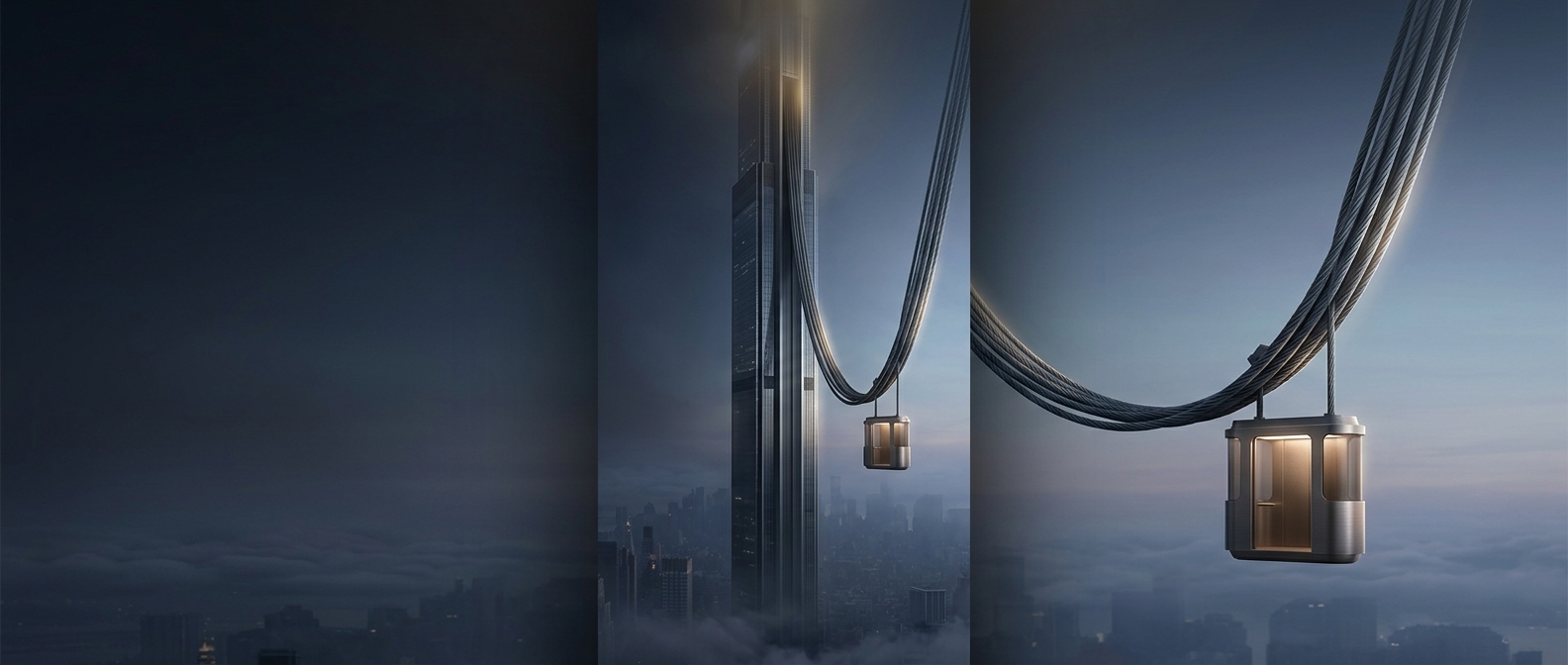
A conventional elevator car is pulled by steel ropes running over a motorized wheel. The ropes must support the car and its passengers—but, in a very tall shaft, they must also support their own weight. The longer the ropes, the more weight hangs from the upper part of the system.
That creates a compounding problem: heavier ropes need stronger, heavier ropes to carry them. Eventually, too much of the elevator’s lifting capacity would be spent moving the rope itself, leaving too little for a useful passenger load. The limit depends on the elevator’s design and materials, but simply extending the same rope system upward stops being practical.
Sky lobbies break one long trip into stages
A sky lobby turns the building into sections. Express elevators carry passengers from the ground to a transfer floor; there, passengers board separate elevators serving the floors above. Each elevator’s ropes cover a shorter vertical distance than a single ground-to-top system would require.
The tradeoff is an extra transfer: riders may have to leave one car and wait for another. In return, the building can serve far higher floors without asking one set of ropes to carry its own enormous length. A sky lobby is therefore more than a convenient stop—it is a way to reorganize the journey around the physical limits of lifting weight.