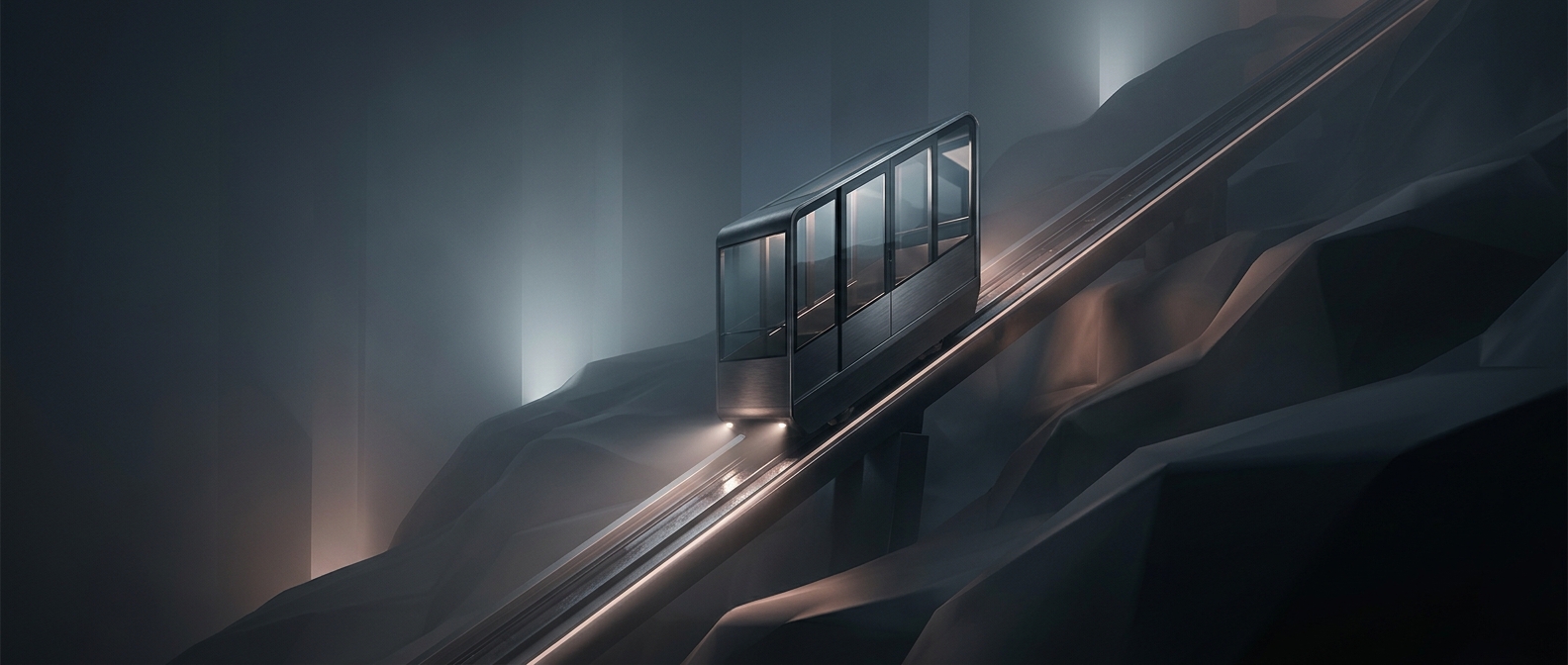
How a cabin can climb while staying level
An inclined elevator runs on a track set along a slope rather than inside a vertical shaft. The track guides the cabin’s wheels as it moves uphill, while the cabin body is mounted or adjusted so its floor remains close to horizontal. That distinction matters: the wheels follow the hillside’s angle, but passengers and their belongings do not have to sit at that angle.
The drive system depends on the installation. A motor may pull the cabin with a cable, or push it using another mechanism. In many cable-driven systems, a counterweight or a second cabin helps balance the load, reducing the effort needed to move it. Brakes and other safety equipment are designed for the particular track, drive, and site.
Fitting the route to the hillside
Because the elevator follows the terrain, its route can connect two levels without requiring a long road that winds around the slope or a staircase that passengers must climb. But the track still needs a stable foundation and a carefully planned path. Engineers must account for the grade, ground conditions, weather exposure, drainage, and how people will enter and leave at each end.
That makes an inclined elevator a site-specific solution, not simply a regular elevator laid on its side. Its practical advantage is that it can turn a steep change in elevation into a short ride—while occupying a narrow corridor where a road, ramp, or conventional stairway may be difficult to fit.