Why a night terror can look like waking
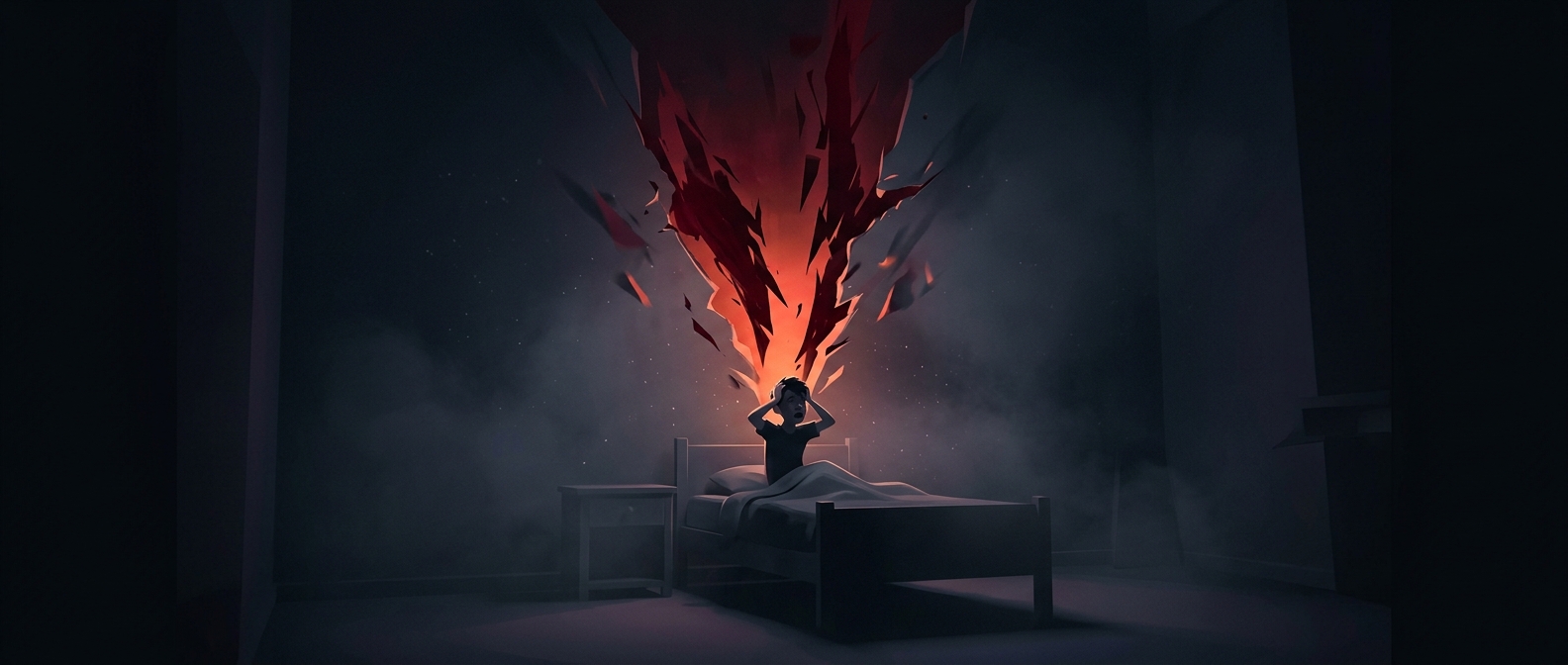
A night terror begins during deep non-REM sleep, when the brain is not moving through the vivid dream-rich sleep most people associate with nightmares. Instead, the sleeper becomes partly aroused: systems involved in movement and alarm can surge toward wakefulness while awareness and memory remain largely in sleep mode.
That mismatch can produce a scream, a rapid heartbeat, or frantic movement without a clear dream to explain it. The person may have open eyes, yet be difficult to comfort or communicate with. They are not necessarily choosing to ignore anyone; they may not be fully aware that another person is there.
The alarm is not the same as a remembered threat
A nightmare usually leaves a story because it occurs in a sleep stage more closely linked to vivid dreams and is followed by fuller waking. A night terror is more like an abrupt, incomplete transition out of deep sleep. The body’s alarm response is visible, but the brain may never form—or later retrieve—a coherent scene behind it.
That is why asking for the frightening dream afterward may get no answer. The missing account is part of the sleep-state disruption, not evidence that the person is concealing what happened. Night terrors are especially common in children, whose sleep patterns are still developing, and many outgrow them.
What a witness can do
Because the sleeper is not fully awake, trying to shake them into an explanation can increase confusion rather than help. The practical priority is to keep them from falling or striking nearby objects, then let the episode pass. In the morning, they may remember little or nothing—even when the event was unmistakable to everyone else in the room.