A travelogue with room for the marvelous
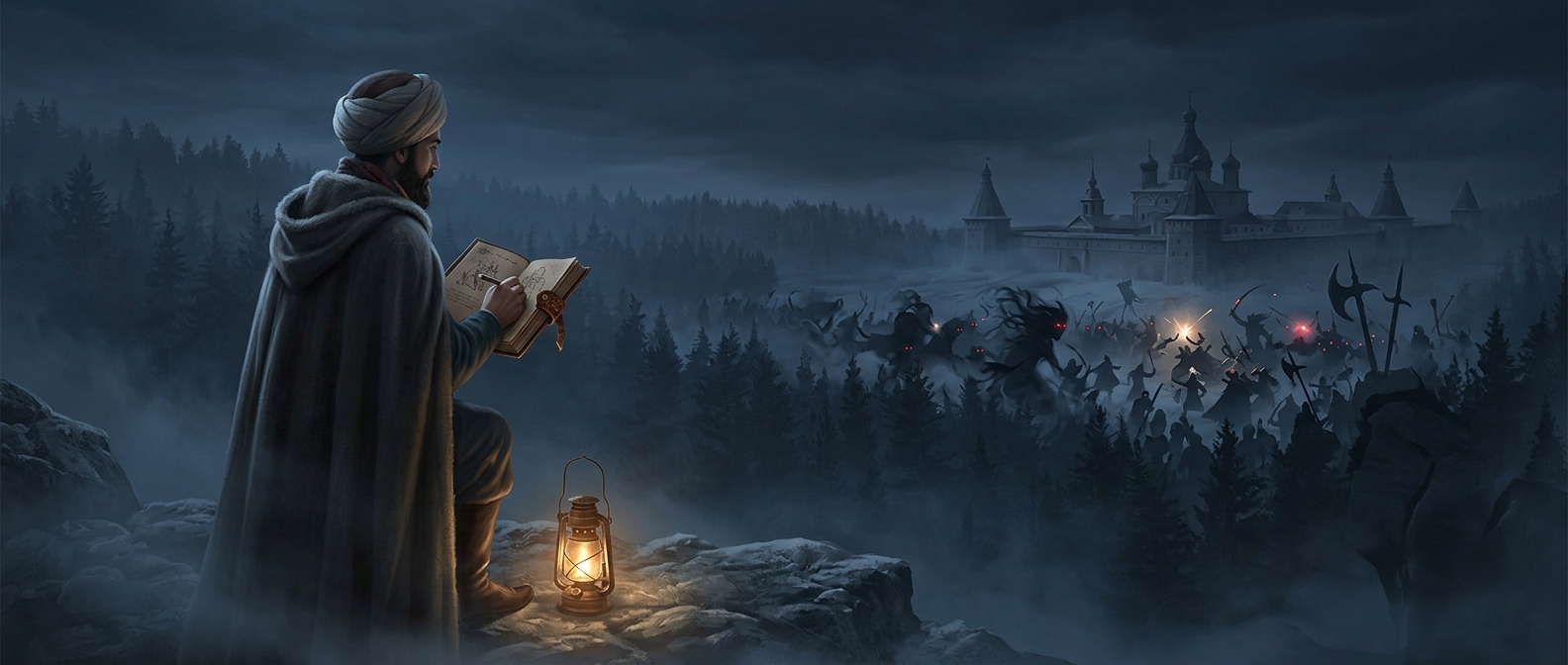
Evliya Çelebi’s Seyahatname—literally a “Book of Travels”—was not a modern guidebook or a narrowly factual report. Across its many volumes, the 17th-century Ottoman writer described places and people while also gathering stories, customs, and striking local claims. A report of supernatural combat could sit beside practical observations because both helped convey what a place was like to him and his readers.
That mix matters when reading his account of Russian vampires and Circassian witches. The scene of opponents uprooting trees belongs to the language of marvel and folklore, not to an ordinary description of military action. Its scale makes the story memorable, but it also signals that the travelogue could preserve tales that a contemporary listener might find worth recording even when they were not verifiable events.
What the story tells us
The passage is useful less as evidence that such a battle happened than as evidence of the kinds of stories that circulated in the world Evliya was describing. Folklore could give unfamiliar regions a vivid identity: the landscape became a stage for forces beyond everyday experience, and local beliefs became part of the account of local life.
For modern readers, the challenge is not to sort the Seyahatname into “fact” or “fiction” all at once. Its value lies partly in seeing how those categories could share a page. Evliya’s travel writing preserved observations and marvels together, leaving later readers a record not only of places, but of how people imagined them.