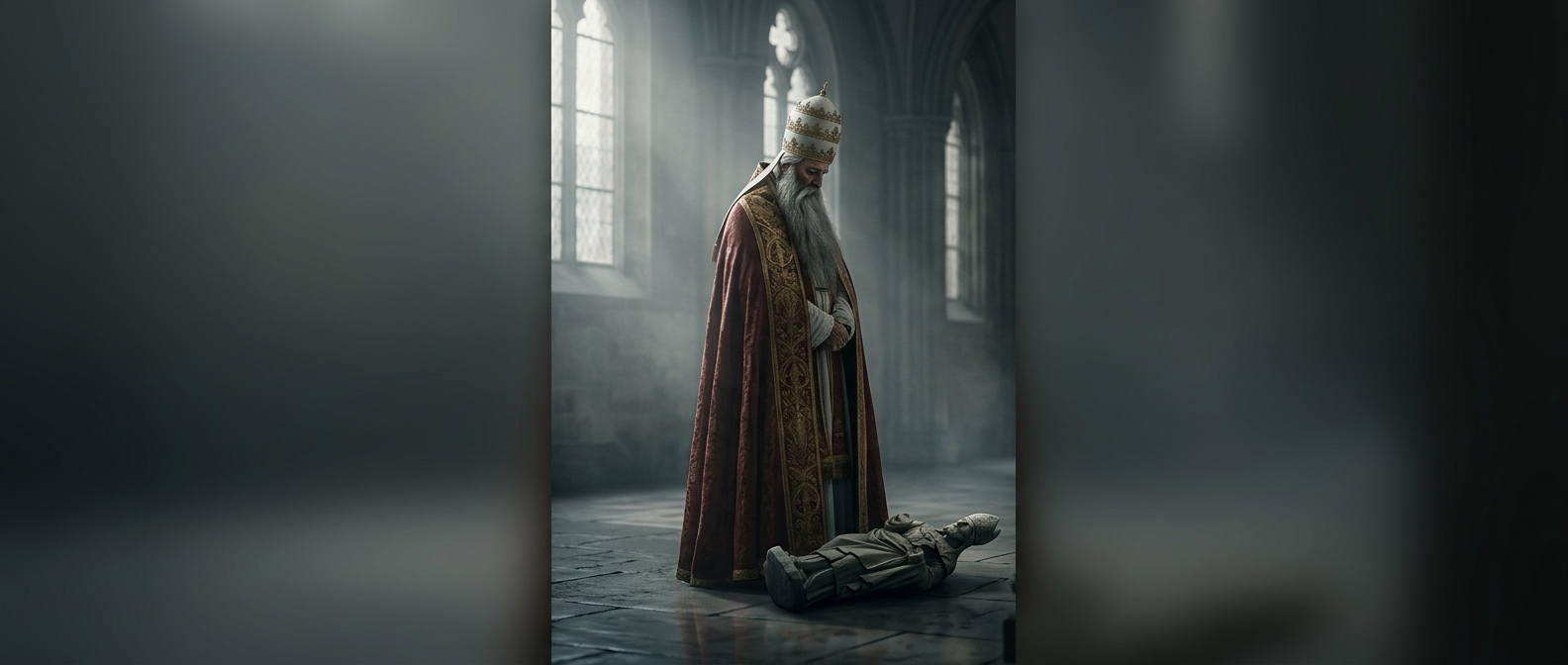
Mortality as a check on papal power
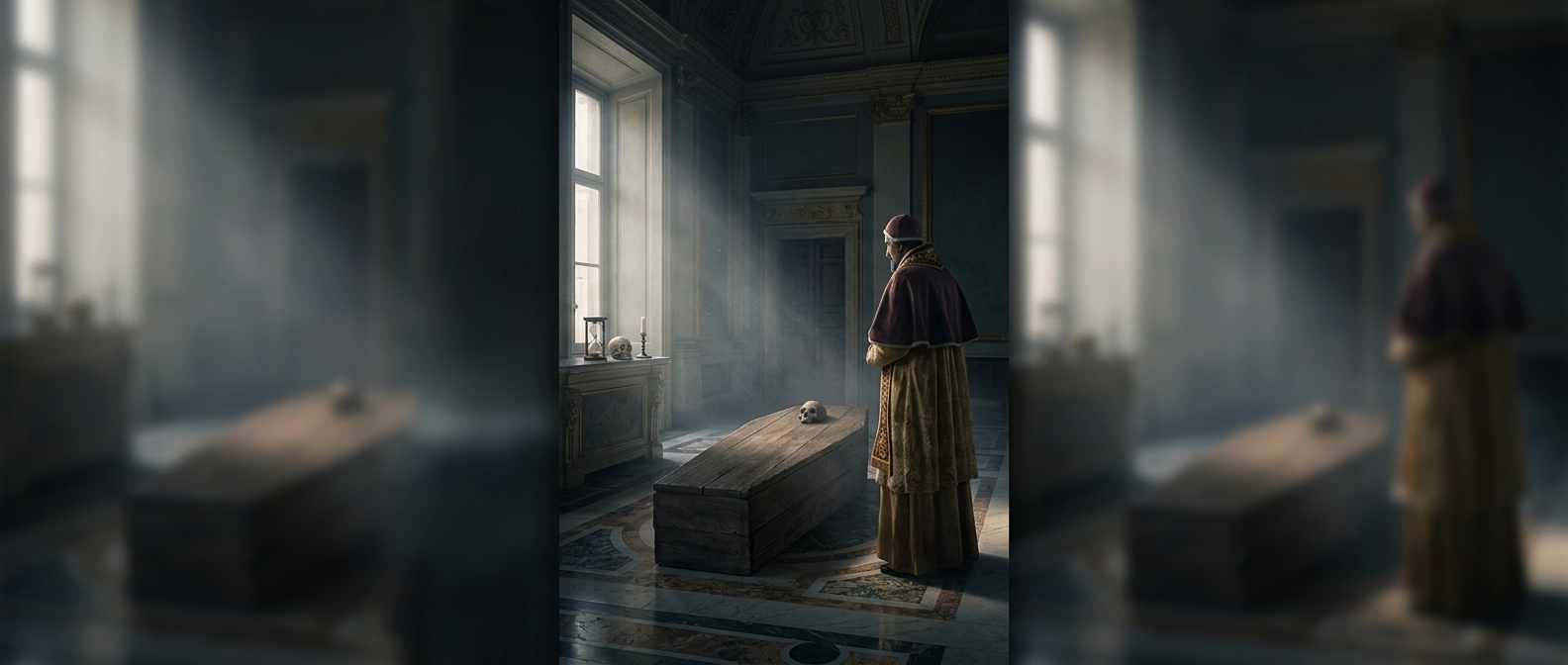
A coffin in a bedroom turns a distant idea—everyone dies—into something impossible to ignore. For a pope, whose office carried immense spiritual authority, that reminder could serve as a private counterweight to status: no title or ceremony changed the fact that he was mortal.
The practice of memento mori
The objects belong to a long Christian tradition called memento mori, Latin for “remember that you must die.” Its purpose was not to celebrate death, but to keep worldly success in perspective and encourage humility. A beautifully made coffin made the lesson tangible; a chalice shaped like a skull brought the same image into the act of drinking.
That pairing connected an ordinary setting—the bedroom—with a sacred one. Instead of relying only on an occasional sermon or a solemn ceremony, the pope encountered reminders of mortality in daily life. Their force came from repetition: the objects made humility a practical discipline, not merely an abstract virtue.
A stark contrast with the office
The contrast is what makes the story memorable. The pope stood at the summit of a powerful institution, yet kept symbols of an end that would come to every person. The coffin did not erase his authority; it challenged the temptation to mistake authority for permanence.