A backup plan packed beside his clothes
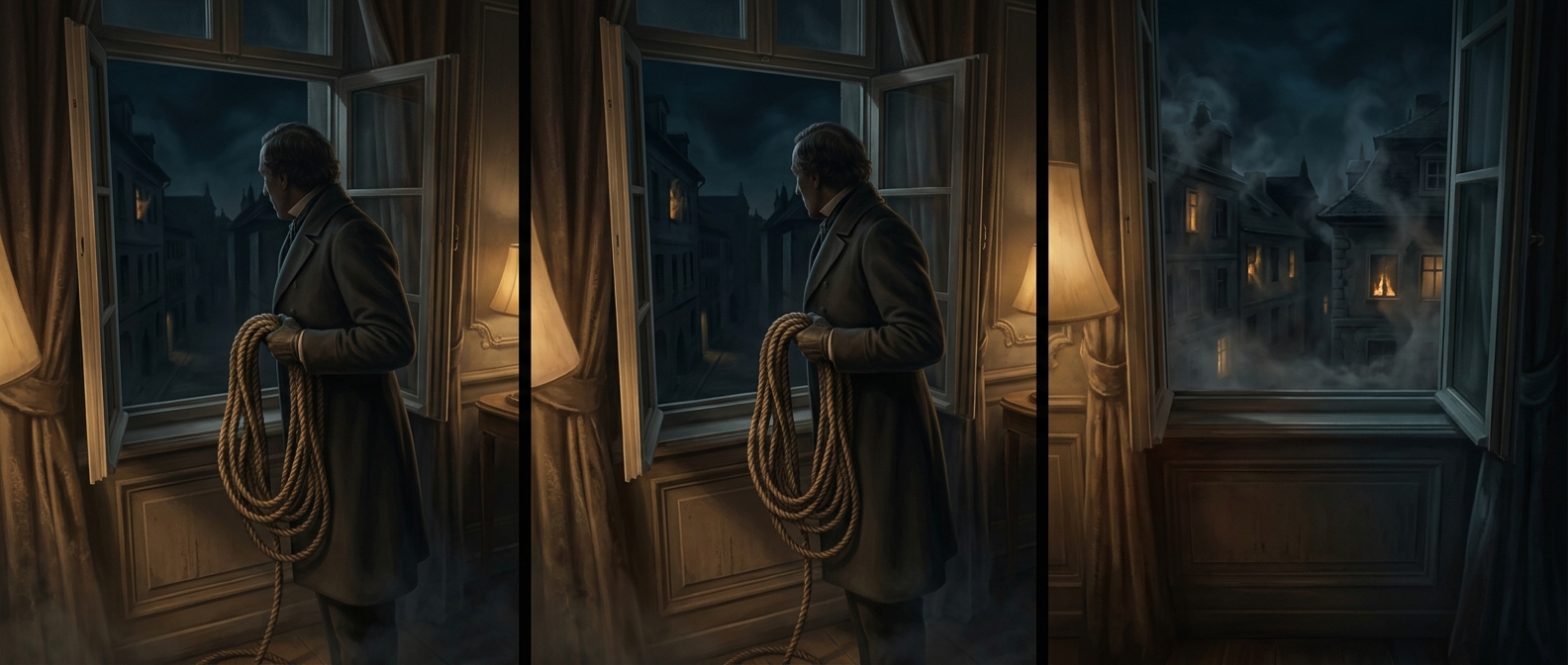
For Hans Christian Andersen, checking into a hotel meant preparing for a danger he could not control. He kept a thick rope in his luggage so that, if fire blocked the ordinary way out, he might lower himself from a window. It was a personal escape plan carried from one unfamiliar room to the next—not a guarantee of safety.
The idea depended on a few practical conditions: the rope had to reach somewhere safe, the window had to be usable, and Andersen had to be able to bear his weight while descending. A rope could offer an alternative when a corridor or stairway was impassable, but it could not protect someone from smoke, flames, or a fall. Its value was that it gave him another possible route at a time when he could not count on every building having the same protections.
The logic of a portable precaution
Travel meant sleeping in rooms whose exits and construction were unfamiliar. Carrying his own rope let Andersen prepare for that uncertainty with an object he could keep close, rather than relying entirely on the hotel’s arrangements. The coil was both equipment and a reminder that escape might require improvisation.
That small detail makes the risk of travel in his era feel immediate: a fire plan could be as personal—and as heavy—as something packed into a suitcase.