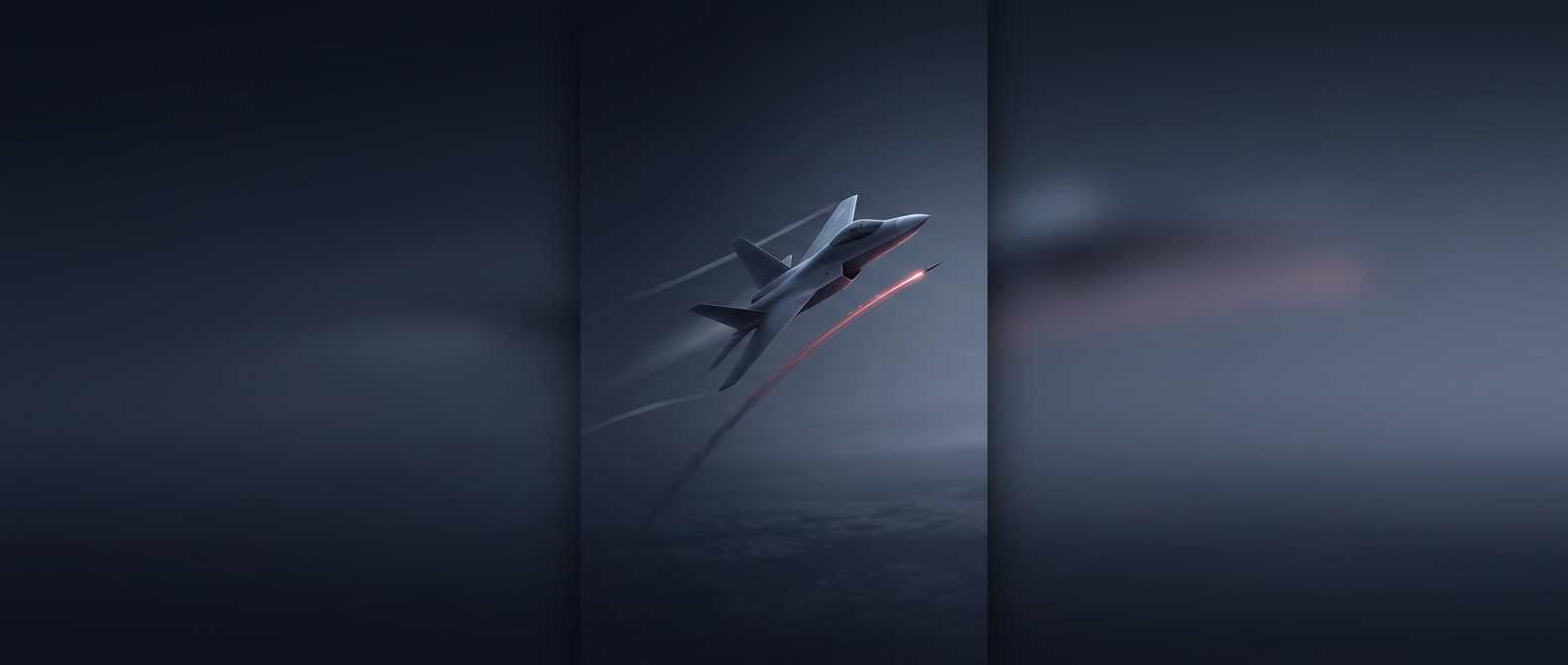
When a fighter catches its own gunfire
A cannon round fired straight ahead starts with the airplane’s forward speed plus the speed it gains as it leaves the barrel. But that extra speed is measured relative to the aircraft. Once the round is in the air, drag steadily slows it, while the airplane continues to accelerate under engine thrust and gravity during a dive.
The key is how quickly the gap closes. At first, the bullets pull ahead at roughly their muzzle speed relative to the plane. As air resistance cuts into that lead, the aircraft may catch up—especially if it is already moving fast and still gaining speed downhill. The rounds do not reverse direction; the airplane simply reaches the space they occupy.
Why a dive makes the timing possible
In level flight, a jet’s speed is limited by the balance between thrust and drag. Pointing its nose down lets gravity add energy to its motion, increasing its speed without requiring the engine alone to provide all the acceleration. The bullets, by contrast, are small objects exposed to intense aerodynamic drag, so their speed relative to the aircraft can shrink quickly.
This is a narrow combination of firing direction, aircraft speed, and timing—not a routine consequence of using a cannon. A slight difference in the dive or the weapon’s aim changes where the aircraft and rounds travel. But if their paths line up, the airplane can reach its own projectiles before they have gone far, turning forward fire into a hazard for the plane that fired it.