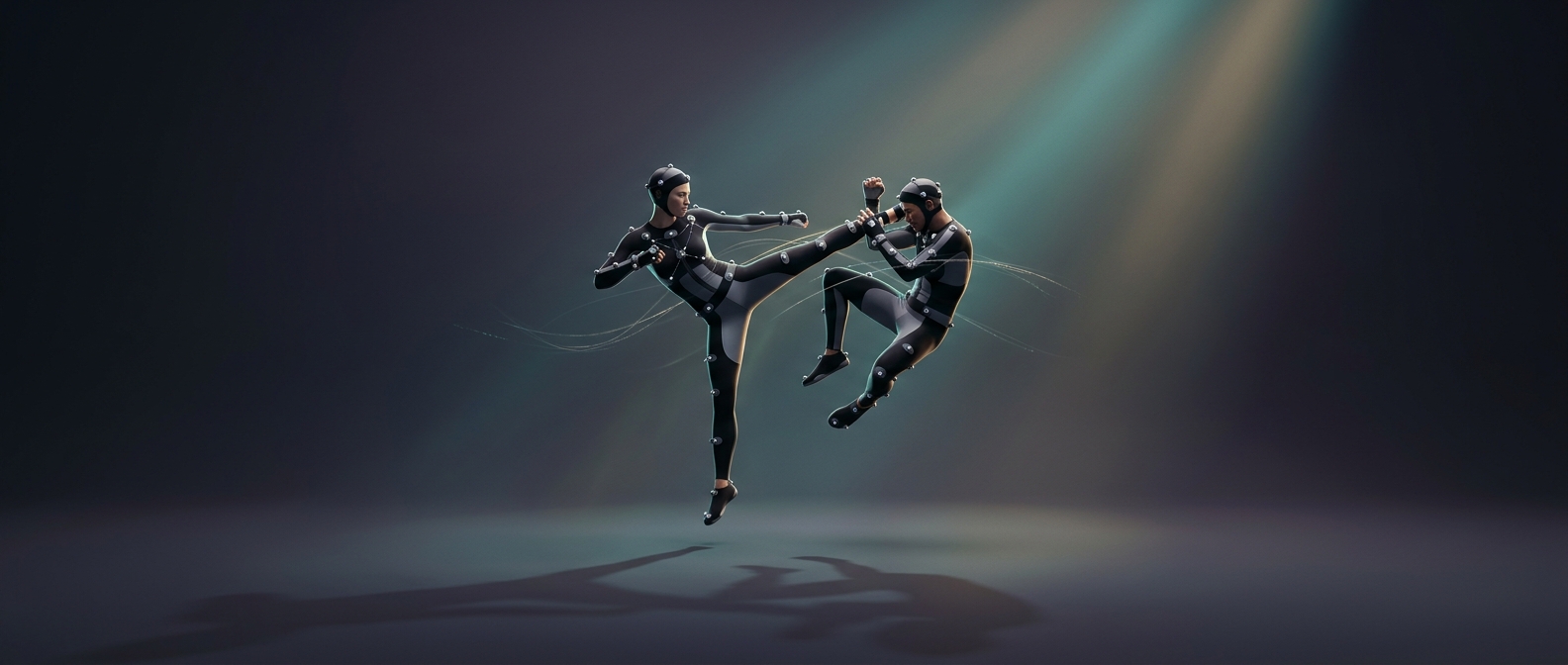
The padding protects the performer; the markers record the motion
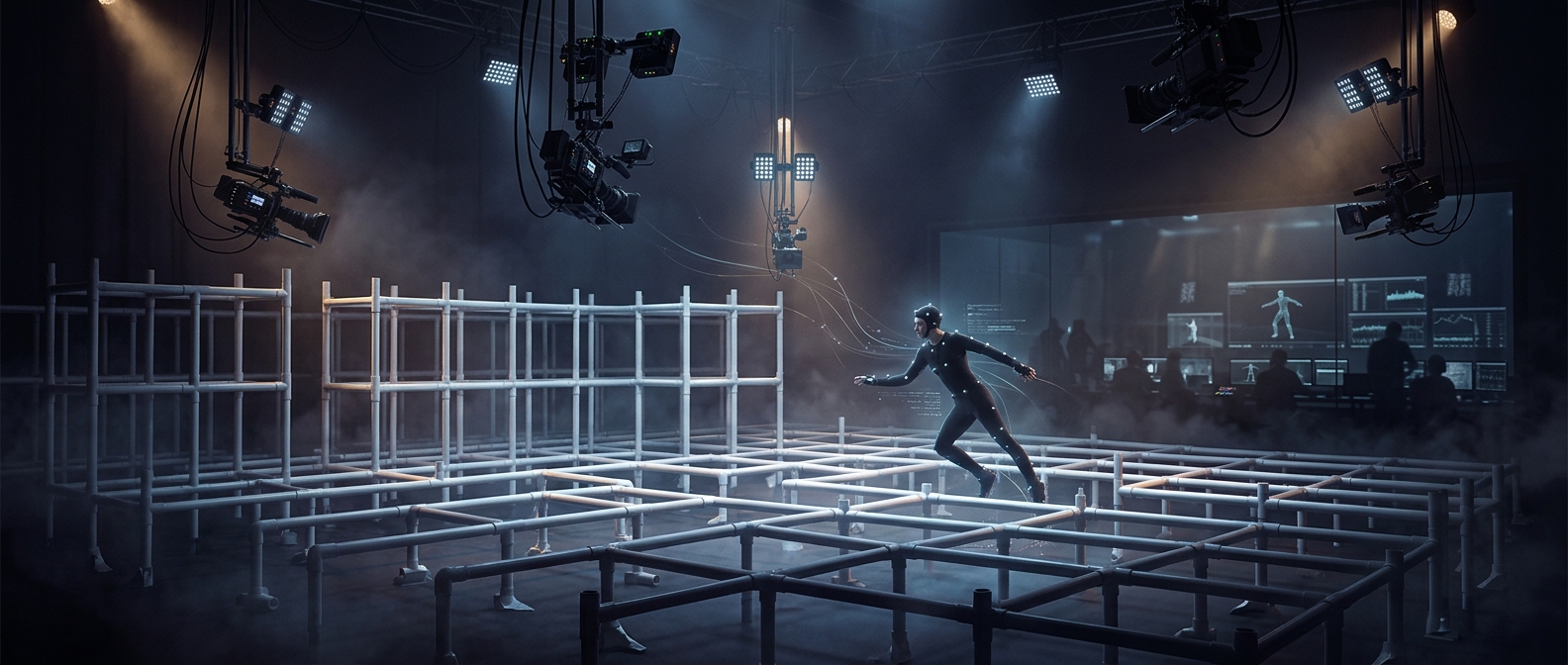
A game can make a character tumble through a fight without asking an animator to invent every shift of weight from scratch. In motion capture, a performer acts out the movement while a camera system tracks markers attached to the body. Software turns those tracked positions into a moving digital skeleton that can guide the character’s animation.
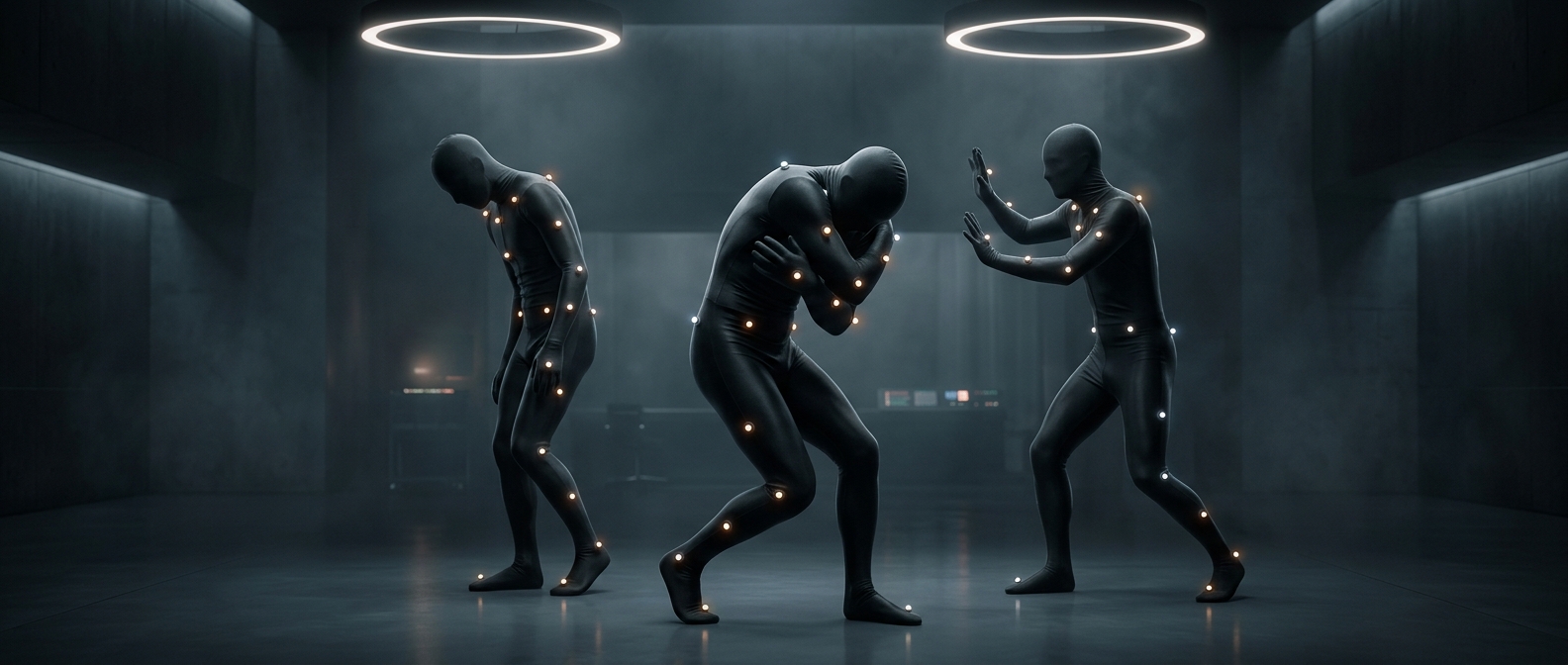
When the performance involves falls, kicks, or collisions, protective padding helps make repeated takes safer. But padding adds bulk and can restrict how freely a performer bends, twists, or raises a limb. It also changes the body shape the cameras see, so the captured movement is useful reference—not necessarily a finished animation that can be dropped straight into a game.
Why choreographing in the suit takes care
A stunt must read clearly to the cameras as well as look convincing to a person watching from the side. Performers and choreographers therefore work out where a move begins and ends, how to make contact safely, and how to keep the motion legible despite the gear. A kick that feels natural in ordinary clothing may need adjustment when padding limits its reach or balance.
The captured performance gives animators the timing and physical rhythm of a real body. They can then refine the result for the game character—adjusting poses, timing, or proportions while preserving the force and flow of the original move. The bulky suit is part of a tradeoff: protect the person doing the stunt, then translate the movement into something a digital character can perform.