The Structure Hidden Beneath a Screen-Ready Prop
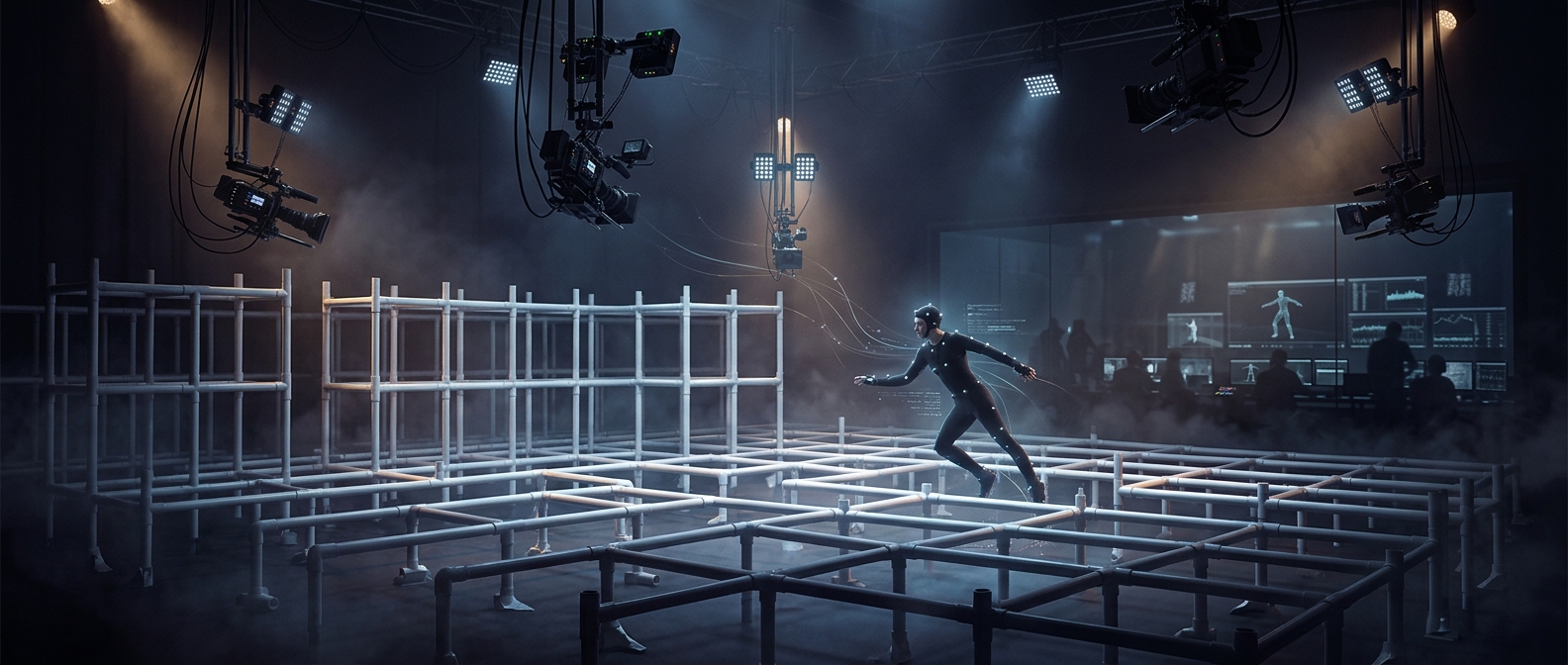
A throne that looks carved from stone or a weapon with an ornate silhouette does not have to be made from the material it imitates. For many set pieces, the practical goal is to create a shape that reads clearly on camera while remaining light enough to move and sturdy enough for an actor to handle. PVC pipe offers a cheap, easy-to-cut framework; tape can hold pieces together while the crew adjusts the design.
Build for the Shot, Not the Museum
A prop is designed around how it will be used. A throne may need to support an actor’s weight, while a sword may only need to be carried through a scene. Those demands affect where the frame needs reinforcement and which details can be decorative. The camera also changes the calculation: a feature that fills the frame needs a convincing surface, but one seen briefly or from farther away may need only a strong outline.
The pipe supplies the underlying form, not the finished illusion. Crews can cover or disguise the framework with other materials and paint so that the visible surface suggests a different substance. This separation between structure and appearance lets a lightweight prop resemble something far heavier.
The Tradeoff Is Practicality
Cheap materials make experimentation easier: a crew can alter a shape without committing to expensive carved wood or metal. But a prop still has to survive handling, look right from the camera’s angle, and avoid becoming awkward or unsafe on set. The result is a useful bit of movie craft: the audience sees a grand object, while the actor may be gripping a carefully dressed frame of plastic pipe.