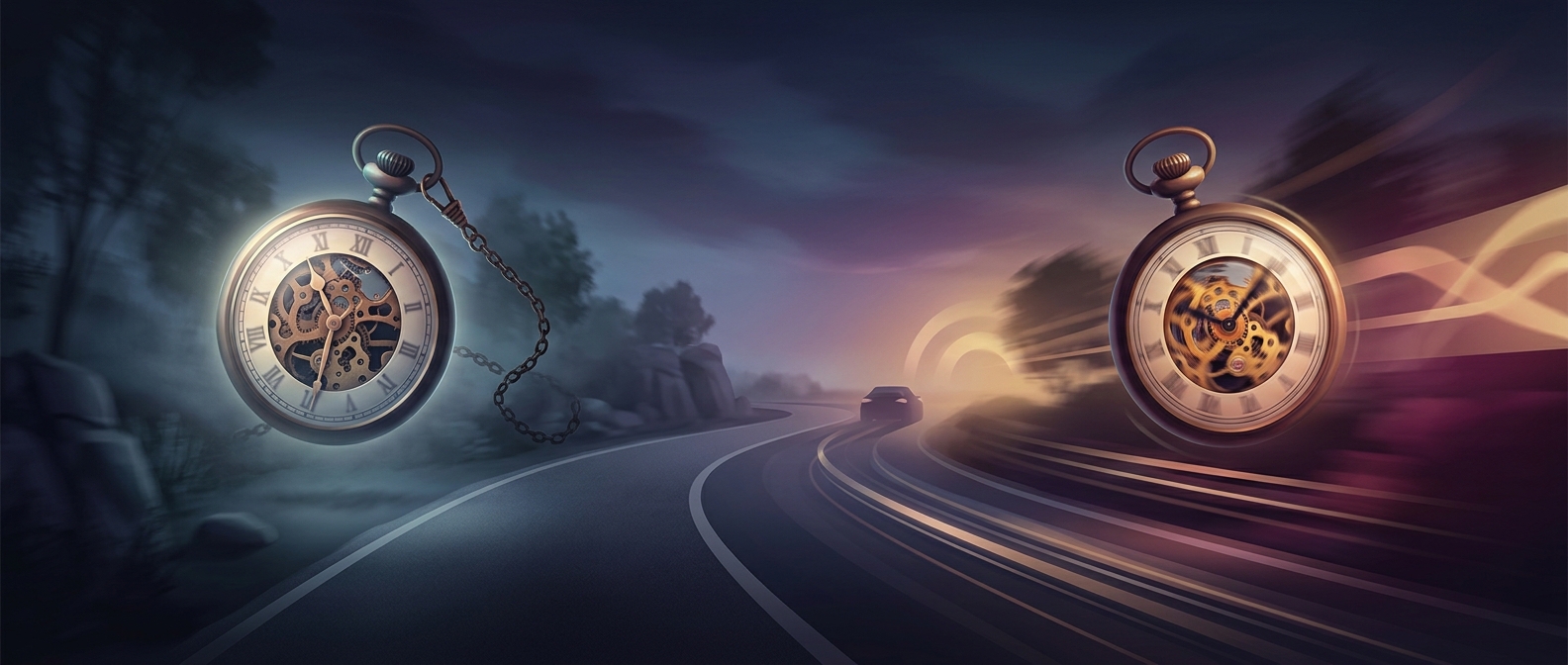
Why a Turn-by-Turn Voice Can Outrank the Road
A navigation instruction is brief, confident, and timed to arrive just before a decision: “Continue straight.” The view outside is more complicated. A driver may see a shoreline, a confusing junction, or a road that appears to continue beyond a barrier. Under pressure to choose quickly, the clear instruction can win—not because the driver has stopped seeing the danger, but because the app has become the easiest guide to follow.
Psychologists call one part of this automation bias: the tendency to give a computer’s recommendation extra weight, especially when a task is busy or uncertain. Navigation also shifts some mental work onto the device. Once a driver relies on it to track the route, they may pay less attention to where the road is leading and more attention to whether the next instruction has arrived.
A Route Is Not the Same as a View
A navigation app works from mapped roads and location data; its direction describes a planned path, not necessarily what is safe or passable at that moment. “Straight” means continue along the route as represented in the system. It is not the same as a person or sensor evaluating the scene and deciding that the visible way ahead is open.
That difference can be easy to miss when the screen’s map looks precise. A moving marker and a neatly drawn line create a sense that the device has the whole situation in hand. Yet a map can be incomplete, a location estimate can be off, or the road ahead can differ from what the route data implies. The app’s certainty of tone does not guarantee certainty about the surroundings.
Trust Needs a Reality Check
The useful habit is not to ignore navigation, but to treat it as one source of information. A driver can compare the spoken direction with road signs, barriers, and the visible layout—and stop somewhere safe if they need to reassess. The map can guide the journey, but only the road reveals what is actually in front of the car.