How a blank became “less than one”
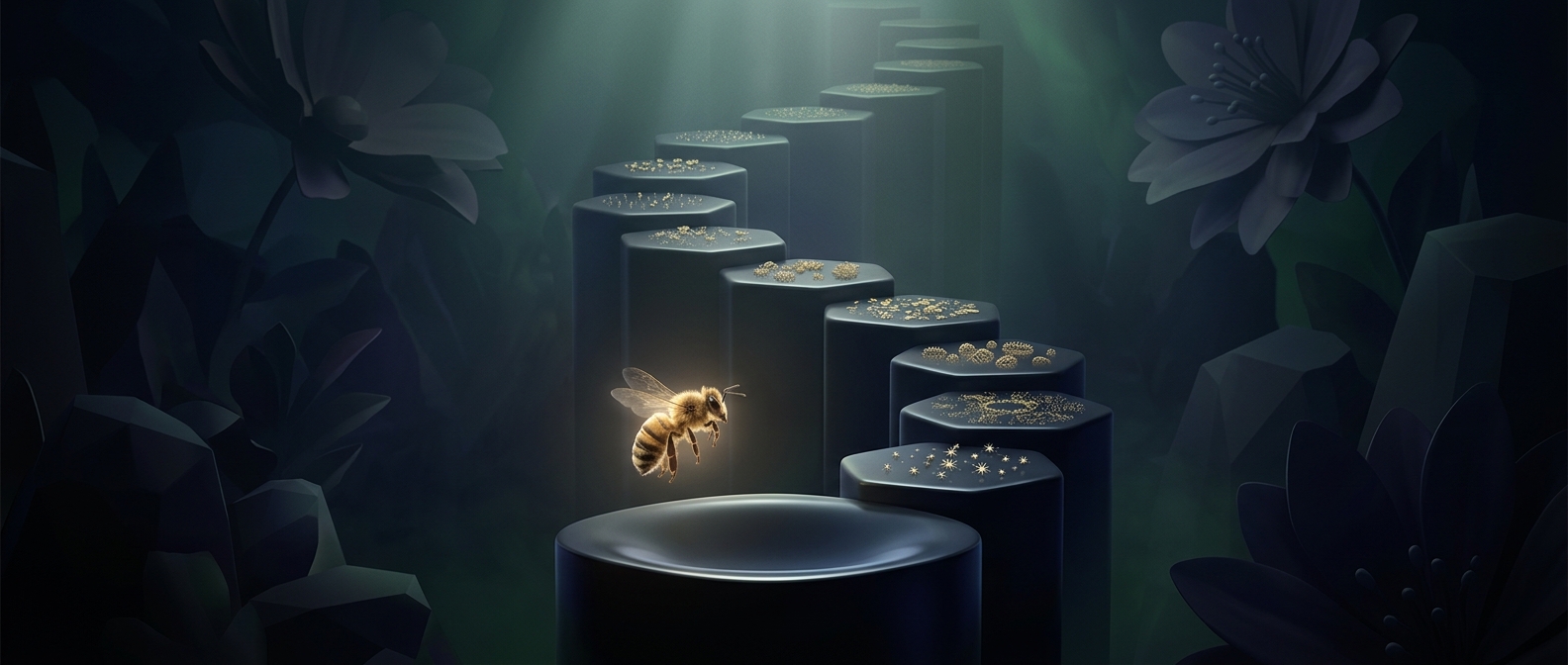
To test whether honeybees could grasp zero-like quantity, researchers trained them to choose the display with fewer shapes. A display might show one shape or several; after learning the rule, the bees were also given a choice between one shape and a blank display. They tended to choose the blank.
That result matters because a blank is not simply another small group. It contains no visible objects, so the bee had to treat the absence of shapes as a quantity that could be compared with one. In this task, the blank functioned as less than one.
What the bees did—and did not—show
The experiment points to a basic numerical ability: comparing an empty set with a set containing an item. It does not mean bees understand zero as a written numeral, use it in arithmetic, or share the full human concept of zero. The test showed a practical comparison, not a number system.
That distinction helps explain why the finding is intriguing. Human cultures took a long time to develop zero as a symbol and a tool for calculation, but a simpler sense of “none” can serve a useful purpose without either. For a bee choosing between visual options, recognizing that no shapes means fewer than one may be enough.