Why a Sleeping Bag Can Turn Stairs Into a Slide
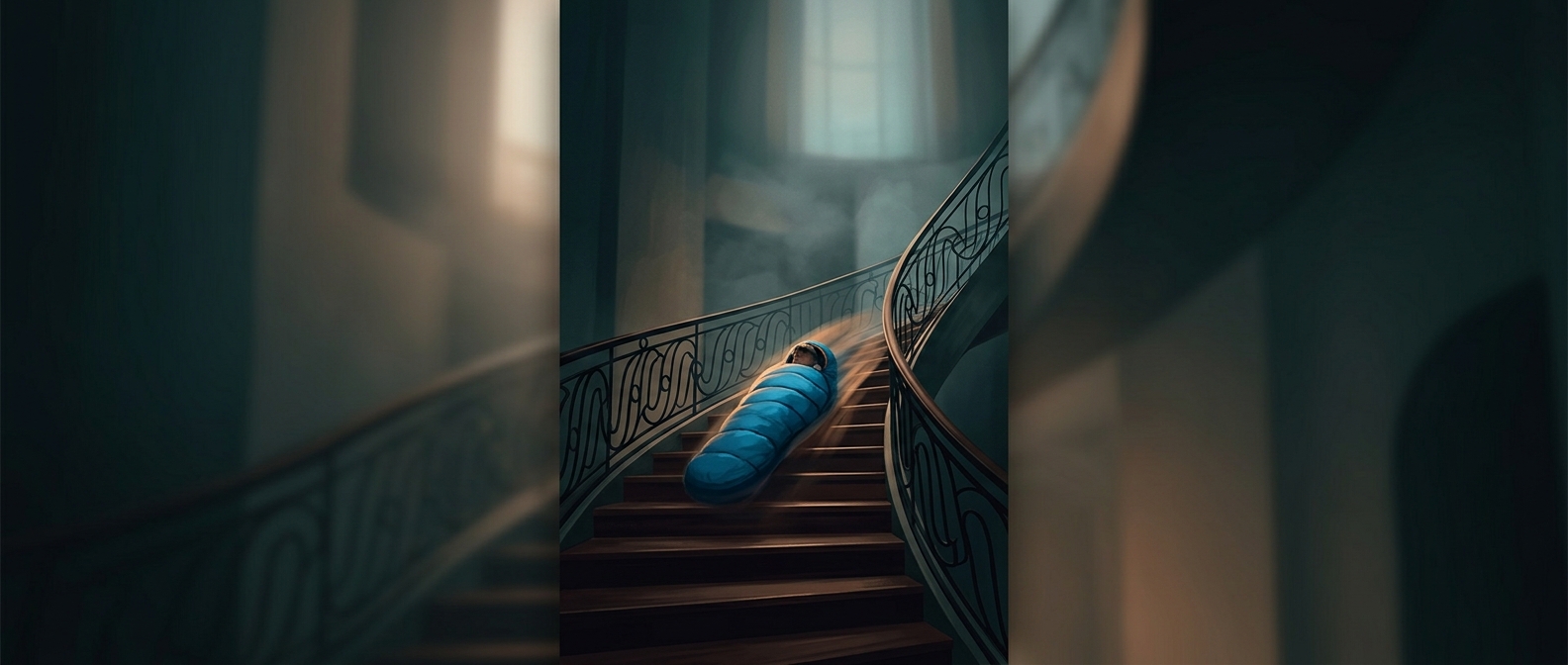
A staircase is normally easy to descend because each step gives a foot a stable place to land. A sleeping bag changes that arrangement: its fabric can glide across the stair surfaces, and the person inside no longer controls each step with their feet. Gravity pulls the combined person-and-bag downhill, while contact with the stair edges slows the slide unevenly.
That uneven contact is why the ride can feel less like a smooth ramp and more like a series of jolts. The bag’s insulation compresses under the body and spreads some pressure, but it cannot reliably absorb the force of a hard impact. The stair edges still press into the bag, and seams, zippers, or folds can catch rather than glide.
The Tradeoff Between Slide and Control
On a staircase, small changes in friction matter. Smooth fabric may reduce rubbing, but a shift in body position can expose a rougher surface or cause the bag to twist. Once that happens, the person has limited ability to steer or stop—especially because the bag’s loose shape can trap arms or legs and obscure the steps ahead.
So the makeshift chute works because the bag combines a slippery surface with a little cushioning, not because it makes stairs safe to ride. Its padding is designed to retain warmth, not protect against falls. The same feature that makes the descent amusing—the loss of ordinary foot-by-foot control—is what makes the landing unpredictable.