A warning that works before sight does
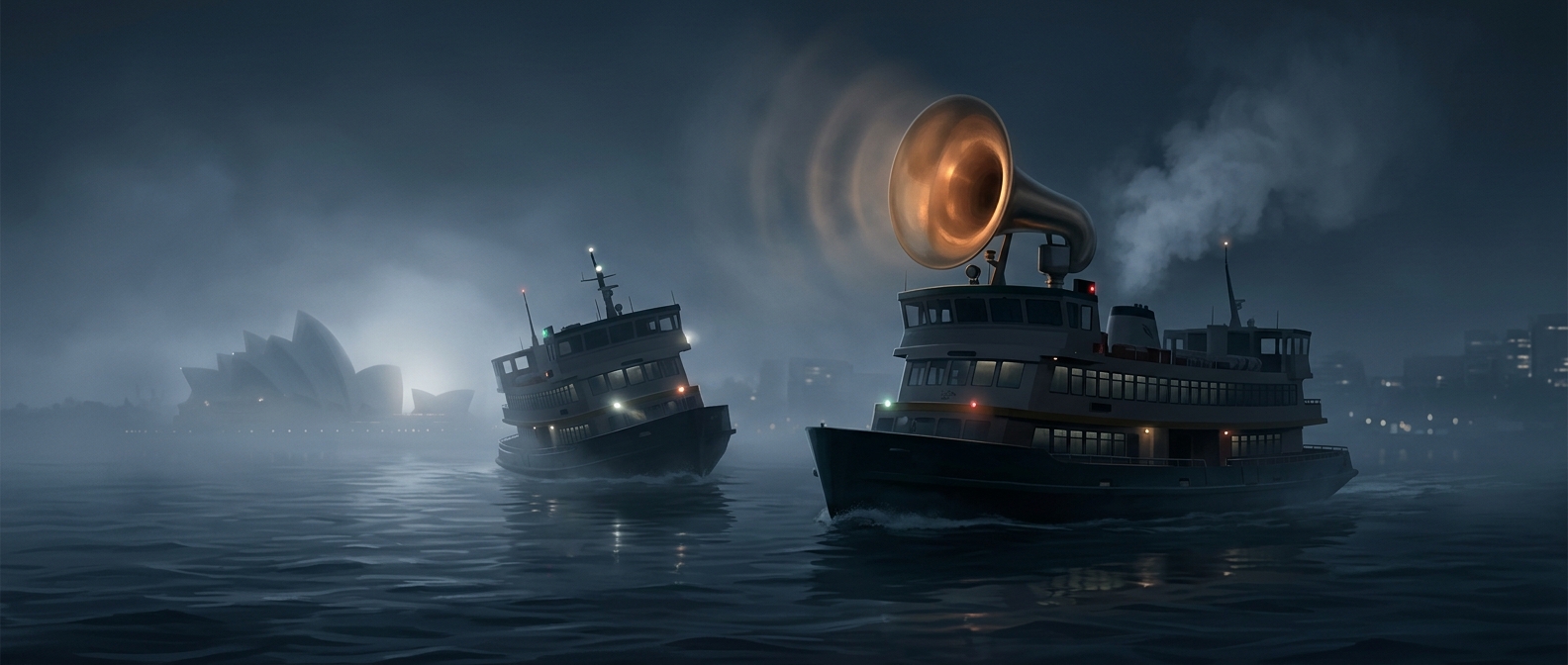
Fog does not stop sound, but it can erase the visual cues boat crews rely on to judge distance and movement. A ferry may be close enough to matter while remaining hidden from another vessel’s view. Its horn gives that other crew an audible warning before the ferry emerges from the mist.
The horn’s size serves a practical purpose: it must produce a sound strong enough to carry across open water and rise above wind, engines, and harbor noise. A loud blast can announce that a large vessel is nearby, buying other crews time to pay attention and adjust course.
The horn is part of a larger safety routine
A sound signal is not a map. Fog can make it difficult to tell exactly where a horn is coming from, especially around shorelines and other vessels, where sound may reflect. Crews still need to keep watch, move cautiously, and use their navigation equipment; the blast adds a warning when eyes alone cannot do the job.
That matters in Sydney Harbour, where ferries share busy waterways with other boats. In clear weather, a ferry’s size and movement are easy to spot. In fog, the horn makes its presence known earlier—turning an unseen approach into a hazard other crews can hear and respond to.