A Moving Shield Behind the Rider
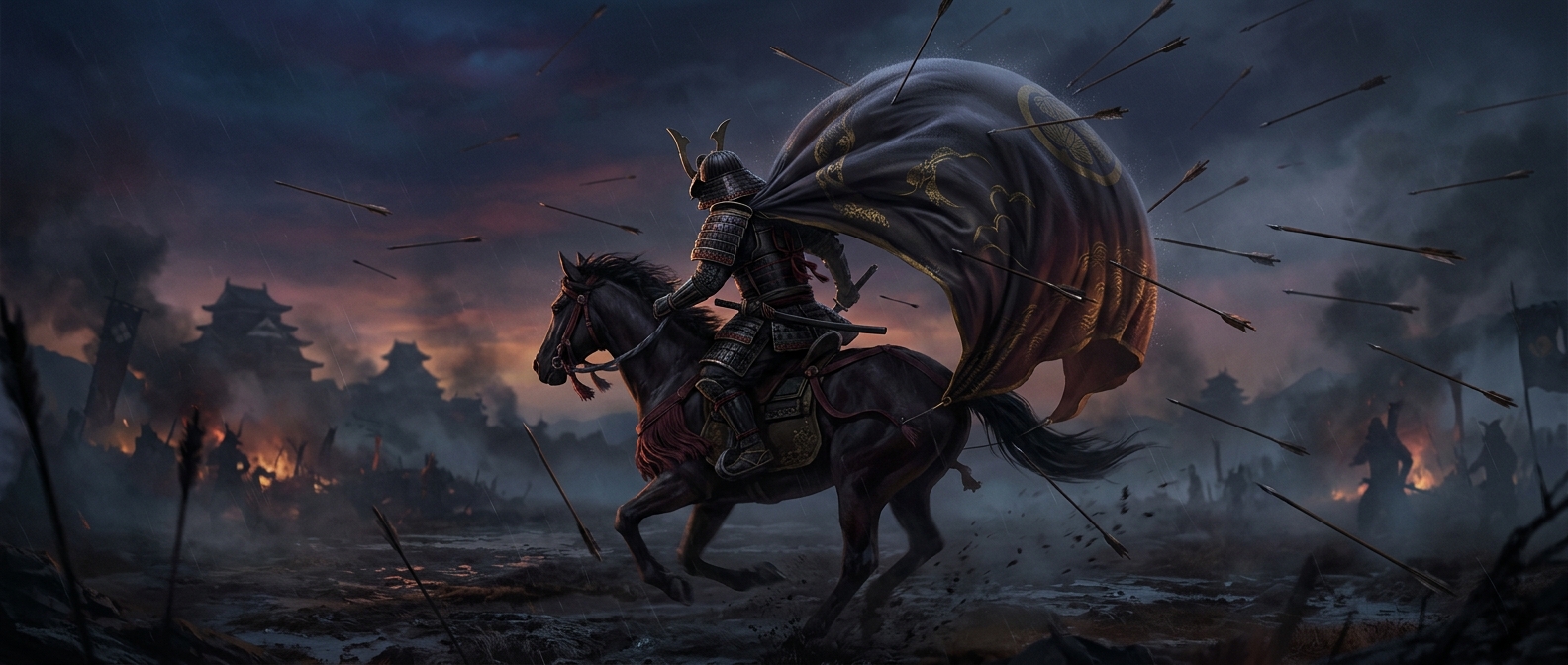
A horo was a large, loose covering stretched over a light frame and worn behind a mounted samurai. As the rider moved, air filled the covering, holding it out from the body instead of letting it hang flat. That space mattered: an arrow coming from behind met the cloth before it could reach the rider.
The horo’s job was not to make its wearer invulnerable. Its fabric could snag or slow an arrow, and the air-filled shape kept the material away from the body, but protection depended on the arrow, its angle, and the covering’s construction. It was a specialized barrier against a threat that armor on the front of a rider could not address well.
Protection Shaped by the Direction of Attack
Mounted combat made the rear a practical vulnerability: a rider could be moving quickly while an enemy shot from behind. The horo extended protection into that exposed space without requiring a rigid shield to be carried in the hand. Its frame gave the cloth volume, while the rider’s motion helped keep the unusual shield-like form spread out.
The design’s striking feature was also its logic: rather than armor the rider more heavily everywhere, it placed a lightweight obstacle exactly where a pursuing archer’s shot might land. A horo turned the wind behind a moving horse into part of the defense.