A defeat that ended an emperor’s campaign
In 811, Byzantine Emperor Nikephoros I led an army into Bulgaria and captured the Bulgarian capital, Pliska. The victory proved short-lived. As the Byzantines withdrew through a mountain pass, Bulgarian forces ambushed them and destroyed much of the army. Nikephoros was killed; his son and heir survived but was badly injured.
The disaster was more than a battlefield loss. An emperor had entered Bulgaria in person, and he did not return. Krum, Bulgaria’s ruler, had defeated the empire’s campaign and its sovereign at once.
Turning a skull into a trophy
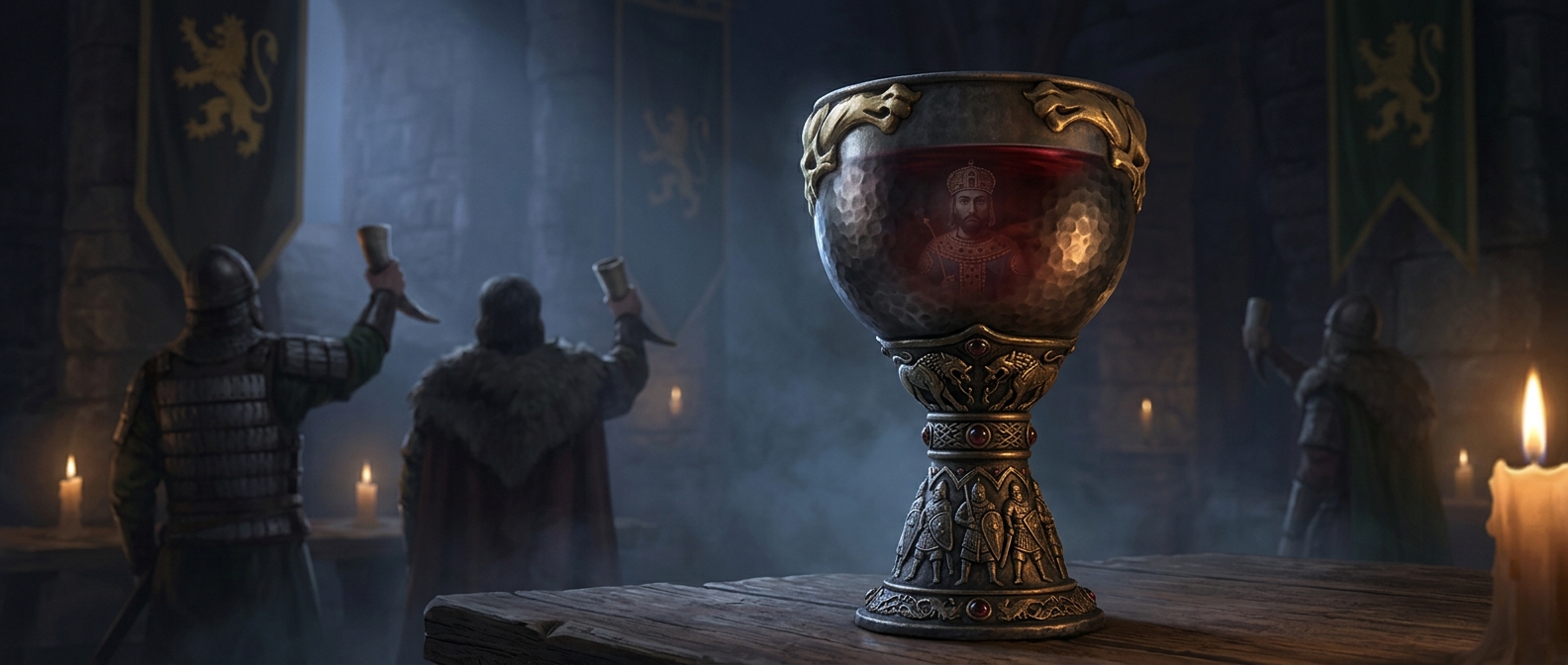
Accounts from the period say that Krum had Nikephoros’s skull hollowed out and fitted with silver, making it a drinking cup. The story’s force lies in the reversal: the emperor’s body, normally a mark of imperial dignity, became an object displayed and used by the victorious ruler.
In a world where rulers’ authority depended partly on public demonstrations of strength, such treatment could make victory visible to allies and enemies alike. The cup was not simply a battlefield souvenir; as the chroniclers tell it, it turned the emperor’s defeat into a lasting act of triumph and humiliation.
The episode also shows how precarious imperial power could be on the frontier. Nikephoros had taken Pliska, but the retreat through unfamiliar terrain left his army exposed. His skull, transformed into a cup, became the starkest image of how completely the campaign had unraveled.