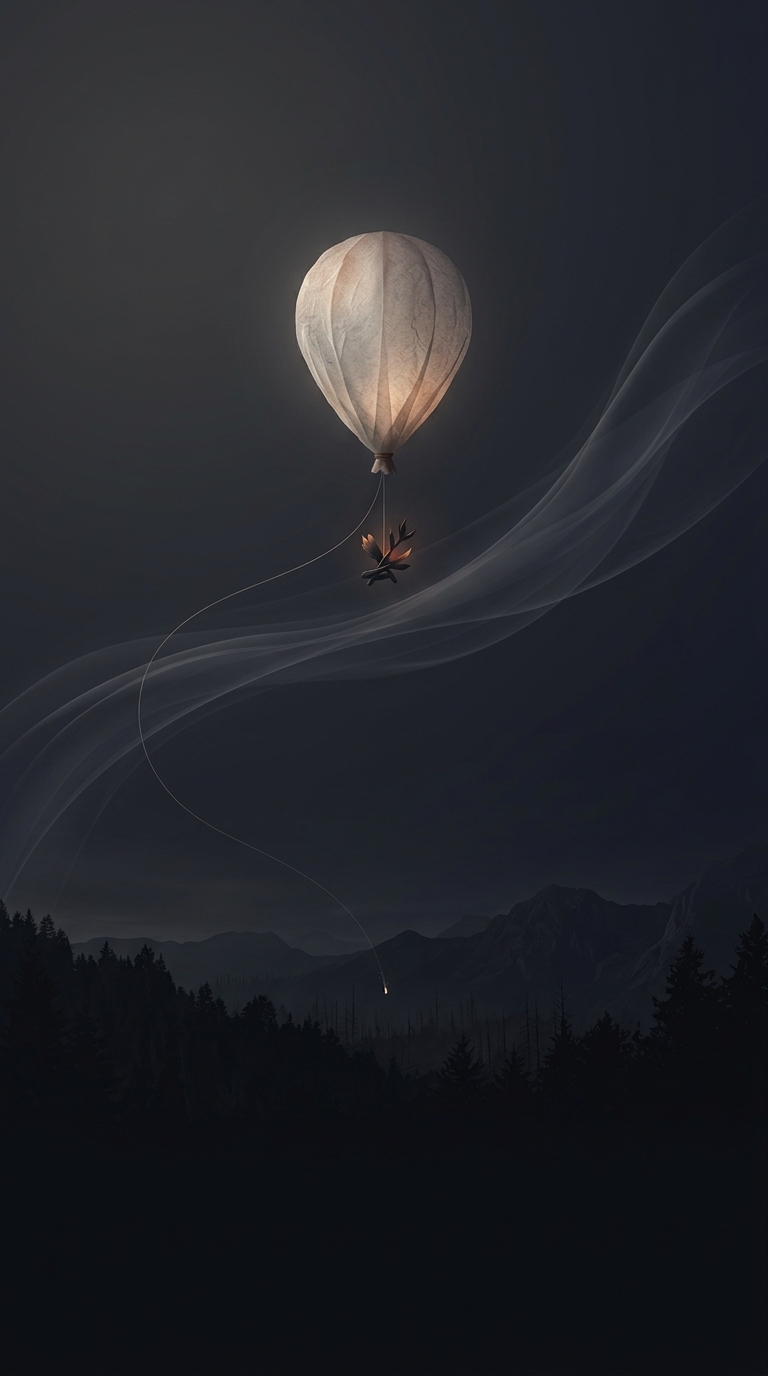
A weapon built for the wind
Japan’s balloon campaign turned a high-altitude air current into a delivery route. The balloons, filled with hydrogen, rose into the jet stream—a fast-moving band of wind high above the weather near the ground—and drifted east across the Pacific. Their route required no pilot and no engine. But it also meant the people who launched them could not steer them toward a particular town or military target.
The balloons carried explosive and incendiary payloads, meant to cause damage and fires after landing. To remain aloft long enough to cross the ocean, they used an automatic system that released ballast as the gas escaped. That kept a balloon from sinking too soon, but it could not guarantee a safe landing or a useful strike. The Pacific was not simply distance to overcome; it was an enormous area where a drifting weapon could disappear without effect.
Paper, paste, and a fragile supply line
Making the balloons required a different kind of mobilization. Schoolgirls assembled panels of mulberry paper, joining them with potato paste to form envelopes large enough to carry the hydrogen and payload. The construction had to hold together through the journey, while the balloon’s automatic controls had to function without anyone aboard to repair them.
Of roughly 9,000 launched, only about 300 reached the United States. That gap captures the campaign’s central tradeoff: the jet stream offered a way to cross an ocean without conventional aircraft, but every step depended on a chain of fragile conditions—from a sound paper envelope to favorable winds and a working release mechanism. The balloons made distance into a weapon, but left the weapon at the mercy of the route.