Why America Got a Different Super Mario Bros. 2
The game released in the United States as Super Mario Bros. 2 was not the Japanese sequel with a new coat of paint. Nintendo instead adapted Yume Kōjō: Doki Doki Panic, an existing game originally made for a Japanese promotional event. The choice reflected a practical concern: Nintendo judged the actual Japanese sequel too difficult for many American players.
That sequel—later released internationally as Super Mario Bros.: The Lost Levels—looked much like the first Super Mario Bros., but its stages were designed to be far less forgiving. Nintendo wanted a follow-up that would feel fresh without asking players to master a punishingly difficult set of courses.
How the Adaptation Changed Play
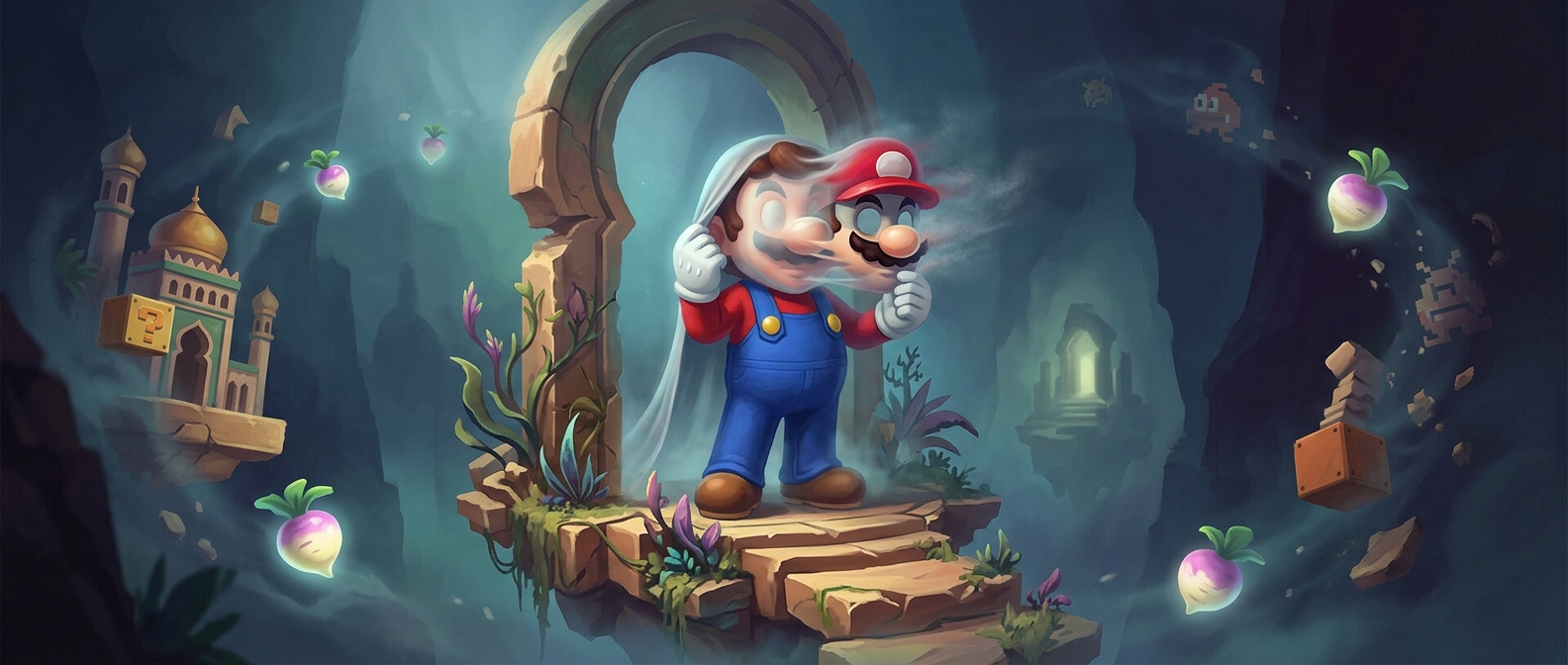
The Doki Doki Panic foundation brought different rules, not just different faces. Instead of mainly defeating enemies by jumping on them, players could lift and throw objects, including vegetables pulled from the ground. The four selectable characters also had distinct strengths: Mario, Luigi, Peach, and Toad inherited roles originally assigned to the game’s four protagonists, with differences in jumping, speed, or lifting.
Nintendo changed characters and other elements to fit the Mario world, but the underlying structure remained unusual for the series. Its stages often emphasize picking up and throwing things, and its characters do not all control alike. Those differences are why this entry feels so unlike the first game.
A Detour That Became Part of the Series
The Japanese sequel did not disappear; it simply was not the game American players first encountered under the number two. The adapted game became the familiar U.S. sequel, while the original sequel reached wider audiences later under the name The Lost Levels.
That split left the series with two games called Super Mario Bros. 2 in different markets—and gave the international version its distinctive vegetable-throwing, character-selecting style.