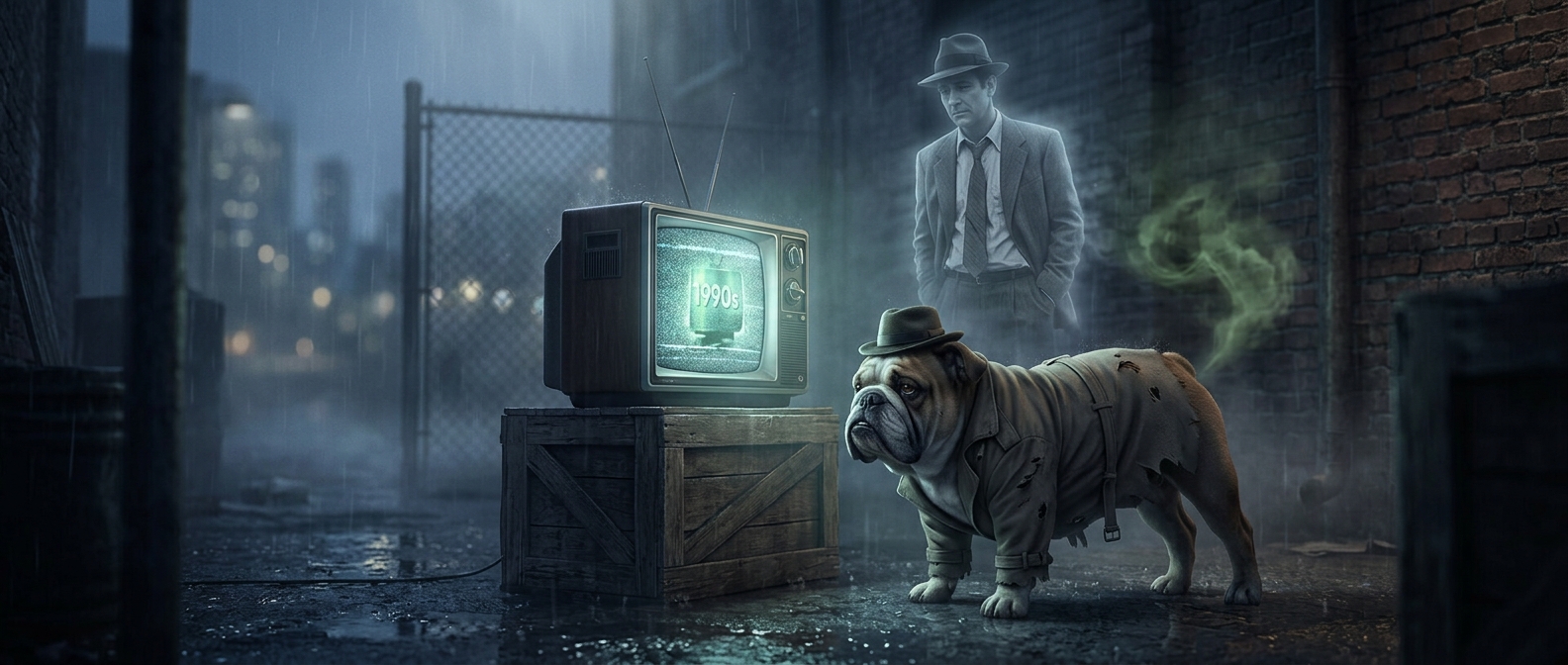
A detective’s mind inside a dog’s body
The premise of Poochinski turns a familiar crime-story problem into a sitcom engine: its detective can still think like a cop, but he can no longer behave like one. Peter Boyle’s inner monologue gives the character a recognizable human point of view; the bulldog’s driving, biting and other physical antics supply a radically different way to act on it.
That split is the central comic mechanism. A detective’s authority normally comes from speech, judgment and control of a scene. In canine form, even an attempt to do police work becomes a clash between what the character intends and what his body can do. The dog’s behavior is not just a disguise for Boyle’s performance—it is half the joke.
The format’s built-in constraint
The story also asks viewers to accept two kinds of performance at once: Boyle as the character’s thinking voice, and the bulldog as the visible character. The voice can explain intentions, while the dog’s movements make those intentions awkward or absurd. The gap between a detective’s human self-image and a dog’s physical reality is what makes the premise more than a simple talking-animal gag.