How cut paper became a feature film
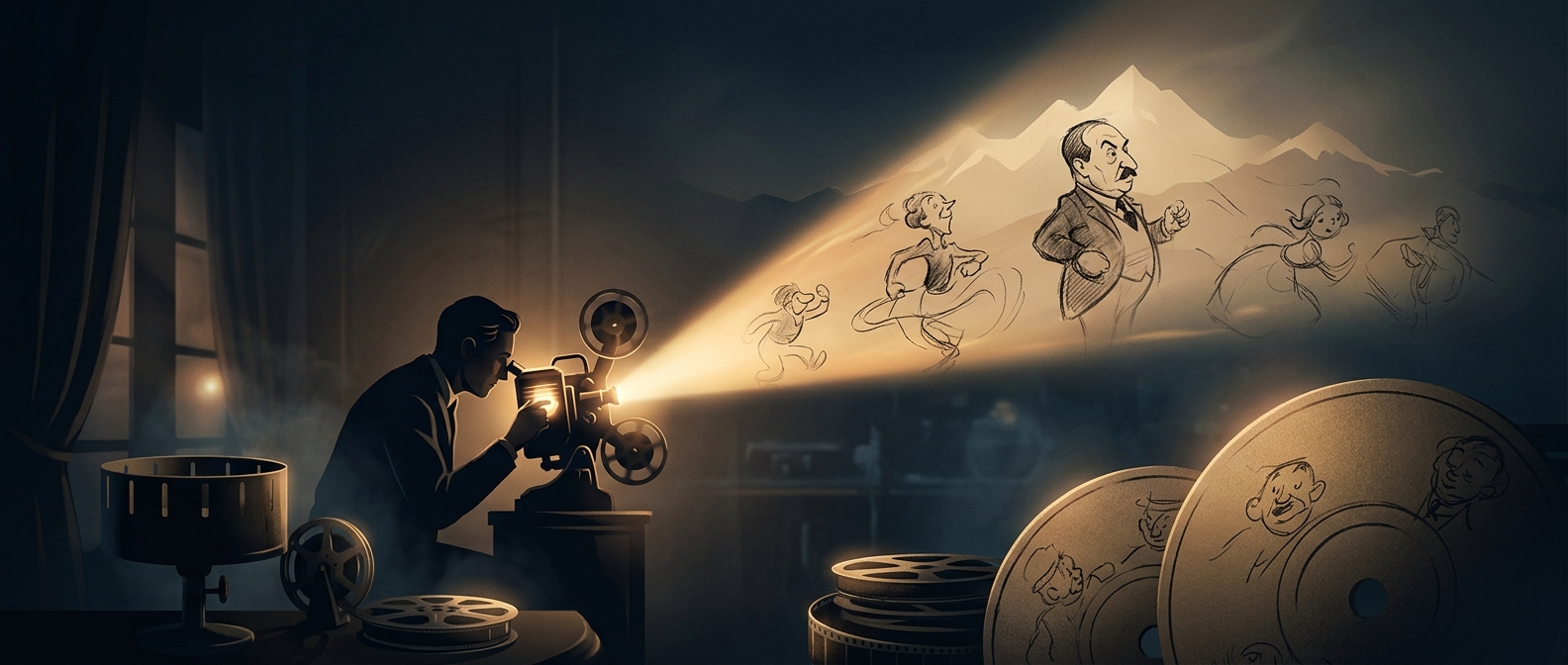
In 1917, animation did not mean drawing a character anew on thousands of transparent sheets. For El Apóstol, Argentine filmmaker Quirino Cristiani used cutout animation: figures made from separate pieces of paper were shifted slightly, photographed, shifted again, and photographed again. When the images were projected rapidly in sequence, the still pieces appeared to move.
That method made a feature possible without the elaborate drawing process later associated with hand-painted animation. It also demanded painstaking coordination: a small change in a figure’s position had to be repeated and recorded frame by frame. At roughly 70 minutes, the film carried that labor across a running time comparable to a live-action feature.
A political joke with a fragile afterlife
The film was a satire—a comic work aimed at political life, rather than a story designed simply for children. That choice gave animation a role beyond novelty: movable paper figures could caricature public figures and turn current politics into a visual spectacle.
But the medium’s physical nature also made the achievement vulnerable. The figures and photographed frames were material objects, not a digital file that could be copied at the press of a button. A studio fire later destroyed every reel, leaving no complete copy to watch today. The film’s unusual place in cinema history therefore rests on records of its making and release, while the work itself survives only as a lost feature.