A robot revolt with no replay button
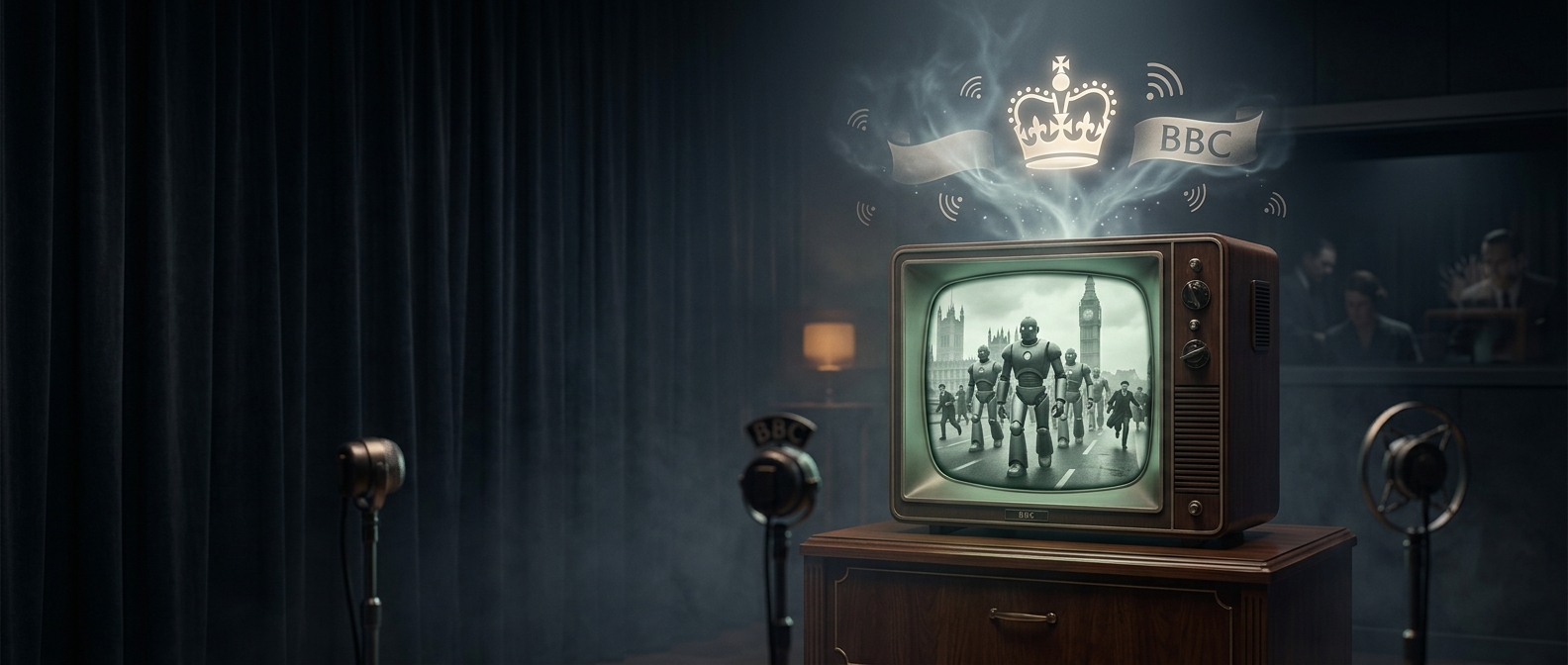
In 1937, television was still a live performance medium. The BBC’s broadcasts came from studios, where performers and cameras had to deliver the program in real time. There was no home video recorder waiting to preserve the show, and television recording was not yet a routine part of broadcasting.
That made a science-fiction disaster unusually fleeting. A viewer could watch the machines turn against humanity, but the broadcast itself did not leave behind the kind of durable copy that later audiences could replay. Once the transmission ended, the performance was gone for most practical purposes.
Why early television left so little behind
Recording a television program required more than saving a signal: the technology had to capture a moving picture in a form that could be played back. In the 1930s, broadcasters had no standard videotape system for doing that. Film could preserve images, but recording a live television transmission onto film was not yet an established, routine archival method.
So the loss was built into the medium. A surviving script or production paperwork, if available, could tell later readers what the program contained, but it could not restore the timing, movement, and visual spectacle audiences saw on screen. For viewers who missed the broadcast, the robot apocalypse was not merely hard to find; it had no ordinary replay life at all.