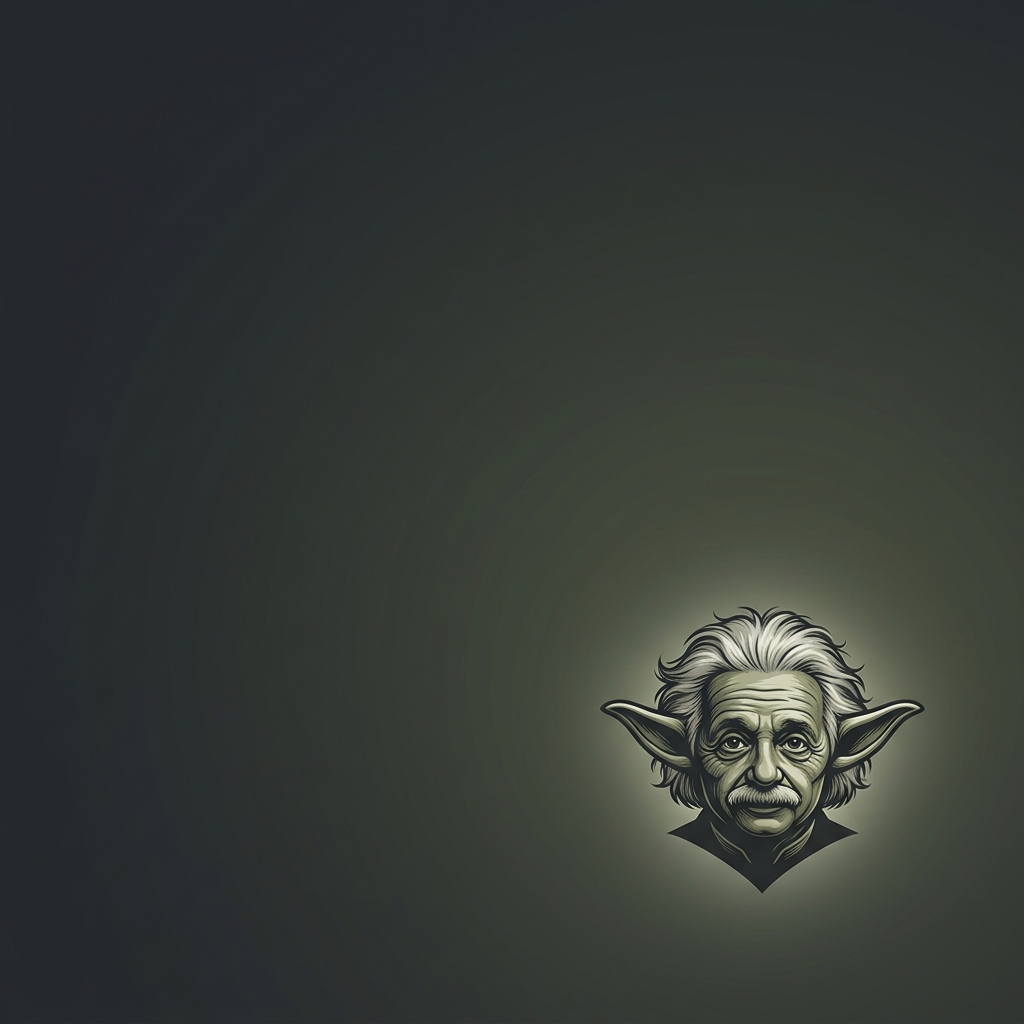
How Einstein’s Features Helped Shape Yoda
Yoda had to look unfamiliar enough to belong to another species, yet expressive enough for audiences to read his emotions on a small puppet face. The designers drew on Albert Einstein’s eyes and wrinkles to give him a recognizable signal of age and intelligence. Those features made the alien’s wisdom legible before he said a word.
Wrinkles do more than suggest that a character is old. They create folds and shadows around the eyes and mouth, making subtle expressions easier to notice. Large, distinctive eyes can hold a viewer’s attention and convey alertness. Together, the features gave Yoda a face that could seem both ancient and curious—a useful balance for a character who was a teacher but also an odd, playful presence.
A Familiar Face on an Unfamiliar Creature
The design depended on contrast. Yoda’s small stature and strange green appearance set him apart, while a face associated with a real-world image of intelligence gave viewers a quick point of recognition. Instead of relying only on dialogue to establish that he was wise, the film could make that impression visible in his expression.
That choice also helped the puppet work at close range: viewers could focus on a face whose details carried character, even when its owner was unlike any human being. The result is a memorable design in which a few familiar features make an alien seem immediately knowable.