Why a Burned Library Could Erase More Than Books
In the ancient world, a text survived only if someone kept a copy alive. There was no printing press to replace a destroyed edition with hundreds of identical ones. Books were copied by hand, a slow process that favored works people considered useful, important, or worth the effort. A rare account, local record, or author’s only known work might exist in just one copy—or in a small number gathered in one place.
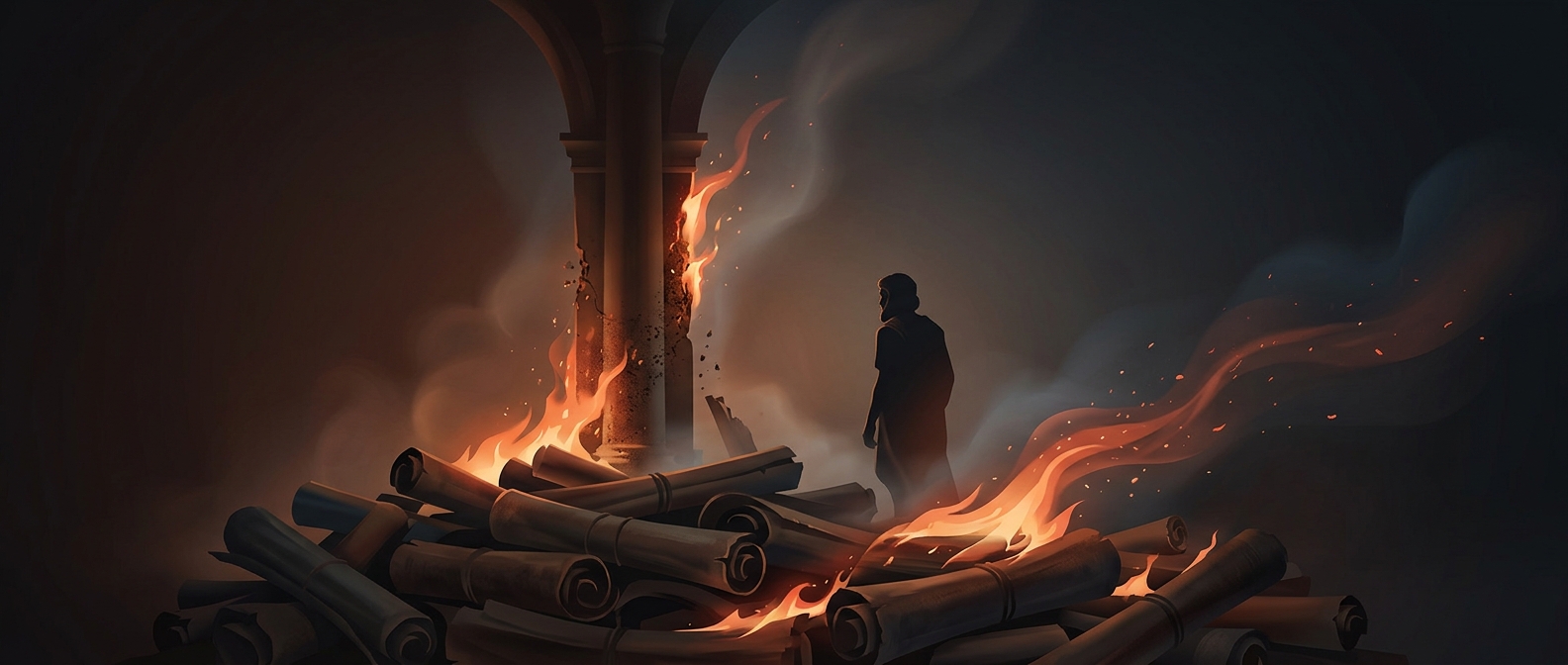
That made a library more than a storehouse. It was a concentration point in the chain of transmission: readers could consult texts, and scribes could copy them for another collection. If a fire consumed the only surviving copies of a work, later generations could not recover its exact contents simply by rebuilding the shelves.
How Knowledge Became a Gap
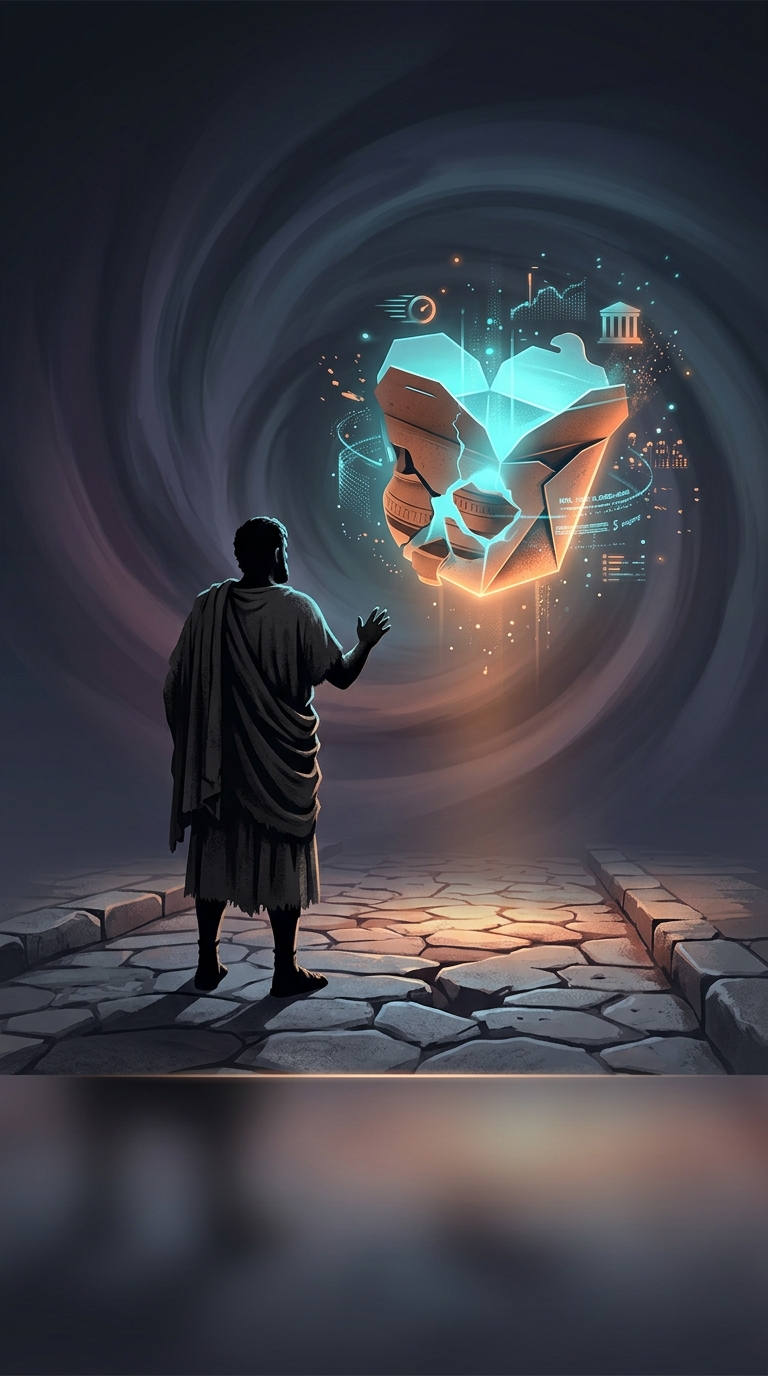
The loss was uneven. Popular works might survive elsewhere, while obscure texts disappeared without leaving a clear trace. Even surviving writings could be incomplete: later authors sometimes quoted or summarized earlier works, preserving a fragment but not the full argument, wording, or context. Historians therefore assemble the past from whatever remains—manuscripts, quotations, inscriptions, artifacts, and accounts written much later.
A destroyed collection could also interrupt access to records that helped people understand their own society: who held power, what laws applied, or how earlier generations explained events. Such losses do not mean an entire civilization’s knowledge vanished in one blaze; knowledge was often scattered among people and places. But when a unique text had no other copy, its disappearance closed off evidence that no later discovery could necessarily restore.
The lasting consequence is not just an empty space where a building stood. It is a question future readers can no longer answer because the evidence itself is gone.